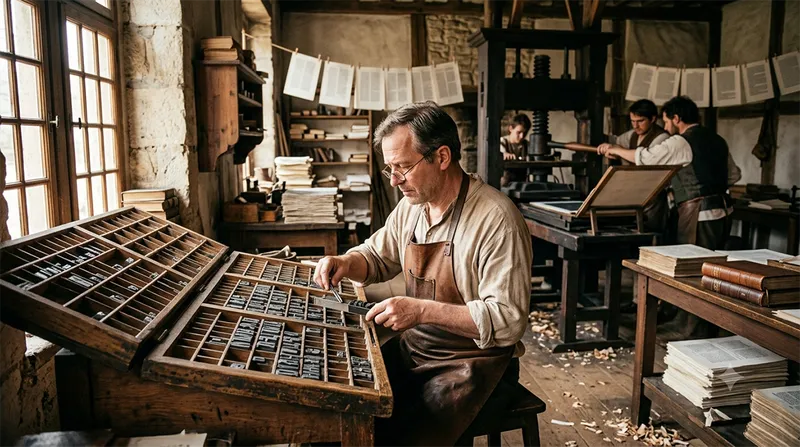
The Printing Press: How Movable Type Flooded the World with Ideas
In 1450, a single book took a monk months to copy. Then Johannes Gutenberg built a machine that could print thousands and the monopoly on knowledge shattered.
WOW Score
For a thousand years, a book was a luxury handmade by monks rare, expensive, and easy for the powerful to control. Then a German goldsmith combined movable metal type, oil-based ink, and a wine-press screw into a machine that multiplied words.
Gutenberg's Bible, printed around 1455, was just the beginning. Within decades, presses across Europe were pouring out pamphlets, Bibles, and scientific tracts faster than any censor could burn them.
Knowledge stopped being a privilege of the few and became a property of the many. The modern mind was, quite literally, set in type.
"Before Gutenberg, ideas traveled at the speed of a scribe's hand. After him, they traveled at the speed of a press and they never slowed down."
The printing press made books cheap and plentiful, fueling the Renaissance, the Reformation, the Scientific Revolution, and mass literacy. It standardized languages, spread dissent, and created the first information economy the direct ancestor of newspapers, libraries, and the open web.
The Full Story
The Clever Borrowing
Gutenberg did not invent printing the Chinese had printed with carved woodblocks centuries earlier, and Bi Sheng had even devised movable clay type around 1040. Gutenberg's genius was the system: durable, reusable metal type cast from a precision mold, paired with a press adapted from wine and paper making, and ink that stuck to metal. That combination made European printing fast and economical.
The Bible That Launched an Industry
The Gutenberg Bible was a masterpiece of craft, but its real importance was economic: it proved books could be produced at scale. By 1500, some 20 million volumes had been printed in Europe. A library that once held dozens of manuscripts now held thousands of titles.
Faith, Reform, and Revolt
When Martin Luther's theses and sermons were printed and distributed, they spread faster than the Church could suppress them fueling the Protestant Reformation. Print turned private dissent into public movements and showed, for the first time, the political power of a reading public.
The Scientific Revolution in Print
Scientists could now share methods, diagrams, and data precisely and repeatably. Copernicus, Galileo, and Newton reached audiences far beyond their letters. Print created the shared, cumulative conversation we now call science and standardized the very languages it was written in.
The First Information Explosion
The press birthed newspapers, the pamphlet wars, and the public sphere. Every later medium telegraph, radio, television, the internet is a descendant racing to do what Gutenberg did: move ideas faster than the human voice. The information age did not begin in Silicon Valley. It began in a Mainz workshop.
What if the printing press had never been invented?
Without movable type, books would have stayed rare and expensive, controlled by scriptoriums and the Church. The Reformation might never have escaped local dissent, scientific findings would have spread slowly by handwritten letter, and mass literacy could have been delayed by centuries leaving the modern information age a far more recent, fragile accident.
Turning Point Connections
How this moment set others in motion — and what set it in motion. Each node links to a related turning point; the label on the line is the cause-and-effect relationship.
Related Turning Moments
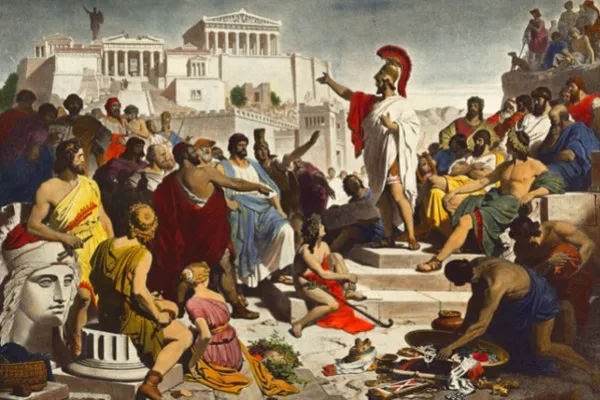
The Birth of Democracy in Athens
508 BCE. A clever reformer named Cleisthenes restructured Athens not by birth or wealth, but by where people lived. The word 'democracy' was about to be invented.
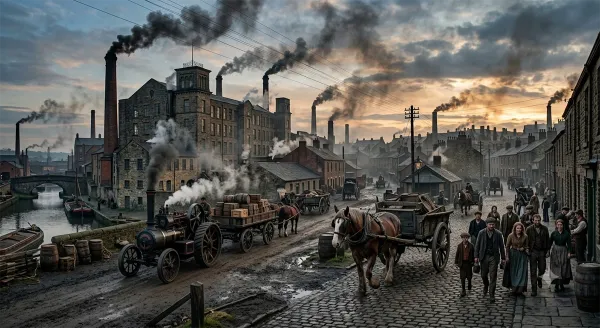
The Industrial Revolution: When Steam Replaced Muscle
In a single generation, humans stopped relying on the strength of their backs and started harnessing coal, iron, and machines. Nothing was ever the same.
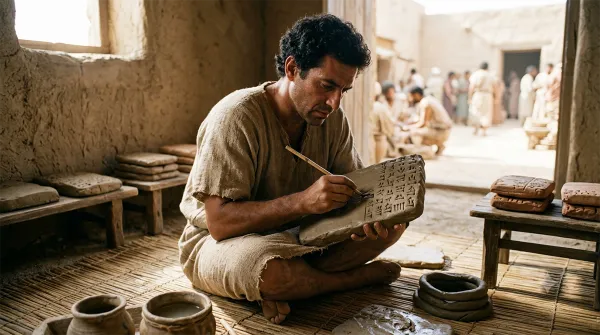
The Birth of Writing: When Humans Learned to Outlive Themselves
Memory fades. Voices die. But around 3200 BC, someone pressed signs into clay and suddenly human thought could survive its speaker.