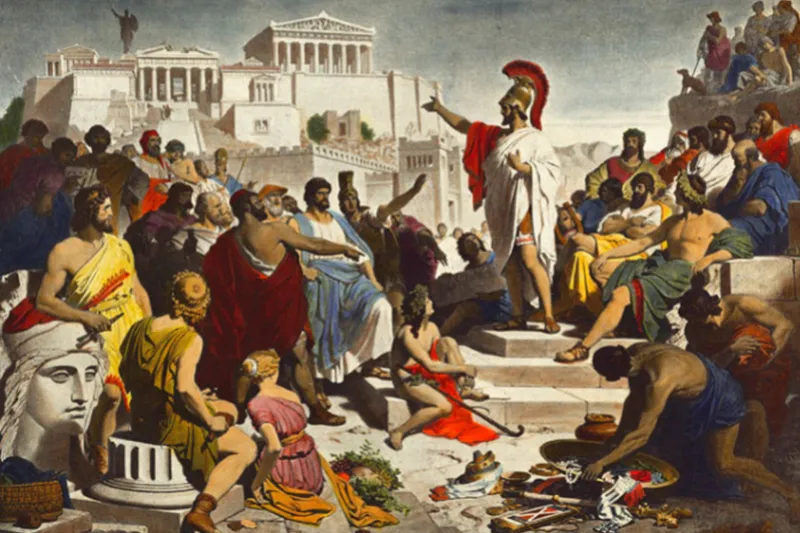
The Birth of Democracy in Athens
508 BCE. A clever reformer named Cleisthenes restructured Athens not by birth or wealth, but by where people lived. The word 'democracy' was about to be invented.
WOW Score
Before Cleisthenes, Athens was torn between rival aristocratic families, prone to tyranny and faction. He broke their power by reorganizing citizens into new local units that mixed rich and poor.
This 'demes' system meant no single clan could dominate a region. Citizens now owed loyalty to the polis, the city, not just their kinship group.
The Assembly, open to all free male citizens, gained real power. Decisions were made by vote, not decree, and the age of the people's rule began.
"For the first time, power flowed not from a king or a noble, but from the people assembled in the open air."
Athenian democracy created the first system of government by the citizenry, seeding ideas of equality, public debate, and civic duty that shaped Rome, the Enlightenment, and modern republics. The word and the ideal still govern much of the world.
The Full Story
A City Tired of Tyrants
Athens had just thrown off the Peisistratid tyrants and was sliding back into aristocratic feuding. Cleisthenes, an Alcmaeonid noble, saw that the old tribal divisions were the machinery of elite control. His reform was a deliberate redesign of how Athenians saw themselves, engineered to make tyranny impossible by spreading power widely.
Redrawing the Map of Loyalty
Cleisthenes abolished the traditional four Ionic tribes that clans used to organize. In their place he created ten new tribes from a mix of coastal, inland, and urban districts. Because each tribe blended different areas and classes, no noble could muster a regional power base. Identity shifted from blood to place, from clan to community.
Rule by the Assembly
Under the new system, the Ecclesia, the Assembly of citizens, could debate and vote on war, law, and policy. Offices were chosen by lot rather than wealth, so ordinary citizens governed alongside the elite. It was messy, loud, and revolutionary: for the first time in the ancient world, the many rather than the few held sovereign power.
The Limits of the Experiment
Athenian democracy was radical but narrow by modern standards. Women, slaves, and foreigners, the majority of residents, could not vote. Yet within its limits it produced an extraordinary flourishing of philosophy, drama, and art, and proved that citizens could govern themselves without a king.
The Turning Moment
Everything turned on a structural choice, to organize power by neighborhood rather than birth, which quietly dismantled the aristocracy's grip and gave the people a voice. Democracy was not declared in a single speech but built into the map of Athens. Cleisthenes did not name the system; he invented the thing itself, and the name followed.
Lasting Legacy
Athenian democracy is the ancestor of every representative and direct democracy on Earth. Its ideals fueled the American and French revolutions and the modern language of human rights. Whether remembered as a flawed experiment or the birthplace of freedom, one fact is already clear: in 508 BCE, Athens gave the world an idea that still rules it.
Related Turning Moments
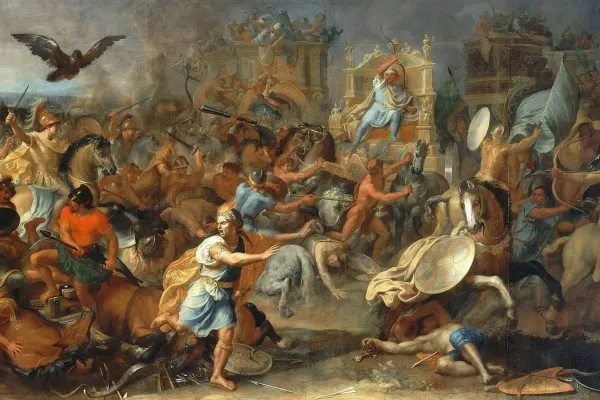
The Battle of Thermopylae
480 BCE. Three hundred Spartans held a mountain pass against an army of millions. They lost, but their stand became the most famous last stand in history.
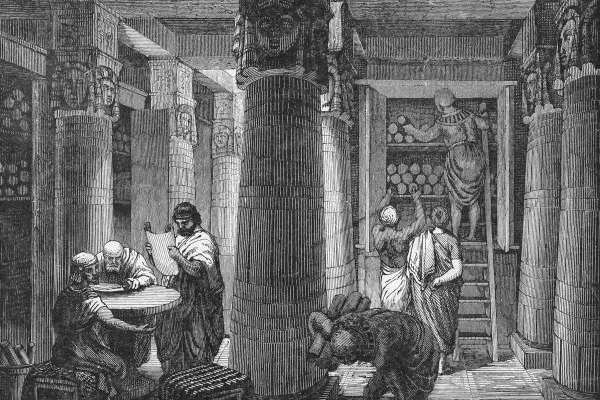
The Library of Alexandria's Destruction
For centuries, the greatest library on Earth held the collected knowledge of humanity. Then fire, war, and time erased most of it forever.
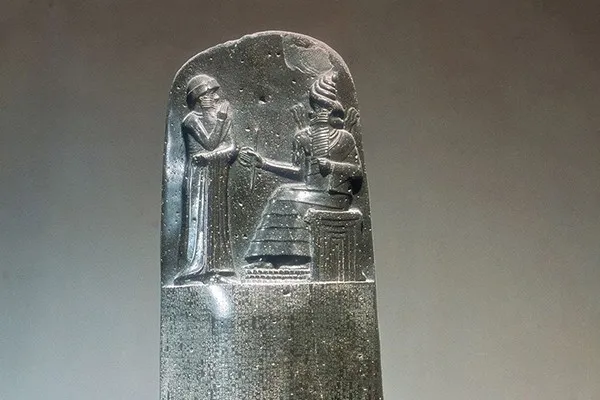
The Code of Hammurabi
c. 1754 BCE. A Babylonian king carved 282 laws into a stone pillar for all to see. It was one of the first times a society said: the rules apply to everyone.