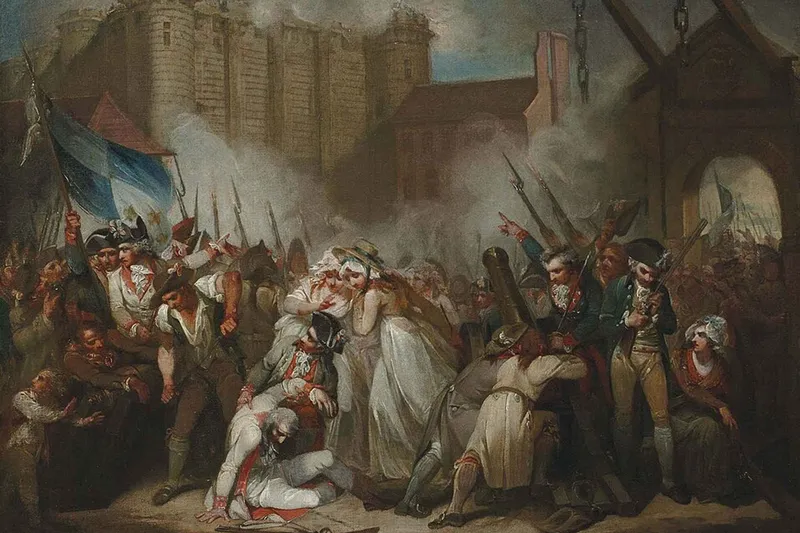
The Bastille: The Prison That Launched a Revolution
July 14, 1789. A Parisian mob stormed a medieval fortress looking for gunpowder and accidentally ignited the modern age.
WOW Score
In the summer of 1789, France was a powder keg. Bread prices had doubled, the king had dismissed his reformist ministers, and Paris was arming itself against a rumored royal crackdown.
On July 14, a crowd marched on the Bastille, a medieval fortress and prison that symbolized royal tyranny. The governor surrendered. The crowd killed him.
Within weeks, the ancient regime had collapsed. Feudalism was abolished, the Declaration of the Rights of Man was proclaimed, and the modern world began.
"The mob came for gunpowder. They left with a symbol that would burn down every monarchy in Europe."
The storming of the Bastille became the defining act of the French Revolution, toppled the absolute monarchy, and exported revolutionary ideals across Europe. The Declaration of the Rights of Man and of the Citizen became the foundation for modern human rights, and the date is still celebrated as France's national holiday.
The Full Story
A Kingdom on the Brink
France in 1789 was bankrupt from war and court excess, with a king who could not govern and a parliament he refused to listen to. Bread shortages turned hunger into rage, and pamphlets calling for liberty circulated through every neighborhood. The Estates-General, convened for the first time in 175 years, had just transformed itself into a National Assembly and taken the Tennis Court Oath, claiming sovereignty for the people.
The Search for Gunpowder
The immediate trigger was practical: Parisians feared the king was bringing in mercenaries to crush the new Assembly, and they needed weapons. The Bastille was known to store gunpowder, and rumors said it also held prisoners held without trial. The crowd did not set out to storm a fortress; it came looking for ammunition and found something far larger.
The Afternoon of the Bastille
The siege lasted several hours. Governor Bernard de Launay tried to negotiate, then capitulated. As the crowd stormed in, fighting broke out; de Launay was seized, stabbed, and beheaded, his head carried through the streets on a pike. The fortress was dismantled stone by stone, its bricks sold as souvenirs. The violence shocked the elite, but it proved that the people had crossed a line and would not go back.
What the Bastille Actually Held
Contrary to myth, the Bastille held only seven prisoners that day four forgers, two madmen, and one aristocrat held for sexual crimes. It was not a dungeon of political martyrs but a nearly obsolete prison about to be closed anyway. Its real power was symbolic: it stood for arbitrary royal power, and its fall proved that power could be broken by ordinary people with nothing but anger and a few muskets.
The Shock Across Europe
Monarchs across Europe watched with horror and fascination. Edmund Burke warned that the Revolution was a dangerous overthrow of inherited order, while Thomas Jefferson celebrated it as proof that people could govern themselves. Within a decade, the ideals would inspire revolutions across the continent and send French armies marching in every direction.
The Turning Moment
Everything turned on one July morning in Paris, when a search for gunpowder became the most important crowd in history. The Bastille did not fall because it was strong; it fell because it had outlived the authority that built it. The French Revolution would take years to turn violent and conservative, but its opening act proved that a people could unmake a king if they moved together.
Lasting Legacy
July 14 is now France's national holiday, celebrated with parades and fireworks. The Declaration of the Rights of Man influenced the American Bill of Rights, the Universal Declaration of Human Rights, and every constitution written in its shadow. Whether remembered as the birth of modern democracy or the start of a decade of terror, one fact is already clear: July 14, 1789, ended the age of absolute monarchy and began the age of the citizen.
Turning Point Connections
How this moment set others in motion — and what set it in motion. Each node links to a related turning point; the label on the line is the cause-and-effect relationship.
Related Turning Moments
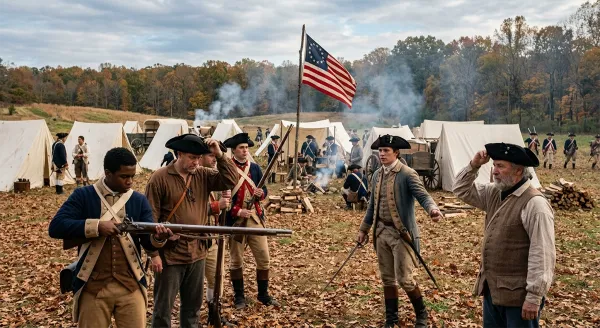
The Shot Heard Round the World: How Thirteen Colonies Beat an Empire
April 19, 1775. A ragtag militia faced the world's strongest army on a Massachusetts green and a rebellion that would birth a superpower began.
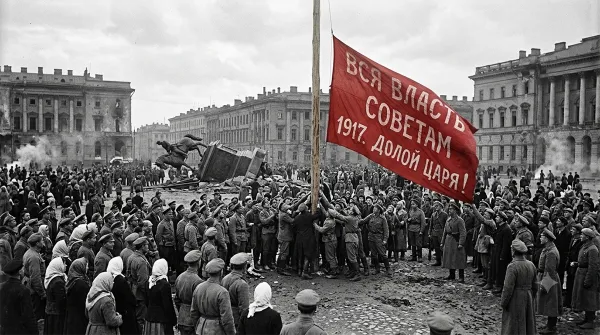
1917: The Year the Tsar Fell and the World Turned Red
In eight months a empire collapsed, a provisional government rose and fell, and Lenin's Bolsheviks seized history by the throat.
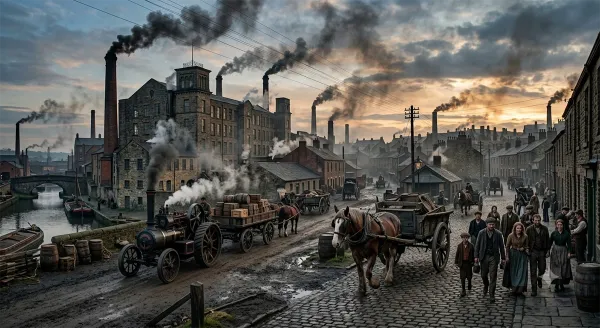
The Industrial Revolution: When Steam Replaced Muscle
In a single generation, humans stopped relying on the strength of their backs and started harnessing coal, iron, and machines. Nothing was ever the same.