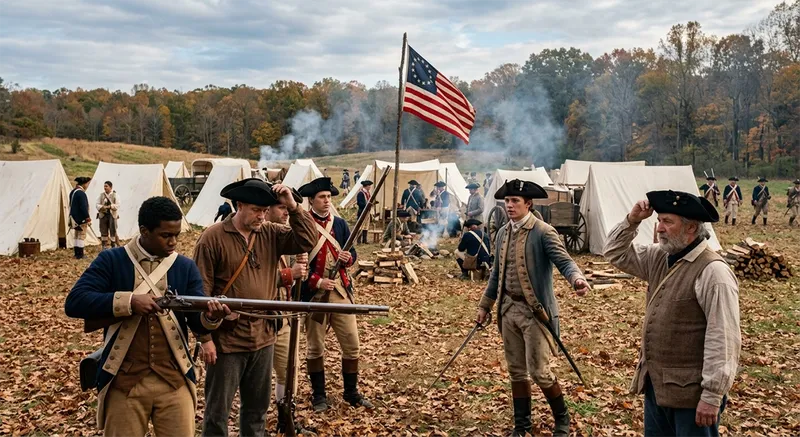
The Shot Heard Round the World: How Thirteen Colonies Beat an Empire
April 19, 1775. A ragtag militia faced the world's strongest army on a Massachusetts green and a rebellion that would birth a superpower began.
WOW Score
By 1775, the American colonies had grown tired of a king three thousand miles away taxing them without a voice. When British soldiers marched to seize colonial weapons at Concord, the locals fought back.
On July 4, 1776, the Continental Congress declared independence, betting a fragile coalition of farmers, merchants, and smugglers against the most powerful military on earth.
Eight years later, with French help and impossible persistence, the new United States had won proving that an idea, armed and organized, could defeat an empire.
"An empire that ruled the waves met its match in farmers who refused to pay for the privilege."
The American Revolution created the first modern republic built on written constitutional limits, exported the idea that governments derive their power from the consent of the governed, and inspired revolutions from France to Latin America. Its Constitution and Bill of Rights remain the template for democracies worldwide.
The Full Story
Taxation Without Representation
After the costly Seven Years' War, Britain demanded the colonies help pay the bill. The Stamp Act, the Townshend duties, and the Tea Act hit colonists where they lived, and a simple slogan 'no taxation without representation' turned a fiscal grievance into a constitutional one. Colonial assemblies argued that only their own elected legislatures could tax them, a principle London refused to concede.
Lexington and Concord
On April 19, 1775, British regulars marched from Boston to confiscate stored munitions. At Lexington Green, a shot was fired whose origin is still unknown, and the war had begun. By the time the redcoats limped back to Boston under guerrilla fire, the colonies were committed to armed resistance, and the Second Continental Congress began raising an army under George Washington.
The Declaration
Drafted chiefly by Thomas Jefferson and adopted on July 4, 1776, the Declaration of Independence did more than announce separation. It asserted that all men are created equal, endowed with unalienable rights, and that governments exist to secure those rights language that would be quoted in courtrooms and barricades for centuries. It transformed a tax revolt into a philosophical earthquake.
The Long War
Victory was never assured. Washington's army froze at Valley Forge, lost battles, and nearly dissolved. The turning point came at Saratoga in 1777, where the American victory convinced France to enter the war as an ally. French money, fleets, and troops plus Spanish and Dutch pressure stretched Britain's resources across the globe and tipped the balance toward the rebels.
Yorktown
In 1781, a combined American and French army cornered Lord Cornwallis at Yorktown, while the French navy blocked escape by sea. His surrender effectively ended the war. Two years later the Treaty of Paris recognized American independence and doubled the size of the new nation, an outcome almost no one had predicted in 1775.
A New Blueprint
The Revolution's true legacy was institutional. The 1787 Constitution created a federal republic with separated powers and checks and balances, and the Bill of Rights enshrined individual liberties. The example rippled outward: the French took up the cry in 1789, and across the Americas colonies would later cite 1776 as their own founding text. A rebellion born on a village green had redrawn the political map of the world.
Related Turning Moments
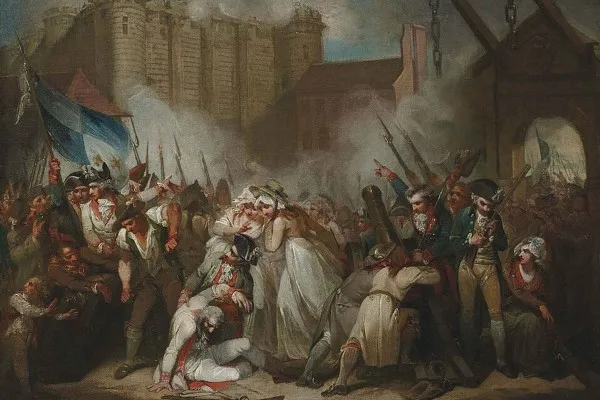
The Bastille: The Prison That Launched a Revolution
July 14, 1789. A Parisian mob stormed a medieval fortress looking for gunpowder and accidentally ignited the modern age.
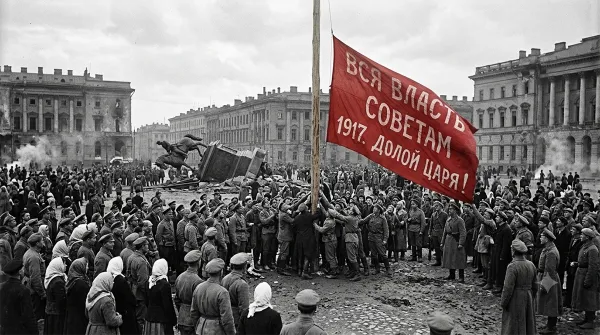
1917: The Year the Tsar Fell and the World Turned Red
In eight months a empire collapsed, a provisional government rose and fell, and Lenin's Bolsheviks seized history by the throat.
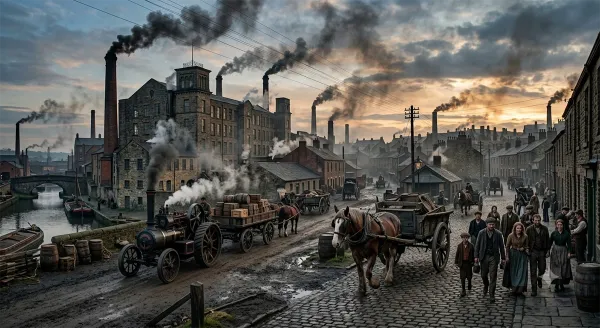
The Industrial Revolution: When Steam Replaced Muscle
In a single generation, humans stopped relying on the strength of their backs and started harnessing coal, iron, and machines. Nothing was ever the same.