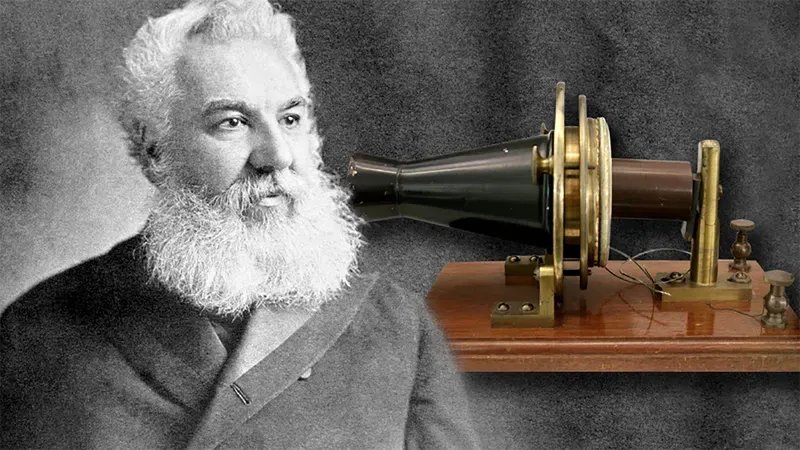
The Telephone: The First Machine That Carried a Voice
For all of history, a voice died at the edge of hearing. Then Alexander Graham Bell sent one down a wire and distance lost its grip on conversation.
WOW Score
On March 10, 1876, Alexander Graham Bell spilled acid, called to his assistant, and heard his own voice echoed back through a wire. The telephone worked.
Within a generation, cities were laced with telephone lines, then continents, then oceans via undersea cable. A farmer in Kansas could chat with a cousin in New York.
The telephone made the world feel small and set the template for every connected device that followed.
"Mr. Watson, come here I want to see you. With those words in 1876, the human voice escaped the room for the first time."
The telephone collapsed distance for business and family alike, created the modern office and call center, and laid the wired backbone (and the culture of instant contact) that the internet and mobile phones later inherited. It made real-time, synchronous communication the default of modern life.
The Full Story
A Race of Inventors
Bell was not alone. Elisha Gray filed a similar patent the same day, and Antonio Meucci had demonstrated voice transmission years earlier. But Bell's 1876 patent held, and his demonstration at the Centennial Exposition in Philadelphia stunned the world. The telephone was real, and it was his.
Wiring the Continent
The Bell Telephone Company spread fast. Operators connected calls by hand at switchboards; long-distance lines reached across America by 1915. The telephone turned businesses from local shops into networks and made the phrase 'long distance' part of everyday life.
The Sound of Modern Life
Before the telephone, news moved at the speed of a letter or a telegram's clipped code. The telephone restored the nuance of tone, hesitation, and warmth across any distance. Families separated by oceans stayed close; emergencies got faster help; markets reacted in minutes.
The Ancestor of the Network
Every later communication technology rides on what the telephone built: the idea of a switched network connecting any two points, the engineering of reliable long lines, and the social habit of expecting to reach anyone, anywhere, instantly. The mobile phone and the internet are its descendants.
Why It Still Matters
We text more than we talk, but the telephone's core promise endures in every call, video chat, and voice assistant. The first machine to carry a human voice taught the world to assume connection and that assumption is now the floor of modern life.
Related Turning Moments
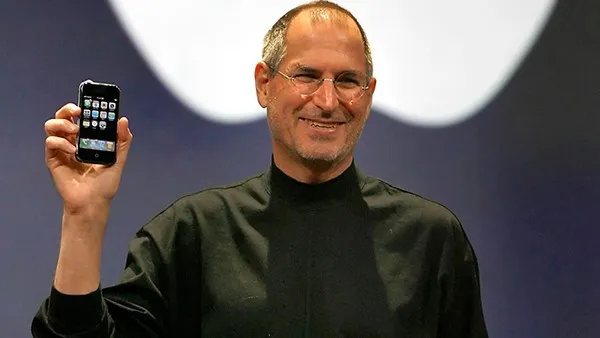
The Keynote That Killed the Keyboard
January 9, 2007. Steve Jobs held up a device and said three things. It was actually one thing. The room didn't understand yet but the phone industry was already over.
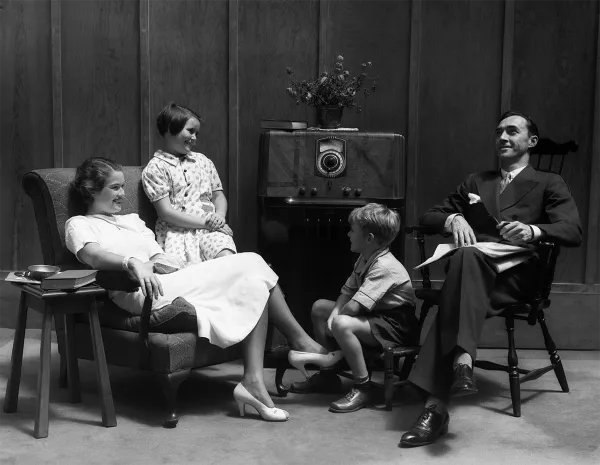
Radio: The Voice That Reached Everyone at Once
For the first time in history, a single voice could enter millions of homes simultaneously no wire, no paper, no delay. The broadcast age began.
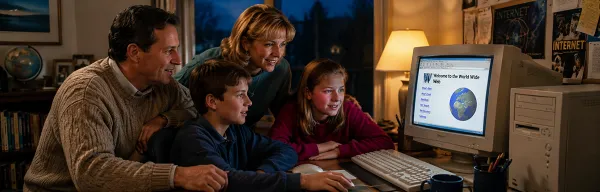
The Internet: The Network That Connected Everything
It began as a Cold War experiment to keep communications alive after a nuclear strike. It became the nervous system of human civilization.