Radio: The Voice That Reached Everyone at Once
For the first time in history, a single voice could enter millions of homes simultaneously no wire, no paper, no delay. The broadcast age began.
WOW Score
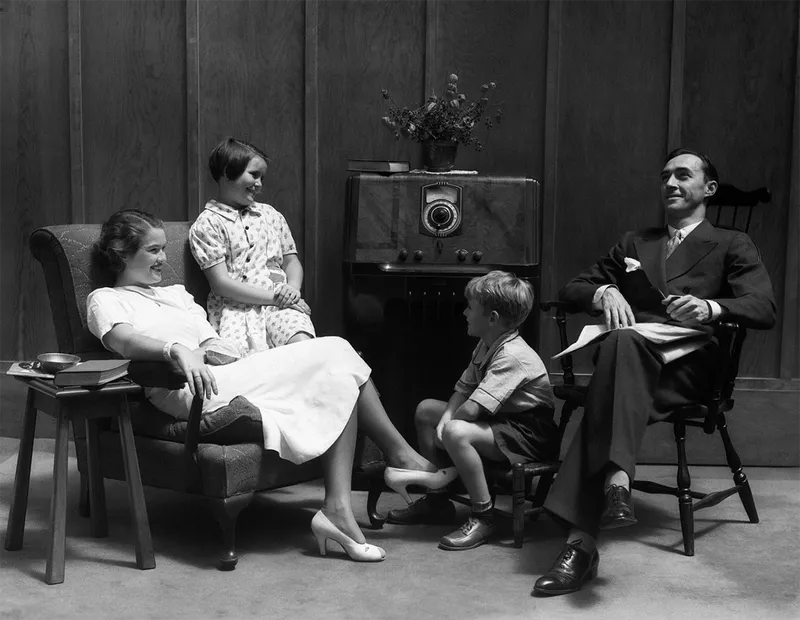
Building on Maxwell's theory and Marconi's transmitters, radio sent signals through the air without wires. By the 1920s, families gathered around glowing sets to hear news, music, and drama.
A president's voice could now reach a continent in seconds. Wars were reported as they happened; elections were won on the airwaves.
Radio invented the audience and taught the world that information, poured from one source to many, could shape a society overnight.
"Radio turned the scattered public into an audience. For the first time, a nation could laugh, worry, and vote together in real time."
Radio created mass culture, real-time news, and the modern celebrity. It reshaped politics and war (Churchill, Roosevelt, Hitler all mastered the microphone), birthed broadcasting and advertising, and laid the wireless foundation for television, mobile phones, and Wi-Fi.
The Full Story
From Sparks to Signals
Heinrich Hertz proved electromagnetic waves existed in 1887; Guglielmo Marconi turned them into wireless telegraphy by the mid-1890s, sending the first transatlantic radio signal in 1901. Early radio was point-to-point Morse code a wireless telegraph, not yet a broadcast.
The Birth of Broadcasting
The shift to one-to-many came after World War I. KDKA in Pittsburgh broadcast election results in 1920, and a craze followed. Suddenly manufacturers sold receivers by the million, and 'radio' meant not a tool for operators but a box in the living room.
The Microphone and the Masses
Radio gave leaders direct, intimate access to citizens. FDR's fireside chats steadied a nation; Churchill's speeches steeled Britain; broadcasts carried jazz, soap operas, and baseball into every home. It forged a shared national consciousness unlike anything print had achieved.
War of the Airwaves
In WWII, radio was propaganda, coordination, and morale. It also terrified: Orson Welles's 1938 War of the Worlds hoax showed how completely a broadcast could command belief. The medium's power over emotion was clear, and dangerous.
The Wireless Seed
Radio's core trick sending information through the air underlies everything wireless since: television, cell phones, GPS, and Wi-Fi. The box that brought the world's voice into the parlor is the ancestor of the signal in your pocket.
Related Turning Moments
The Telephone: The First Machine That Carried a Voice
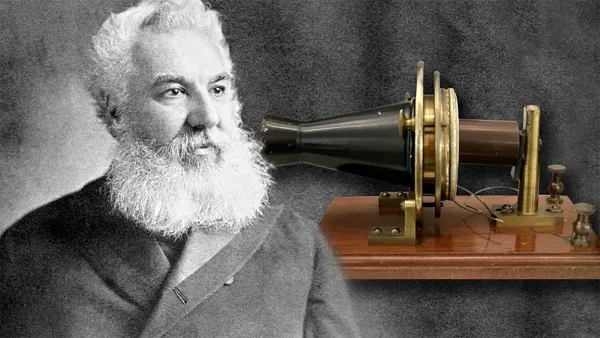
For all of history, a voice died at the edge of hearing. Then Alexander Graham Bell sent one down a wire and distance lost its grip on conversation.
Television: The Window That Brought the World Home
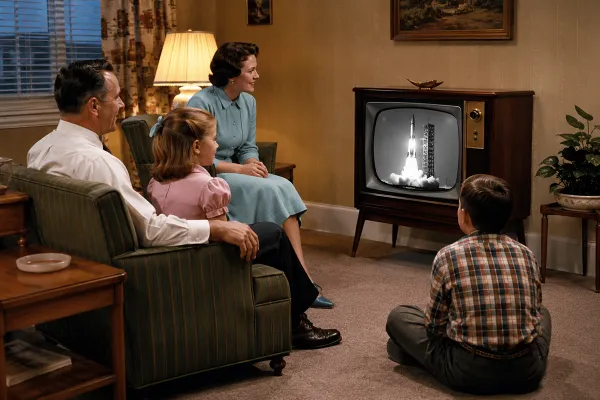
Radio gave the world a voice. Television gave it a face. Suddenly events unfolded live in your living room and reality itself felt closer.
The Internet: The Network That Connected Everything
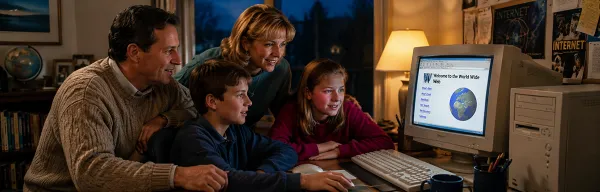
It began as a Cold War experiment to keep communications alive after a nuclear strike. It became the nervous system of human civilization.