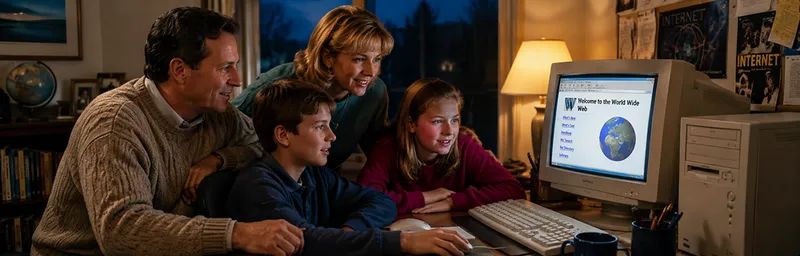
The Internet: The Network That Connected Everything
It began as a Cold War experiment to keep communications alive after a nuclear strike. It became the nervous system of human civilization.
WOW Score
In 1969, a message 'LO' (the system crashed before 'LOGIN') traveled between two computers on ARPANET. The internet had spoken its first word.
Decades of protocols, fiber, and the World Wide Web turned that fragile link into a planet-spanning network. Email, then the web, then video and cloud, arrived in waves.
Today the internet is less a tool than a layer of reality: the place where human attention, memory, and markets now live.
"The internet is the only machine humans have built that gets smarter the more of us use it. We are not its users we are its content."
The internet merged telephone, radio, television, and library into one global, instant, two-way medium. It reshaped commerce, politics, education, and culture; created the modern tech economy; and set the stage for artificial intelligence by linking the world's data, devices, and minds.
The Full Story
A Network That Could Survive
Cold War strategists wanted communications that no single attack could silence. The answer was packet switching breaking messages into chunks routed independently across many paths. ARPANET proved it worked, and the design's decentralization is precisely why the internet is so resilient.
The Protocols That Set It Free
TCP/IP, adopted in 1983, let incompatible networks speak one language the 'internet' protocol that names the net. This open standard meant anyone could plug in, which is why innovation exploded: no central owner, just shared rules and permissionless invention.
The Web Untangles the Net
Tim Berners-Lee's 1991 World Wide Web pages linked by hyperlinks, served over HTTP made the internet usable by ordinary people. Browsers turned a researcher's tool into a global library and marketplace. The dot-com boom and bust that followed were the birth pains of a new economy.
The Social Turn
Web 2.0 made users creators. Search, social networks, and smartphones put the whole net in every pocket, turning passive audiences into active participants. Information, once broadcast downward, now flowed in every direction at once with all the promise and peril that implies.
The Stage for AI
The internet did more than connect people; it generated the vast oceans of text, image, and behavior that modern artificial intelligence learns from. Without the web's linked data, today's AI would have nothing to train on. The net built the substrate; intelligence is now waking up inside it.
Related Turning Moments
ChatGPT Goes Live: The 5 Days That Shook the World
November 30, 2022. One million users in five days. The AI revolution had a face and it could talk.
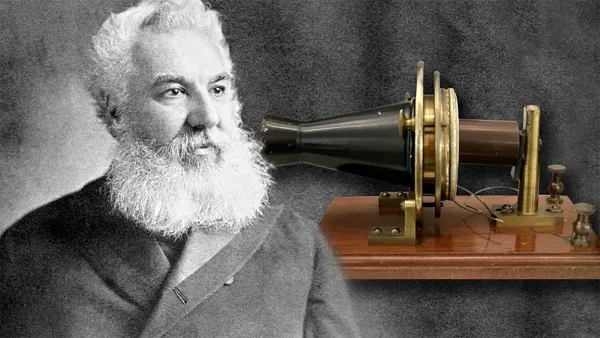
The Telephone: The First Machine That Carried a Voice
For all of history, a voice died at the edge of hearing. Then Alexander Graham Bell sent one down a wire and distance lost its grip on conversation.
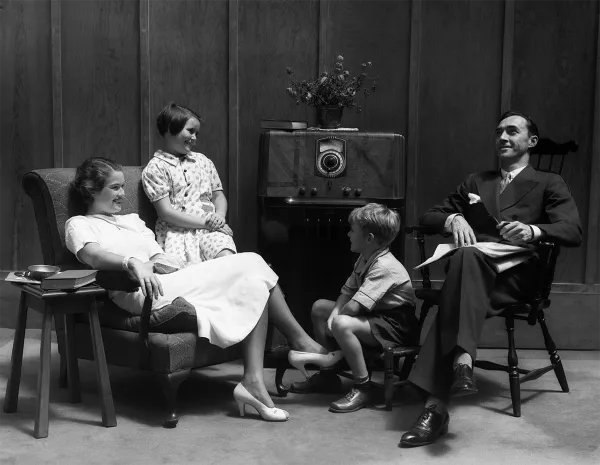
Radio: The Voice That Reached Everyone at Once
For the first time in history, a single voice could enter millions of homes simultaneously no wire, no paper, no delay. The broadcast age began.