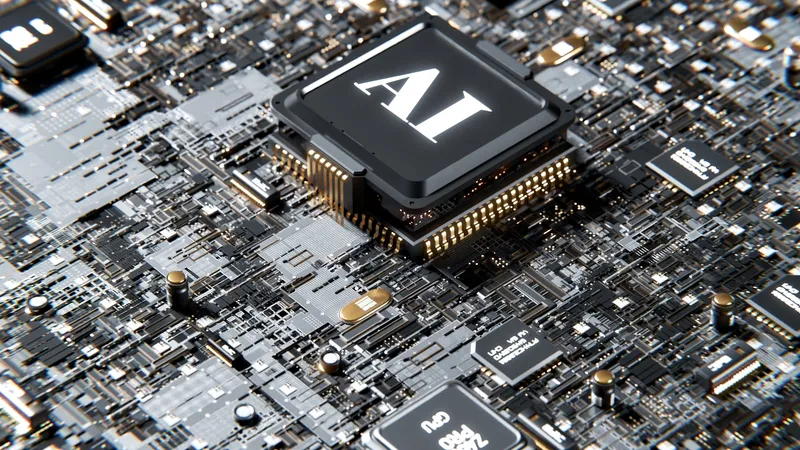
ChatGPT Goes Live: The 5 Days That Shook the World
November 30, 2022. One million users in five days. The AI revolution had a face and it could talk.
- Company
- OpenAI
- Year
- November 30, 2022
- Category
- AI
- Users in first 5 days
- 1 million
- Reached 100M users
- ~2 months
- Funding raised (to date)
- $13B+
WOW Score
On November 30, 2022, a small research preview quietly appeared on the internet. Within days, millions of people were asking it questions. Within months, schools, businesses, governments, and software companies were changing the way they worked.
It wasn't just another app. It marked the beginning of a new era where talking to a computer became as natural as talking to another person. This is the story of ChatGPT.
"The moment an AI could hold a conversation, everything education, work, creativity became negotiable."
Within 18 months, every major tech company restructured around AI. A generation of developers recalibrated what they were building toward. The workforce implications reshaped policy and law across six continents. The question 'what is human?' became, for the first time in history, genuinely uncertain.
The Full Story
Before ChatGPT: The Long Road to Conversational AI
Artificial intelligence had existed for decades before ChatGPT. Researchers dreamed of machines that could understand language, solve problems, and assist humans. Early chatbots like ELIZA in the 1960s could imitate conversation using simple rules, but they didn't actually understand language. Over the following decades, AI advanced through machine learning, bigger datasets, and more powerful computers. The real breakthrough came with large language models based on the Transformer architecture introduced in 2017. These models learned patterns from enormous amounts of text instead of relying on hand-written rules.
OpenAI's Mission
OpenAI was founded in 2015 with an ambitious goal: ensure that artificial general intelligence benefits all of humanity. The organization invested heavily in language models, and each generation became noticeably better GPT (2018), GPT-2 (2019), GPT-3 (2020), and InstructGPT (2022). Every version made AI more useful. But something was still missing. People needed a simple way to interact with it.
November 30, 2022: The Launch That Shocked the World
On November 30, 2022, OpenAI released ChatGPT as a free research preview. There was no massive advertising campaign and no expensive Super Bowl commercial people simply started trying it. Within hours, social media filled with examples of ChatGPT writing essays, explaining science, creating poems, debugging code, and answering complex questions. The internet had never seen software spread this quickly.
The First Million Users
Most internet products grow slowly. ChatGPT didn't. It reached one million users in just five days, making it one of the fastest-growing consumer applications ever at the time. Teachers were amazed, students were excited, and programmers discovered it could help write code. Writers used it for brainstorming, and businesses began imagining entirely new workflows. The conversation around AI changed almost overnight.
Why ChatGPT Felt Different
Unlike traditional search engines, ChatGPT didn't simply provide a list of links it generated complete responses in natural language. People could ask follow-up questions, request simpler explanations, and change tone, format, or depth without starting over. For many users, this was their first experience of a computer that felt conversational rather than mechanical.
The Tech Industry Reacts
The launch triggered one of the biggest competitive shifts in technology in years. Major companies accelerated their AI strategies, search engines began integrating generative AI, and productivity software added AI assistants. Developers started building AI-powered tools into everything from customer support to software development. A technology that had largely been confined to research labs suddenly became a mainstream product category.
The Challenges
Success also brought difficult questions. People debated whether AI could replace jobs, whether students should use AI for homework, how to prevent misinformation, who owns AI-generated content, how AI should be regulated, and how models could become more reliable and safer. These debates continue today.
ChatGPT Evolves
Since its first release, ChatGPT has expanded well beyond text conversations. Capabilities have grown to include more capable reasoning models, image understanding, image generation, voice conversations, coding assistance, data analysis, research tools, custom GPTs and integrations, and enterprise and education offerings. Each generation has pushed conversational AI closer to becoming an everyday digital assistant.
Global Impact
The influence of ChatGPT now reaches nearly every profession. Students use it to learn, developers use it to write and review code, businesses automate repetitive work, researchers summarize papers, marketers create content, designers brainstorm ideas, and healthcare professionals explore administrative assistance. Millions of people now interact with AI as part of their daily routines.
The Turning Moment
Everything changed on one ordinary Wednesday. Not because AI was invented that day, and not because computers suddenly became intelligent but because, for the first time, ordinary people discovered they could simply talk to AI and get useful answers. The barrier between humans and computers became dramatically smaller, transforming AI from a research topic into a mainstream tool. Did you know that ChatGPT reached 1 million users in just 5 days, that GPT stands for Generative Pre-trained Transformer, that it began as a research preview rather than a finished product, and that millions of developers have since integrated OpenAI models into their own applications through APIs?
Lasting Legacy
The story of ChatGPT is still being written. Like the arrival of the web, smartphones, or cloud computing, its long-term impact will unfold over many years. Whether remembered as the beginning of a new computing era or simply the moment conversational AI entered everyday life, one fact is already clear: November 30, 2022, changed the relationship between humans and computers forever.
Related Turning Moments
Move 37: The Day an AI Became Creative
AlphaGo vs. Lee Sedol, 2016. A move no human would play. A move that won. The machine had begun to dream.
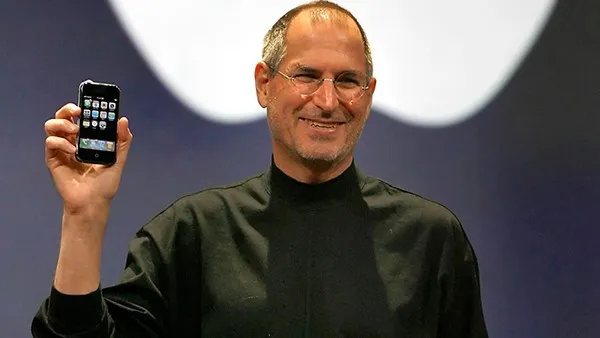
The Keynote That Killed the Keyboard
January 9, 2007. Steve Jobs held up a device and said three things. It was actually one thing. The room didn't understand yet but the phone industry was already over.