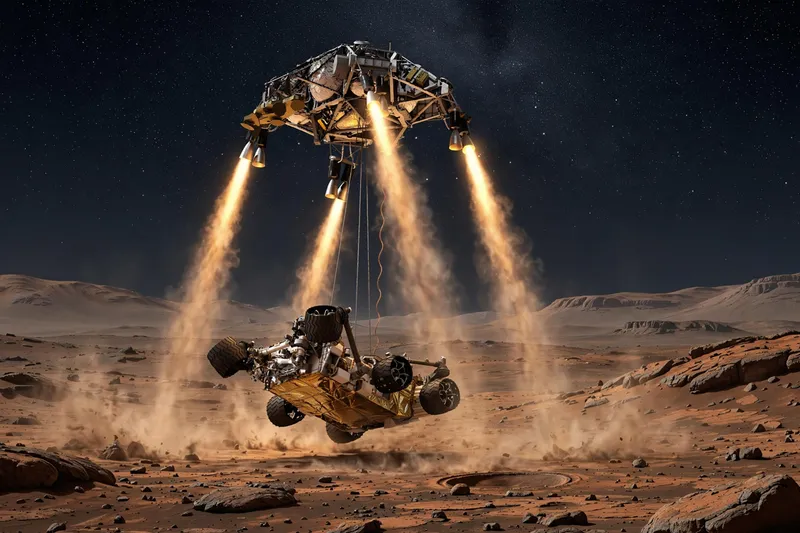
Mars Rover Landing: Seven Minutes of Terror
In 2012, a car-sized robot named Curiosity fell toward Mars at 21,000 km/h. For seven minutes, no one on Earth could help. Then a signal: 'Touchdown confirmed.'
WOW Score
In 2012, NASA's Curiosity rover landed in Mars' Gale Crater using a rocket-powered sky crane a maneuver so audacious it was nicknamed 'seven minutes of terror.'
The landing worked. A roving laboratory the size of a small car began reading the red planet's history, layer by layer, like a geologist's notebook.
"There is no joy in the control room until the dust settles and the signal comes: 'We are wheels-down on Mars.'"
Curiosity proved a nuclear-powered lab could roam another planet, confirming Mars once had conditions for life. It set the template for Perseverance and reshaped the search for life beyond Earth.
The Full Story
Why So Hard
Mars has an atmosphere thin enough not to slow a probe much, yet thick enough to burn it. There is no way to test the full landing on Earth. Engineers called the entry, descent, and landing sequence 'seven minutes of terror' because the whole thing happens faster than a signal can travel from Mars to Earth.
The Sky Crane
Rather than crash-land in airbags, Curiosity was lowered on cables by a rocket backpack that then flew off to crash elsewhere. It was a gamble no previous mission had tried at this scale. The alternative wheels on a dropped platform risked tipping the expensive rover.
Touchdown
At 05:17 UTC on 6 August 2012, the signal arrived: 'Touchdown confirmed. We're safe on Mars.' The control room erupted. Curiosity, powered by a plutonium generator, was built to last years and roam for kilometers.
What It Found
Curiosity confirmed that Gale Crater once held a lake with the chemistry to support microbial life: water, organic molecules, and energy sources. It showed Mars was once habitable not necessarily inhabited, but capable of it.
The Template
Curiosity's success cleared the way for Perseverance (2021) and its helicopter Ingenuity, the first aircraft to fly on another world. Together they turned Mars from a point of light into a place we are learning to explore, step by wheeled step.
Related Turning Moments
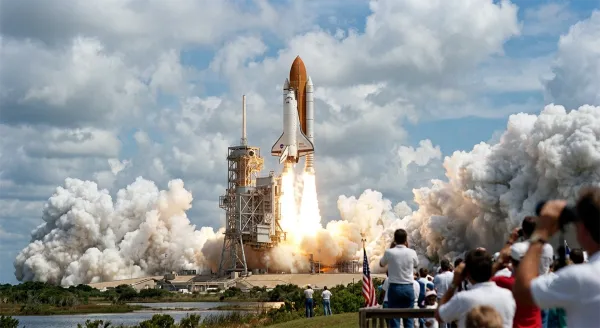
Hubble Telescope Launch: A Clouded Eye That Learned to See
In 1990, a school-bus-sized telescope rose into orbit then sent back blurred pictures. The most ambitious eye on the universe had been built with a flawed mirror.
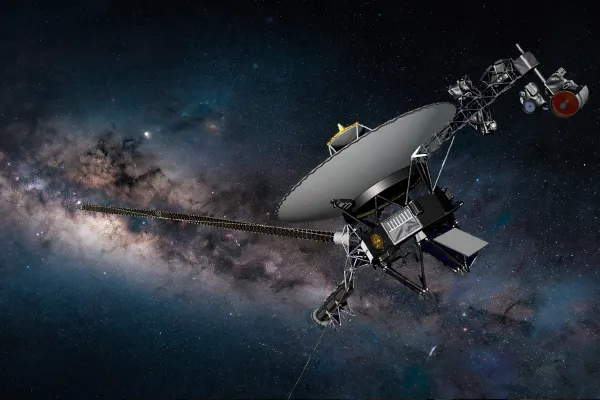
Voyager Leaves the Solar System: A Message in the Dark
Launched in 1977, two probes toured the planets and kept going. In 2012, Voyager 1 crossed into interstellar space the first human-made object to leave the Sun's realm.
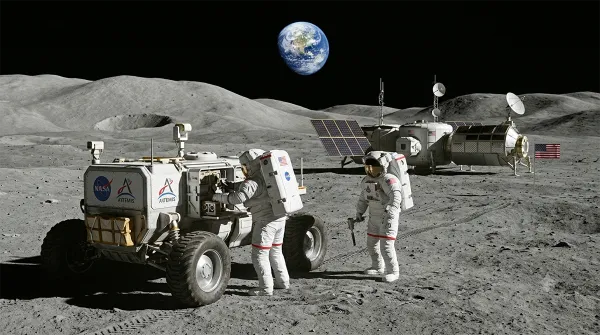
The Artemis Program: Returning to the Moon to Stay
More than half a century after Apollo, a new program aims not for a flag and footprints but a lasting presence and this time, the first woman and first person of color will walk the Moon.