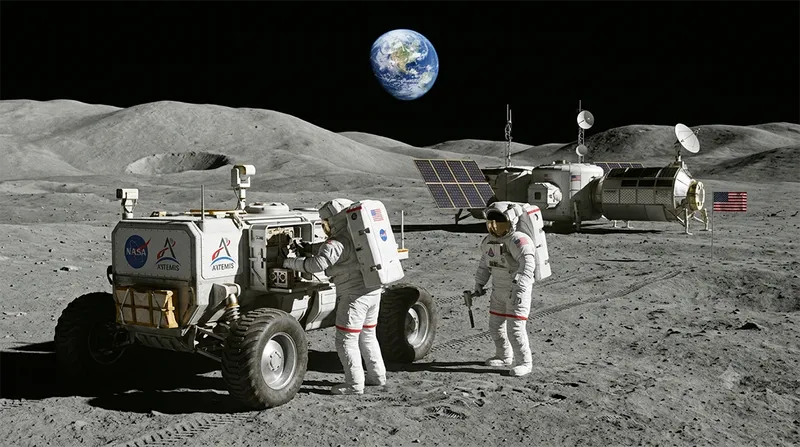
The Artemis Program: Returning to the Moon to Stay
More than half a century after Apollo, a new program aims not for a flag and footprints but a lasting presence and this time, the first woman and first person of color will walk the Moon.
WOW Score
In 2022, NASA's Artemis 1 sent an uncrewed Orion capsule around the Moon and back, opening a new era named for Apollo's twin sister.
Unlike Apollo's sprint, Artemis is built to linger to build a gateway station, a south-pole base, and to use the Moon as a stepping stone to Mars.
"Apollo proved we could go. Artemis is built to prove we can stay and from the Moon, reach for Mars."
Artemis revives crewed lunar exploration with international and commercial partners, targets a south-pole base, and is explicitly the proving ground for the first human missions to Mars.
The Full Story
A New Name, A New Goal
Announced in 2017, Artemis inherits Apollo's ambition but inverts its logic. Apollo raced to win a race and come home. Artemis is a sustained program: orbit the Moon, land, and stay, with allies and private companies sharing the load.
The Hardware
Artemis leans on the Space Launch System the most powerful rocket NASA has flown and the Orion crew capsule. A lunar Gateway station will orbit the Moon, while commercial landers, including ones built by SpaceX, will carry astronauts down to the surface.
Who Goes
Artemis promises the first woman and the first person of color on the Moon, alongside international partners from Europe, Japan, and Canada. The crewed landing, Artemis 3, targets the south pole the same water-rich region India reached with Chandrayaan-3.
Why the Pole
As Chandrayaan's discoveries showed, the south pole likely holds water ice. A base there could support long stays and fuel production. Artemis is, in part, a contest over the most useful ground off Earth conducted, this time, under new international accords.
The Mars Bridge
NASA frames the Moon as a training ground: learn to live and work off Earth, then push to Mars. Whether Artemis meets its ambitious schedule or not, its aim is historic not a visit, but a human foothold beyond our planet, maintained for generations.
Related Turning Moments
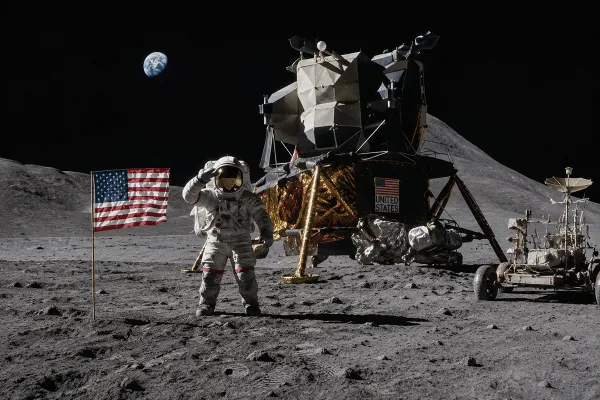
Apollo 11 Moon Landing: One Small Step, One Giant Leap
On 20 July 1969, half a billion people held their breath as a fuzzy black-and-white image showed a boot pressing into lunar dust. Humanity had left its home planet.

International Space Station Begins: A Lab Above the Nations
In 1998, pieces launched from rival superpowers met in orbit and were bolted together by hand. The cold War's enemies built a home in the sky.
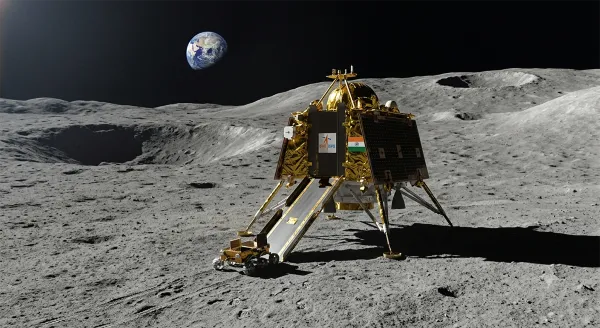
Chandrayaan-3: India Lands at the Moon's South Pole
On 23 August2023, a nation of 1.4 billion held its breath as a lander touched down in the Moon's unexplored south. Only one country had ever done what came next and it was India.