Penicillin Discovered: The Mould That Conquered Death
A forgotten petri dish, a contaminated mess, and a scientist with the eyes to see it. In 1928, a stray mould began killing bacteria and changed medicine forever.
WOW Score
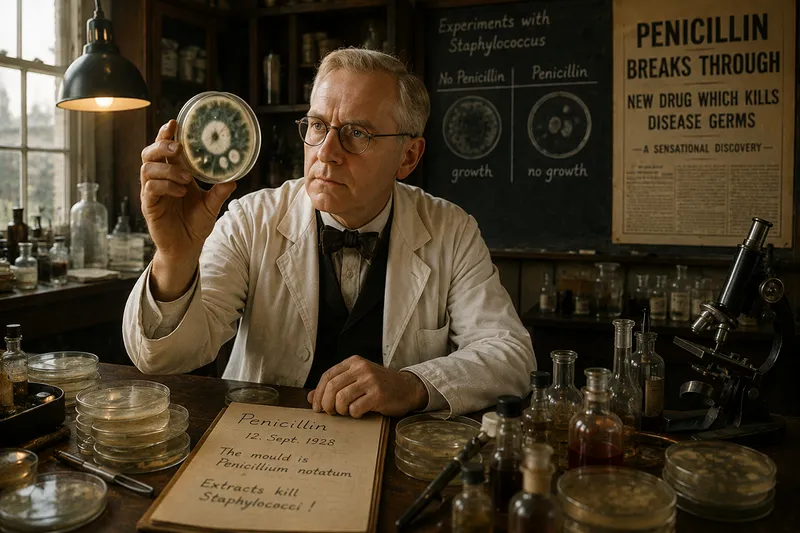
In 1928, Alexander Fleming returned from holiday to find a petri dish of bacteria contaminated by a blue-green mould. Where the mould grew, the bacteria had vanished.
He rightly suspected he'd found something extraordinary. But it took more than a decade and a world war for others to turn that accident into the drug that conquered infection.
"The penicillin mould had not only stopped the bacteria it had dissolved them. Fleming had stumbled on nature's own antibiotic."
Penicillin launched the antibiotic age, turned once-fatal infections into minor annoyances, saved countless lives in World War II, and added decades to human life expectancy. It also began the race against resistance we still run today.
The Full Story
The Contaminated Dish
Fleming, a notoriously messy lab worker, left Staphylococcus cultures stacked in his London lab before a holiday. A spore of Penicillium mould drifted in through an open window. On his return he noticed a clear halo around the mould where bacteria could not grow. Most would have tossed the ruined dish. Fleming studied it.
A Powerful, Gentle Poison
Fleming found the mould's 'juice' killed a wide range of dangerous bacteria yet was surprisingly non-toxic to animals. He named the substance penicillin and published his finding in 1929 but he could not purify or stabilize it in useful quantities, and the medical world largely ignored it.
Oxford Picks Up the Thread
A decade later, Howard Florey, Ernst Chain, and their Oxford team cracked the real problem: isolating penicillin in a usable form. By 1941 they had enough to treat a patient, whose infection dramatically improved before supplies ran out. The result was undeniable.
The Wartime Miracle
With World War II raging, the Allies raced to mass-produce penicillin. Deep-tank fermentation in the United States scaled output from teaspoons to tons. Wounded soldiers who would have died of infection survived. By 1945 it was a household word, and Fleming, Florey, and Chain shared the Nobel Prize.
The Age of Antibiotics
Penicillin opened the entire antibiotic era. Routine surgery, childbirth, and chemotherapy became far safer. Life expectancy climbed. Yet Fleming himself warned early that overuse would breed resistant strains the very crisis of antibiotic resistance that threatens us now.
Related Turning Moments
Einstein's Theory of Relativity: The Year a Clerk Rewrote Time
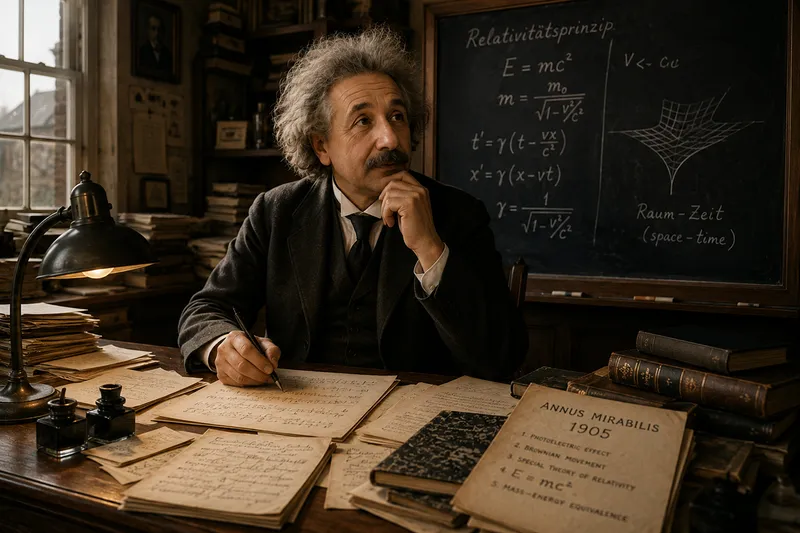
In 1905, a 26-year-old patent clerk with no university job published four papers that shattered Newton's universe. One of them said time itself is not absolute.
The First Heart Transplant: A Strange New Rhythm in a Stranger's Chest
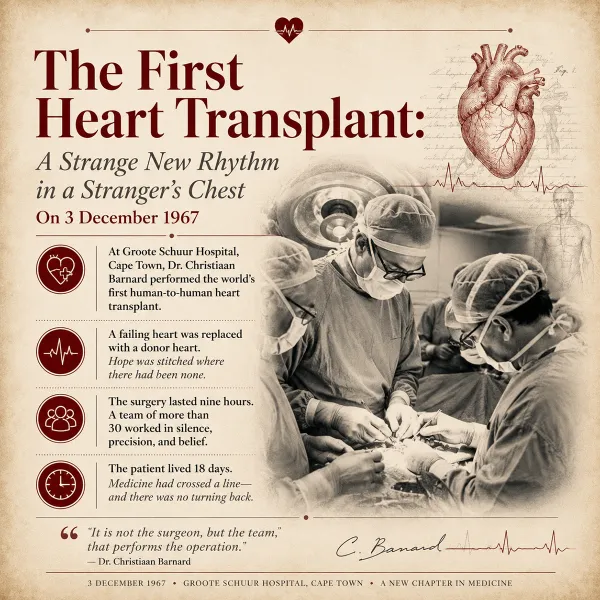
On 3 December 1967, a surgeon in Cape Town moved a beating heart from one man's chest into another's. Medicine crossed a line it could never uncross.
The Birth of IVF: Making Life Where Nature Couldn't
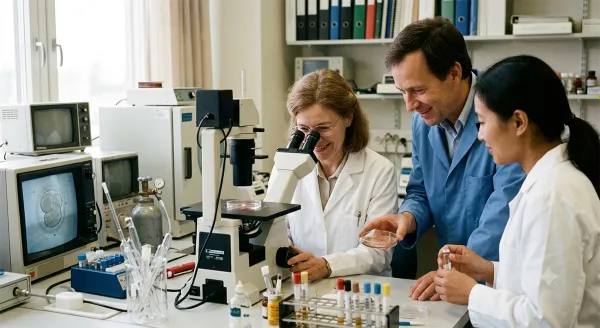
For decades, childless couples were told simply to accept it. Then two biologists learned to fertilize a human egg in a glass dish and opened a door millions walk through today.