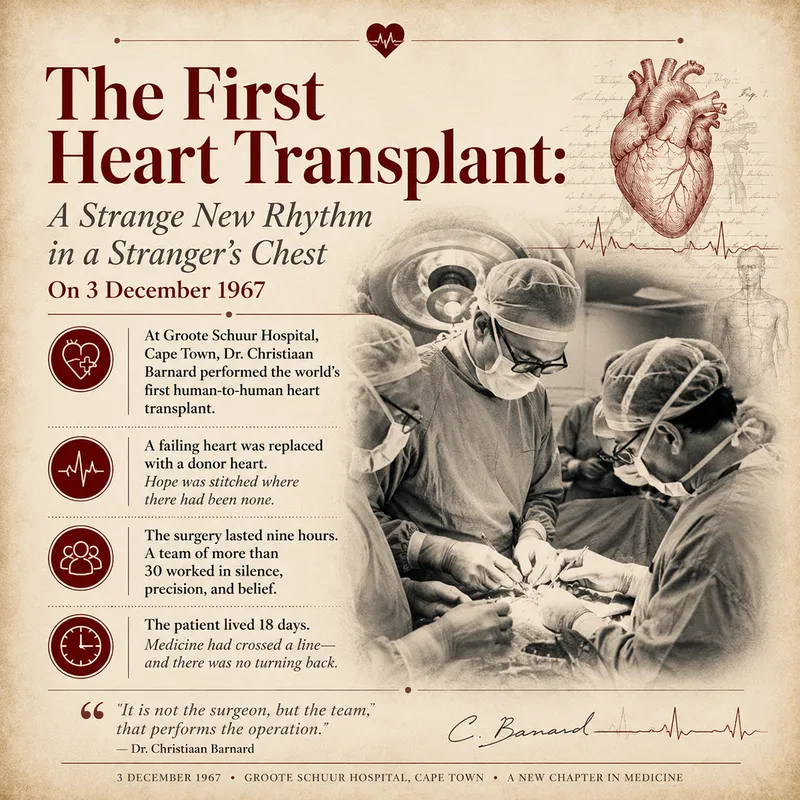
The First Heart Transplant: A Strange New Rhythm in a Stranger's Chest
On 3 December 1967, a surgeon in Cape Town moved a beating heart from one man's chest into another's. Medicine crossed a line it could never uncross.
WOW Score
In 1967, Christiaan Barnard transplanted the heart of a fatal crash victim into Louis Washkansky, a dying grocer. The heart beat. The world held its breath.
The patient lived only 18 days, but the barrier was broken. Surgeons everywhere now knew it could be done and rushed to do it better.
"For the first time, a human being was kept alive by the heart of another and the world realized the self was not quite where it thought."
The first successful heart transplant launched modern transplant surgery, organ-donation systems, and anti-rejection drugs. Thousands now live for years on donated hearts, and the ethical map of medicine was redrawn forever.
The Full Story
A Surgeon Ready for the Impossible
Christiaan Barnard, a gifted and ambitious South African surgeon, had spent years mastering the techniques of stopping and restarting hearts. Animal heart transplants had succeeded in labs. Barnard believed the moment for a human attempt had come if a donor and a dying recipient aligned.
The Operation
On 3 December 1967, Denise Darvall was declared brain-dead after a car crash; her father consented to donate her heart. Barnard removed Washkansky's failing heart and sewed in the donor heart. It began to beat on its own. The nine-hour operation made medical history and flung Barnard onto the front pages of every newspaper on Earth.
Eighteen Days
Washkansky survived 18 days. He died not from the heart but from pneumonia, a complication of the powerful immune-suppressing drugs needed to stop his body rejecting the foreign organ. The result was sobering but proof of concept was absolute. A human could live, briefly, on another's heart.
A Global Stampede
Within a year, hospitals worldwide attempted heart transplants. Early results were poor until the drug cyclosporine, in the 1980s, tamed rejection. Survival stretched from weeks to years to decades. Transplant centers, donor registries, and the very idea of the 'gift of life' became fixtures of modern medicine.
The Question of the Self
Beyond the science, the transplant unsettled philosophy and faith. If your heart long a symbol of identity and feeling comes from a stranger, what are you? Barnard's operation forced humanity to reconsider where the self resides, even as it gave thousands a second chance at life.
Related Turning Moments
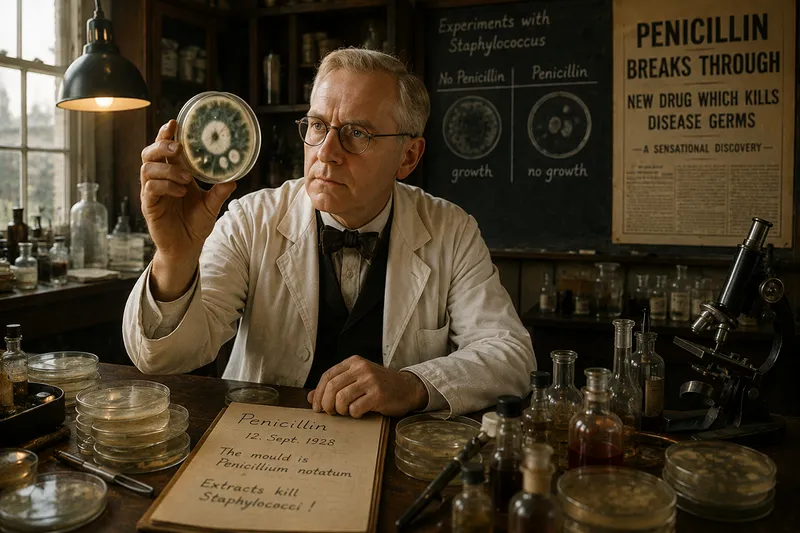
Penicillin Discovered: The Mould That Conquered Death
A forgotten petri dish, a contaminated mess, and a scientist with the eyes to see it. In 1928, a stray mould began killing bacteria and changed medicine forever.
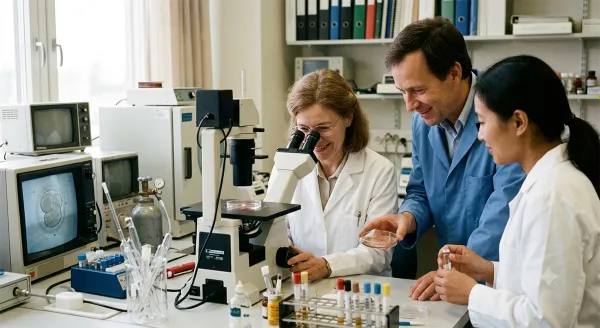
The Birth of IVF: Making Life Where Nature Couldn't
For decades, childless couples were told simply to accept it. Then two biologists learned to fertilize a human egg in a glass dish and opened a door millions walk through today.
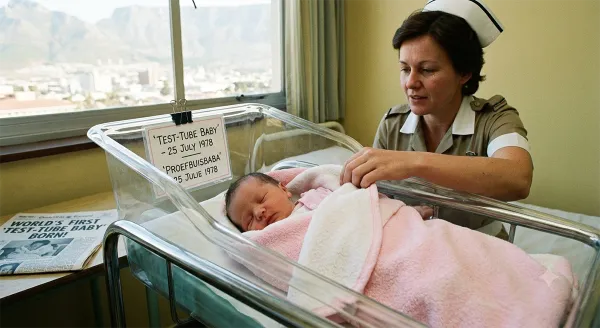
The First Test-Tube Baby: A New Life Begins in a Dish
On 25 July 1978, a baby girl was born who had been conceived not in a womb but in a glass dish. The world called her a 'test-tube baby' and a silent revolution began.