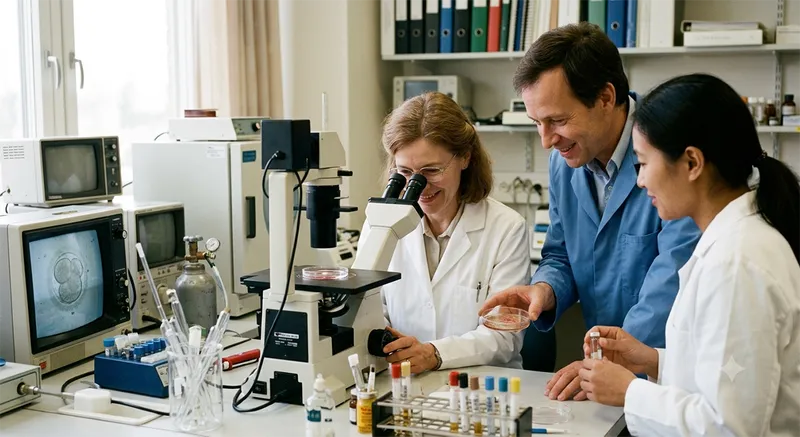
The Birth of IVF: Making Life Where Nature Couldn't
For decades, childless couples were told simply to accept it. Then two biologists learned to fertilize a human egg in a glass dish and opened a door millions walk through today.
WOW Score
Through the 1950s and 60s, physiologists Robert Edwards and Patrick Steptoe pursued a heresy: fertilizing a human egg outside the body, then returning it to the womb to grow.
After years of failure and fierce criticism, their method worked. The first IVF child was born in 1978 proof that a new life could begin not in the body, but in a laboratory dish.
"The technique was called 'test-tube baby,' whispered with fear. It turned out to be one of the gentlest revolutions medicine ever made."
In-vitro fertilization gave infertile couples a path to parenthood, spawned the entire fertility industry, and raised enduring questions about embryos, surrogacy, and the boundaries of making life. Over 8 million IVF babies have been born.
The Full Story
An Idea Others Avoided
Robert Edwards, a Cambridge physiologist, became obsessed with human fertilization in the lab. Patrick Steptoe, a surgeon, contributed the laparoscope to retrieve eggs safely. Funding agencies were wary and the public uneasy, but the two persisted through a decade of setbacks.
The Hard Problems
They had to coax eggs to mature, time fertilization precisely, and culture the embryo long enough to survive transfer into the mother. Many attempts failed. Religious leaders and ethicists warned of 'artificial humans.' Edwards pressed on, convinced the reward a cure for infertility outweighed the fears.
Louise Brown
On 25 July 1978, Lesley Brown gave birth in Oldham, England, to Louise the first human conceived outside the body. The press called her a 'test-tube baby.' She was, in fact, a healthy child conceived in a dish and carried in a womb like any other. The phrase stuck; the stigma slowly faded.
A Quiet Industry Is Born
IVF spread rapidly. Techniques improved: hormone stimulation, freezing, intracytoplasmic sperm injection, and preimplantation genetic testing. What was once a single impossible birth became a routine medical procedure offered worldwide, helping millions of families.
The Questions It Raised
IVF forced societies to legislate the unlegislated: the status of embryos, the ethics of selection, the limits of surrogacy and egg donation. Edwards received the Nobel Prize in 2010. The revolution he began is still unfolding and still asking us what making life should mean.
Related Turning Moments
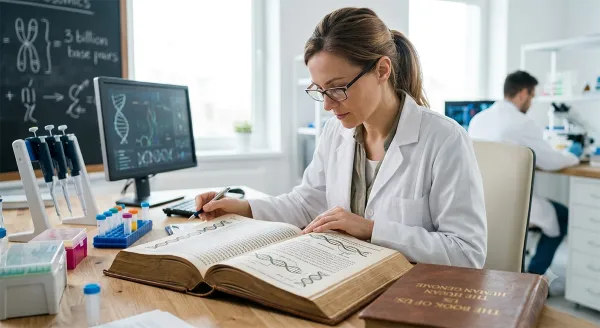
The Human Genome Project: Reading the Book of Us
It took 13 years, billions of dollars, and an international army of scientists to spell out the 3 billion letters of human DNA. In 2003, we finally read ourselves.
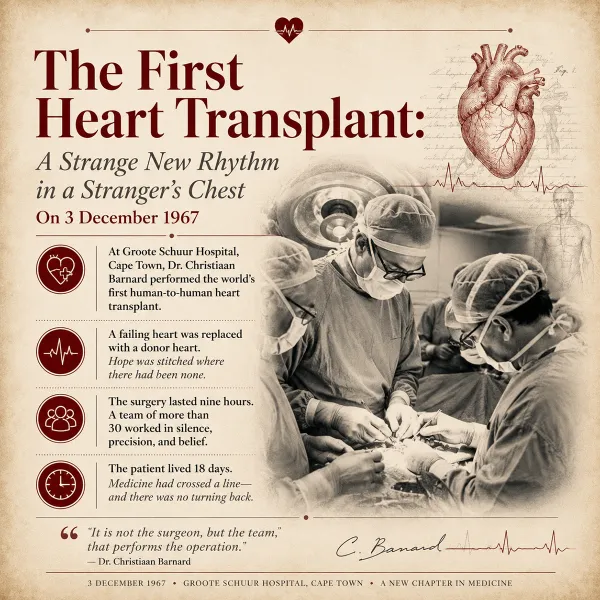
The First Heart Transplant: A Strange New Rhythm in a Stranger's Chest
On 3 December 1967, a surgeon in Cape Town moved a beating heart from one man's chest into another's. Medicine crossed a line it could never uncross.
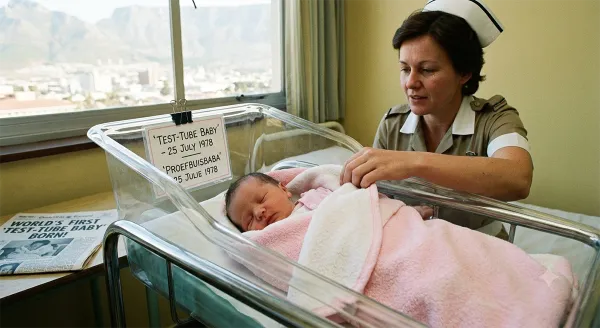
The First Test-Tube Baby: A New Life Begins in a Dish
On 25 July 1978, a baby girl was born who had been conceived not in a womb but in a glass dish. The world called her a 'test-tube baby' and a silent revolution began.