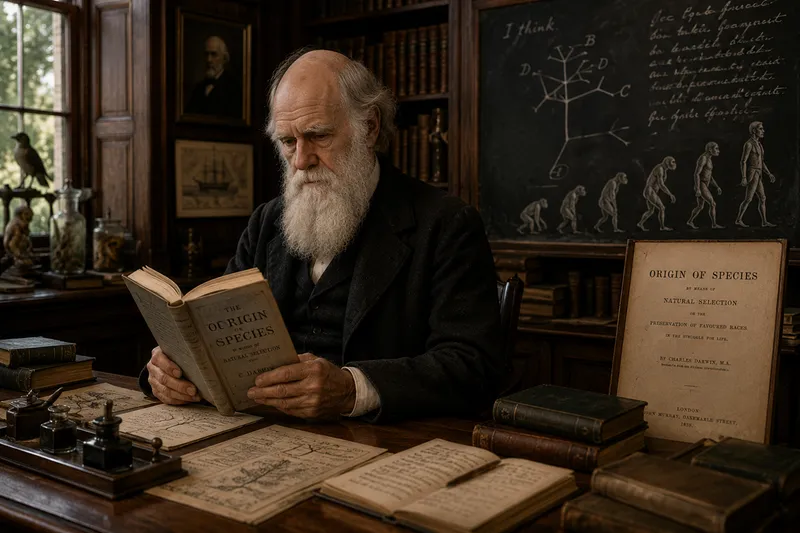
Darwin Publishes Evolution: The Book That Moved Humans Off the Pedestal
After 20 years of silence, a shy naturalist published a single book that explained where every living thing comes from and changed how humanity sees itself forever.
WOW Score
In 1859, Charles Darwin finally published the idea he had feared for two decades: that species are not fixed, but change over time through natural selection. The first print run sold out on day one.
It was not just a theory about finches. It was a new story of life itself one that placed humans inside nature rather than above it, and that scientists still build upon today.
"Natural selection needs no designer. From the war of nature, from famine and death, the highest result we can conceive the production of higher animals directly follows."
On the Origin of Species gave biology a unifying theory, reshaped religion and philosophy, founded modern genetics and medicine, and still frames debates about creation, race, and climate. Evolution is now the organizing principle of all life science.
The Full Story
The Voyage of the Beagle
From 1831 to 1836, Darwin sailed the world as a naturalist aboard HMS Beagle. In the Galápagos Islands he noticed that finches on different islands had subtly different beaks, shaped to their food. The puzzle lodged in his mind: perhaps species adapted to their environments and gradually diverged into new forms.
Twenty Years of Doubt
Darwin grasped the mechanism of evolution early but delayed publishing. He knew the idea would enrage religious authorities and disturb the public. He spent decades gathering evidence on pigeons, barnacles, and fossils building a case so exhaustive that it could not be dismissed as a hunch.
Natural Selection
The core idea is simple and brutal: organisms produce more offspring than can survive; those with traits better suited to their environment leave more descendants; over immense time, this 'selects' for change. No intelligence guides it. Tiny advantages accumulate, and species transform. Darwin called it 'descent with modification.'
The Day It Dropped
Urged partly by a rival essay from Alfred Russel Wallace, Darwin published On the Origin of Species in November 1859. The 1,250 copies sold out immediately. Reviews were fierce but fascinated. Within a generation, the scientific community had accepted evolution even if the mechanism of heredity remained mysterious until genetics arrived.
Why It Still Echoes
Evolution became the backbone of biology: medicine, agriculture, virology, and conservation all depend on it. It also unsettled humanity's self-image, sparking arguments about science and faith that continue worldwide. Darwin never claimed to explain the origin of life only its branching, ever-changing tree. That tree, geneticists later proved, includes us.
Related Turning Moments
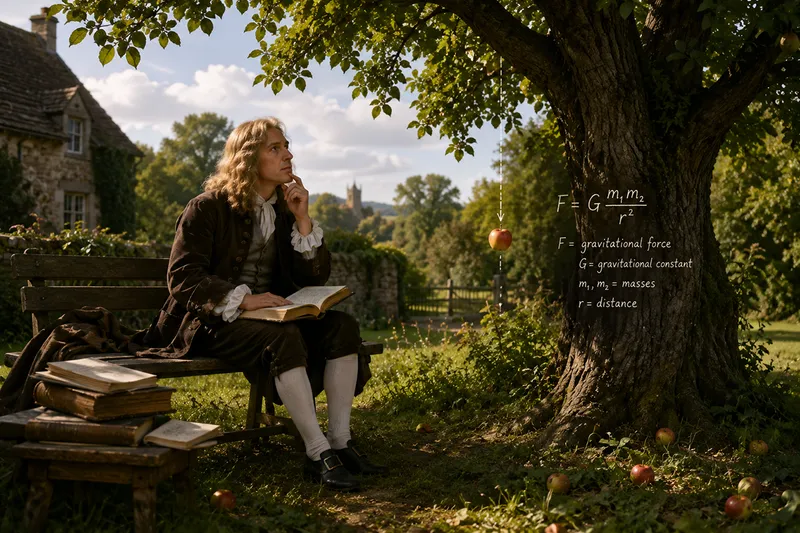
Newton Discovers Gravity: The Apple That Fell on All of Science
A fallen apple. A young scholar in isolation. In a single year of plague, Isaac Newton rewrote the rules of the universe and we've been living under them ever since.
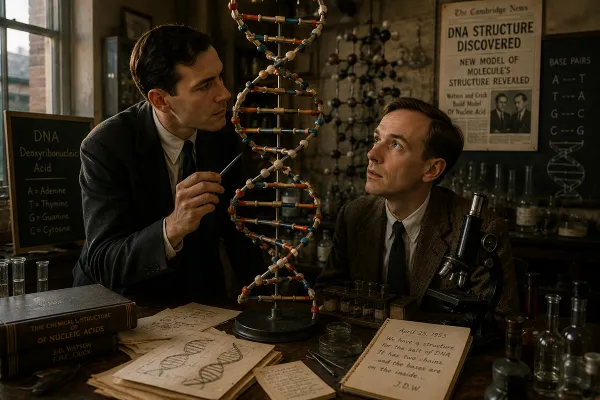
The DNA Double Helix: The Spiral That Spelled Life
In 1953, two young scientists pieced together a twisted ladder from scattered data and suddenly humanity could read the instruction book of every living thing.

CRISPR Gene Editing: Life's Own Word Processor
A bacterial immune system, repurposed by scientists, became a find-and-replace tool for DNA. In 2012, we learned to edit the code of life itself.