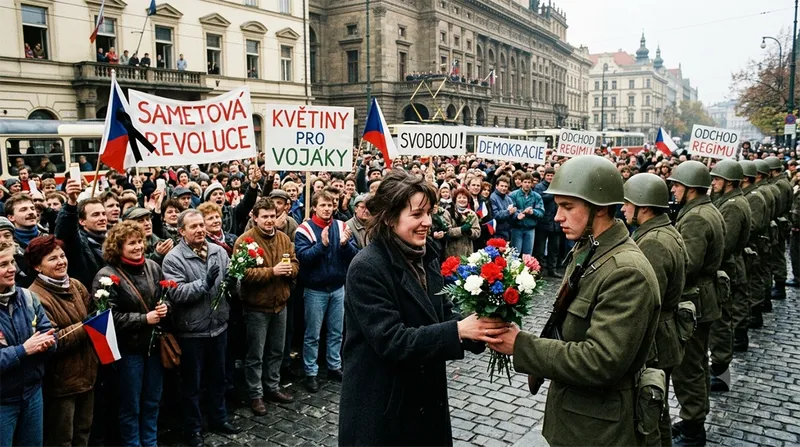
The Velvet Revolution: How Czechoslovakia Beat a Regime With Flowers
In 1989, a police baton charge against student protesters backfired so completely that a communist state dissolved without a shot.
WOW Score
By late 1989, the Soviet empire was crumbling, and Czechoslovakia's hardline regime looked increasingly like a relic.
When police beat peaceful student marchers in Prague, the brutality lit a fuse: hundreds of thousands poured into the streets for weeks.
Within six weeks, the communists handed over power and the playwright Václav Havel became president.
"No guillotine, no civil war just a nation that decided, together, that the regime was already dead."
The Velvet Revolution ended four decades of communist rule in Czechoslovakia and helped topple the Eastern Bloc. It restored democracy, later split peacefully into the Czech Republic and Slovakia, and became the model for nonviolent change that inspired movements from the Baltics to Tahrir Square.
The Full Story
A Relic Out of Time
Czechoslovakia was the most stubborn holdout of the Eastern Bloc, ruled since 1968 by a regime that had crushed its own reforms with Soviet tanks. But Moscow's Mikhail Gorbachev had signaled he would not intervene again, and Poland and Hungary were already loosening. The Prague leadership was isolated and out of step with a continent in motion.
The Spark
On November 17, 1989, a student march commemorating a Nazi massacre was met with a violent police charge. Rumors that a student had been killed false, but believed exploded across the country via word of mouth and nascent independent media. Instead of intimidating people, the beatings radicalized them; the next day, theatres and universities went on strike.
Civic Forum
Opposition groups coalesced into Civic Forum, a broad, nonviolent umbrella led by the dissident playwright Václav Havel. Their demands were simple: truth, freedom, and the resignation of the government. Nightly demonstrations in Prague's Wenceslas Square drew hundreds of thousands, while workers and institutions switched sides in a matter of days.
The General Strike
A two-hour general strike on November 27 united the nation in a stunning display of coordination factories, schools, and offices all stopped at once. The regime understood the game was over. Negotiations began, the monopoly on power was surrendered, and the communist leadership resigned. Not a single life was lost in the transfer.
Havel and the Hour of Truth
In December, the Federal Assembly elected Havel president a jailed playwright becoming head of state within weeks of dictatorship. His inaugural address called for a 'republic of citizens,' and the phrase 'truth and love must prevail over lies and hatred' captured the movement's gentle, moral force. The speed of the transformation stunned observers.
The Velvet Divorce
The revolution's calm set the tone for what followed. In 1993, Czechs and Slovaks parted ways peacefully in the 'Velvet Divorce,' a split almost unheard of in a region scarred by ethnic war. The Velvet Revolution proved that regimes resting on fear could collapse the moment enough people simply withdrew their cooperation a lesson that echoed across the globe.
Related Turning Moments
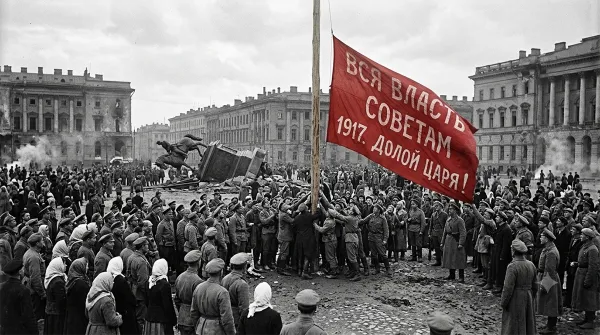
1917: The Year the Tsar Fell and the World Turned Red
In eight months a empire collapsed, a provisional government rose and fell, and Lenin's Bolsheviks seized history by the throat.
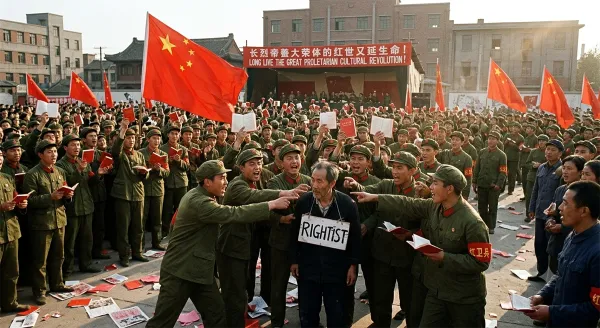
China's Cultural Revolution: When a Nation Turned on Itself
In 1966, Mao unleashed millions of young Red Guards to purge 'old ideas' and a decade of chaos swallowed a civilization.
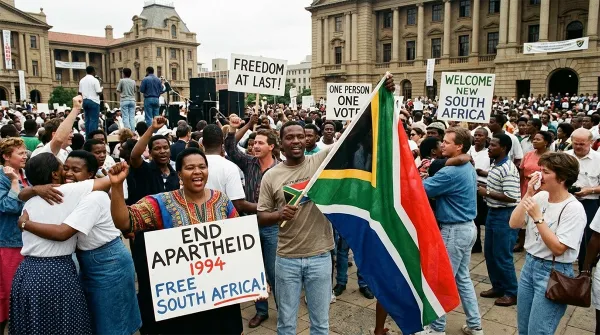
The Fall of Apartheid: How South Africa Chose Freedom Over Revenge
After decades of racial tyranny, a nation teetering on civil war instead held its first free election and embraced the enemy as a neighbor.