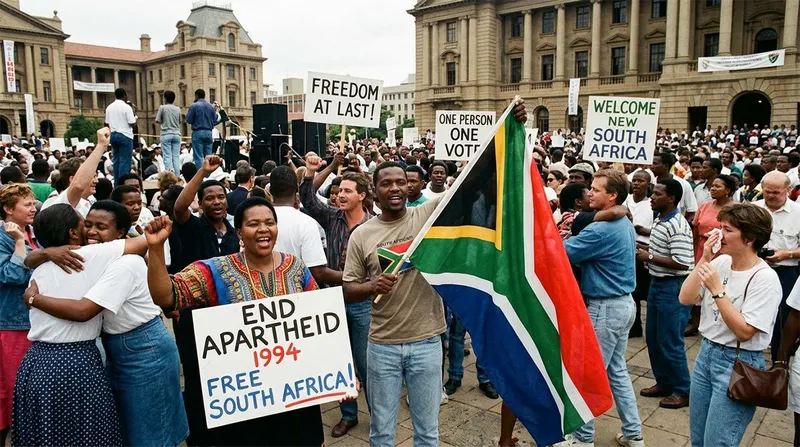
The Fall of Apartheid: How South Africa Chose Freedom Over Revenge
After decades of racial tyranny, a nation teetering on civil war instead held its first free election and embraced the enemy as a neighbor.
WOW Score
For nearly half a century, South Africa's white minority ruled twenty million Black citizens by law, force, and fear. By the 1980s, the system was rotting from sanctions, revolt, and isolation.
Rather than collapse into race war, leaders on both sides chose negotiation and a prisoner of 27 years became the symbol of a new nation.
On April 27, 1994, millions queued for hours to cast a vote that changed the world.
"They had every reason to settle scores. Instead, they built a rainbow nation."
The end of apartheid dismantled one of the 20th century's most notorious systems of racial domination and made Nelson Mandela the president of a free South Africa. It inspired a global model of truth and reconciliation, and showed that even the deepest injustices can be unwound without endless bloodshed.
The Full Story
A State Built on Race
From 1948, apartheid codified racial separation into every corner of life: where people could live, work, love, and learn. The African National Congress and other movements resisted, first peacefully and then, after the Sharpeville Massacre, through armed struggle. Decades of repression, imprisonment, and exile followed, with Mandela and others jailed for life on Robben Island.
The System Cracks
By the 1980s, apartheid was unsustainable. International sanctions bit, the economy stagnated, and township uprisings made the country ungovernable. President P.W. Botha's refusal to reform gave way to F.W. de Klerk, who in 1990 unbanned the ANC, freed Mandela, and opened talks. A regime built to last forever had decided to negotiate its own end.
Mandela Walks Free
When Mandela emerged from prison after 27 years, the world expected rage. Instead, he preached reconciliation and warned that Black South Africans 'should not be free merely to be free, but to enhance the freedom of all.' His dignity disarmed his enemies and gave the negotiation a moral center. The image of a 71-year-old former prisoner raising his fist became one of the defining photos of the century.
The Negotiated Revolution
Talks nearly collapsed amid violence much of it stoked by shadowy forces hoping to derail a settlement. But the ANC and the government pressed on, crafting a transitional constitution that protected minority rights while extending the franchise to all. It was a revolution conducted not in the streets alone but at the conference table, with compromise as the weapon.
Truth and Reconciliation
Rather than Nuremberg-style trials, South Africa chose a Truth and Reconciliation Commission, chaired by Archbishop Desmond Tutu, that traded amnesty for full disclosure of atrocities. The gamble was that acknowledging the past honestly would prevent an endless cycle of vengeance. Imperfect as it was, it let the new nation look forward instead of backward.
One Person, One Vote
On April 27, 1994, long lines formed before dawn as first-time voters, many elderly, cast ballots in the country's first universal suffrage election. The ANC won overwhelmingly, and Mandela became president in a government of national unity. The peaceful transfer of power ended apartheid and offered the world a rare example of a revolution that healed rather than devoured its own.
Related Turning Moments
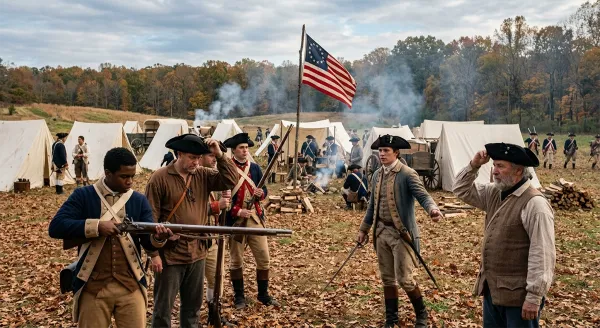
The Shot Heard Round the World: How Thirteen Colonies Beat an Empire
April 19, 1775. A ragtag militia faced the world's strongest army on a Massachusetts green and a rebellion that would birth a superpower began.
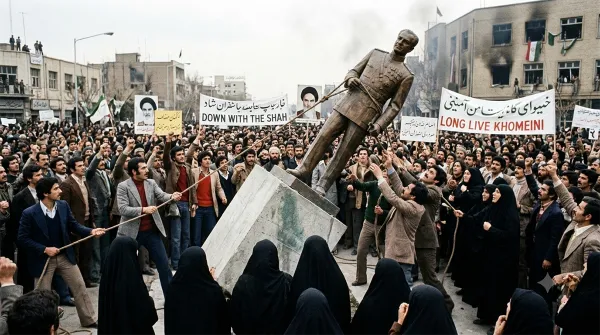
1979: The Iranian Revolution That Overturned a Shah
A modernizing monarchy, backed by the world's superpowers, was swept away in months by protesters and a cleric in exile.
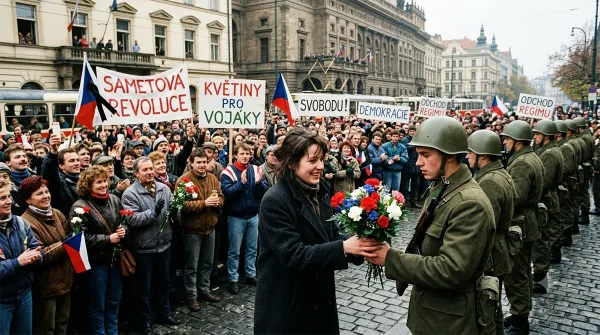
The Velvet Revolution: How Czechoslovakia Beat a Regime With Flowers
In 1989, a police baton charge against student protesters backfired so completely that a communist state dissolved without a shot.