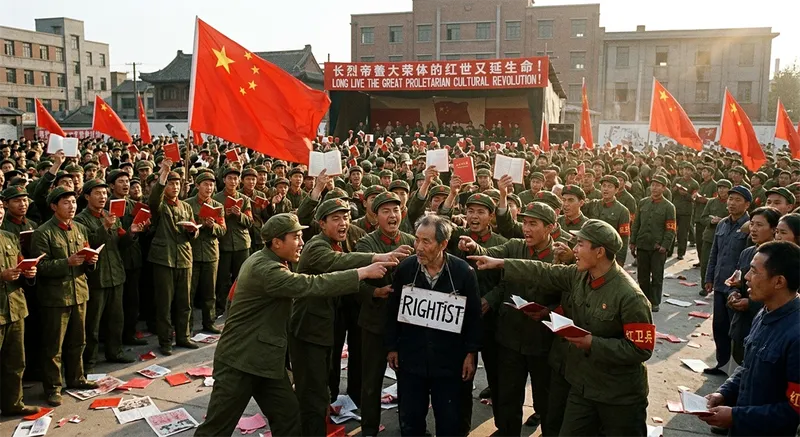
China's Cultural Revolution: When a Nation Turned on Itself
In 1966, Mao unleashed millions of young Red Guards to purge 'old ideas' and a decade of chaos swallowed a civilization.
WOW Score
By the mid-1960s, Mao Zedong feared his revolution was stalling and his rivals were winning. So he called on China's youth to tear the old world down.
Schools closed, temples were smashed, and neighbors denounced neighbors in the name of permanent revolution.
For ten years the world's most populous country convulsed until exhaustion forced it to stop.
"To destroy the old, a leader told the young to rebel and they did, against everyone."
The Cultural Revolution upended Chinese society, shattered education and cultural heritage, and left deep scars that still shape Chinese politics. Its failure pushed China's later leaders toward pragmatic economic reform, setting the stage for the country's dramatic reemergence as a global power.
The Full Story
A Chairman on the Sidelines
After the disasters of the Great Leap Forward, Mao had been partly sidelined by pragmatists like Liu Shaoqi and Deng Xiaoping. Convinced that Soviet-style 'revisionism' was creeping into China, Mao sought to reignite revolutionary fervor and reclaim dominance. The Cultural Revolution was his vehicle: a mass mobilization from above aimed at the Party itself.
The Red Guards
In 1966, students formed paramilitary 'Red Guards' who pledged to defend Mao and attack the 'Four Olds' old customs, culture, habits, and ideas. Encouraged by the authorities, they ransacked homes, burned books, defaced monuments, and humiliated teachers, officials, and intellectuals in public struggle sessions. A generation's education simply stopped.
Purges and Chaos
The movement spread beyond youth into factories and villages, where factional violence erupted between rival revolutionary groups. Senior leaders were denounced as 'capitalist roaders' and sent to the countryside. The army, under Lin Biao, became the ultimate arbiter. Estimates of those killed or driven to death range from hundreds of thousands to millions, with countless more imprisoned or displaced.
Rustication
As Red Guard violence spun out of control, the state shipped millions of urban youth 'down to the countryside' to learn from peasants. The policy drained the cities of unrest but traumatized a cohort who lost years of schooling and bore lifelong scars. For many, the experience bred deep disillusionment with the revolution's promises.
The End and the Aftermath
Mao's death in 1976 and the arrest of the 'Gang of Four' ended the decade of turmoil. The new leadership, led eventually by Deng Xiaoping, repudiated the Cultural Revolution as a catastrophe and shifted toward opening up and modernization. The episode became a cautionary core of modern Chinese governance a reason, its rulers argue, for stability over upheaval.
Scars That Linger
The Cultural Revolution destroyed irreplaceable art, archives, and temples, and shattered trust within families and communities. Its memory is tightly controlled in China today, where it serves both as a warning against disorder and as a reminder of how quickly mass idealism can curdle into terror. Few revolutions changed a society more completely or cost it more.
Related Turning Moments
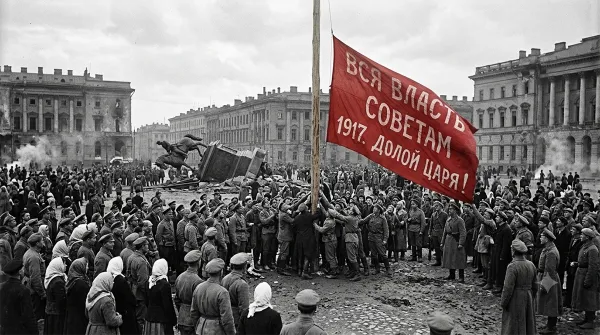
1917: The Year the Tsar Fell and the World Turned Red
In eight months a empire collapsed, a provisional government rose and fell, and Lenin's Bolsheviks seized history by the throat.
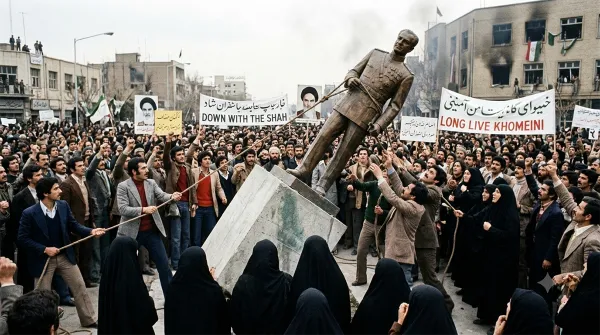
1979: The Iranian Revolution That Overturned a Shah
A modernizing monarchy, backed by the world's superpowers, was swept away in months by protesters and a cleric in exile.
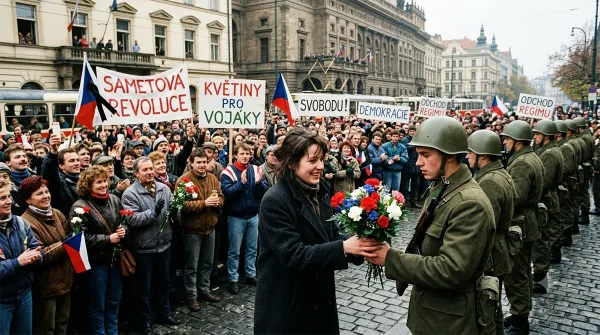
The Velvet Revolution: How Czechoslovakia Beat a Regime With Flowers
In 1989, a police baton charge against student protesters backfired so completely that a communist state dissolved without a shot.