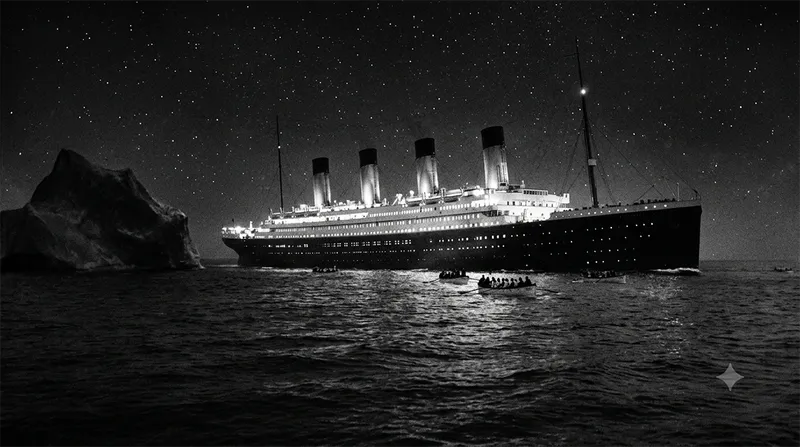
The Unsinkable Ship That Sank
April 15, 1912. The largest, most luxurious ship ever built struck an iceberg on its maiden voyage and disappeared in under three hours, taking 1,500 lives and the era's faith in progress with it.
WOW Score
RMS Titanic was proclaimed virtually unsinkable, with watertight compartments that, tragically, did not extend high enough to survive a long gash along the hull.
Sailing at near full speed through a field of ice that wireless operators had been warned about, it struck a berg at 11:40 p.m. The hull buckled open across five compartments, and the design's fatal limit was exceeded instantly.
Amid confusion, class divided survival: women and children in first class boarded boats first, while steerage passengers were locked below, and the 'unsinkable' myth drowned along with the ship.
"There were lifeboats for barely half the people on board, and the sea was so still that passengers thought the iceberg a minor bump until the water reached the stairs."
The disaster rewrote maritime law worldwide, mandated enough lifeboats for all, and created the International Ice Patrol and 24-hour radio watch, ending the age of cavalier confidence at sea.
The Full Story
A Ship of Its Age
Built by Harland and Wolff for the White Star Line, Titanic was a floating palace of steel, electric lights, and a telephone in every cabin. Its size, over 800 feet, and its owners' boasts of being unsinkable captured the self-assurance of an age that believed engineering had tamed the ocean.
Too Few Boats
The ship carried 20 lifeboats, enough for about 1,200 of the 2,200 aboard, because regulations were based on old tonnage formulas and because decks crowded with boats were considered unfashionable. The gap between the law and the reality was a death sentence waiting for a disaster.
The Ice Warnings Ignored
That night, the wireless operator was buried in passenger telegrams and let ice warnings from nearby ships go unread or unacted upon. Captain Smith, nearing retirement, held speed despite the calm, glassy seas that hid icebergs until too late. The conditions made the berg nearly invisible.
The Collision
Lookouts spotted the berg at the last moment; the ship turned but could not avoid a glancing blow that opened a 300-foot wound below the waterline. The design assumed any hit would be localized, yet the berg sliced across multiple compartments. The ship was doomed within minutes of contact.
Chaos in the Dark
As the bow sank, officers loaded lifeboats unevenly, some launching barely half full while hundreds remained on deck. The strictly enforced 'women and children first' rule, and the physical separation of steerage, meant survival tracked class and luck. The band played on as the list grew steep.
The Stern Rises
At 2:20 a.m., the lights went out and the stern lifted vertically before slipping beneath the surface. About 1,500 people died, most in the 28-degree water within minutes. The nearby Californian, warned by flares, had shut off its radio for the night and did not come.
A World Shaken
The disaster exposed the arrogance of an industrial age that had come to trust machines over caution. Inquiries in Britain and the United States produced rapid change: lifeboats for all, continuous radio watch, and an international patrol to track North Atlantic ice.
The Turning Moment
The turning point was the collision that the ship's own legend said could not happen. A single iceberg punctured not just a hull but the conviction that human ingenuity had conquered nature. After Titanic, no ship would ever again sail so sure of its own safety.
Lasting Legacy
Titanic became the 20th century's first great catastrophe and an enduring cultural touchstone. It forced a revolution in maritime safety still in force today, and it remains the cautionary tale of confidence outrunning prudence on the open sea.
Related Turning Moments
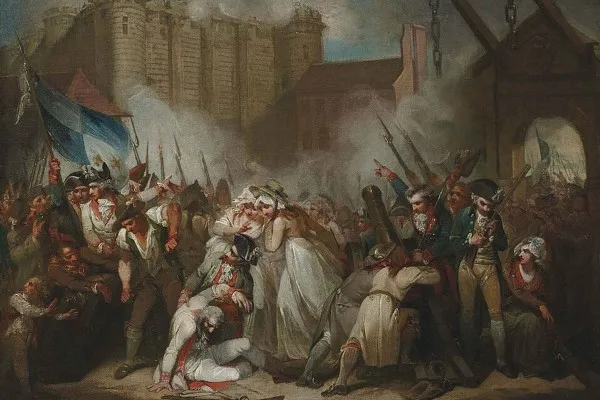
The Bastille: The Prison That Launched a Revolution
July 14, 1789. A Parisian mob stormed a medieval fortress looking for gunpowder and accidentally ignited the modern age.

The Shot Heard Round the World: How Thirteen Colonies Beat an Empire
April 19, 1775. A ragtag militia faced the world's strongest army on a Massachusetts green and a rebellion that would birth a superpower began.
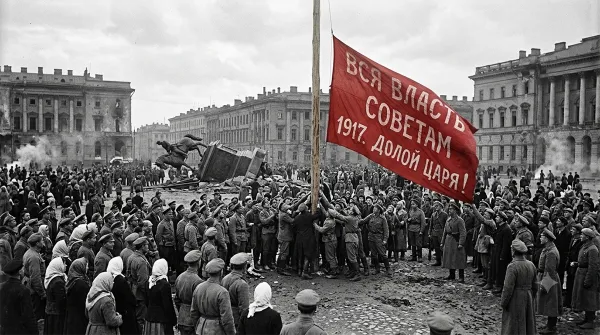
1917: The Year the Tsar Fell and the World Turned Red
In eight months a empire collapsed, a provisional government rose and fell, and Lenin's Bolsheviks seized history by the throat.