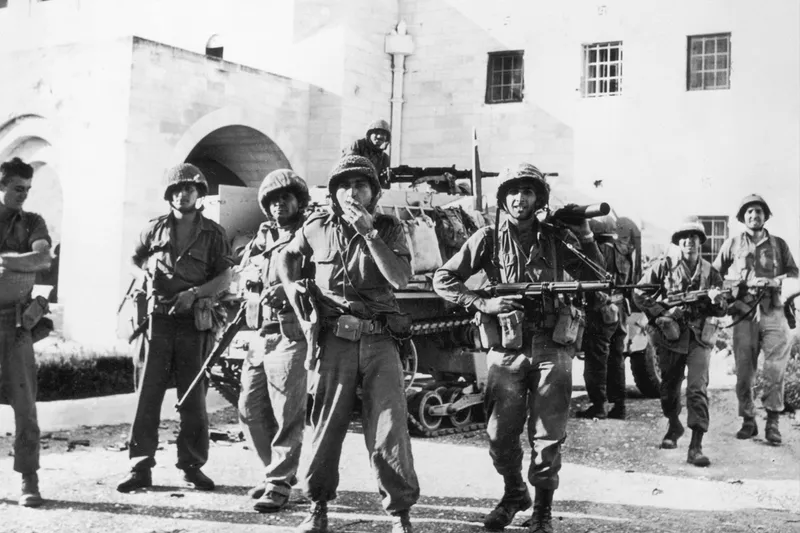
The Six-Day War
June 1967. In less than a week, Israel fought three Arab armies and redrew the Middle East. The map has not been the same since.
WOW Score
Facing imminent threat from Egypt, Jordan, and Syria, Israel launched a preemptive strike that wiped out the Egyptian air force on the ground in hours.
With air superiority, Israeli armor and paratroopers raced across Sinai, the West Bank, and the Golan, defeating armies that outnumbered them.
By June 10, the fighting ended. Israel had tripled its territory, and the conflict's unresolved questions still shape the region.
"In six days, a war that everyone expected to be long was over and the borders of the Middle East were rewritten."
The Six-Day War left Israel in control of the Sinai, Gaza, the West Bank, and the Golan Heights, creating the core territorial disputes of the Israeli-Palestinian conflict that persist today. It reshaped Arab politics and the region's alignment for decades.
The Full Story
A Region on a Knife's Edge
Tensions had built for years. In 1967, Egypt's Nasser expelled U.N. peacekeepers, closed the Straits of Tiran to Israeli shipping, and mobilized along the Sinai. With Arab armies massing and bellicose rhetoric rising, Israel judged that a first strike was a matter of survival rather than choice.
The Opening Knockout
On the morning of June 5, waves of Israeli jets hit Egyptian airfields in Operation Focus, destroying most of Egypt's air force in hours. Jordan and Syria then entered the war, and their air forces were similarly gutted. With the sky cleared, Israeli ground forces moved without fear of attack from above, the decisive advantage of modern war.
Three Fronts in Six Days
In Sinai, Israeli armor routed the Egyptians and reached the Suez Canal. In the east, paratroopers reunited Jerusalem and took the West Bank. In the north, the Golan Heights fell to a daring assault. Each front moved with speed that stunned the world and left Israel in control of territory far beyond its 1949 lines.
The Consequences That Linger
The war left Israel occupying the Sinai, Gaza, the West Bank, and the Golan Heights, and brought hundreds of thousands of Palestinians under Israeli rule. The Sinai was later returned for peace with Egypt, but the other territories remain at the heart of the conflict. The war also shattered Arab faith in pan-Arab unity and boosted Islamic movements.
The Turning Moment
Everything turned on the first hours of June 5, when Israel's strike erased the enemy air forces and seized the initiative for the entire war. A conflict everyone expected to last weeks or months was effectively decided in a single morning. The Six-Day War proved that in modern war, the first blow can be the last word.
Lasting Legacy
The Six-Day War created the territorial and political reality of the modern Middle East and the unresolved core of the Israeli-Palestinian conflict. Its borders, occupations, and peace treaties still define diplomacy in the region. Whether remembered as a stunning victory or the source of an enduring dispute, one fact is already clear: in June 1967, six days redrew the map of the Middle East.
Related Turning Moments
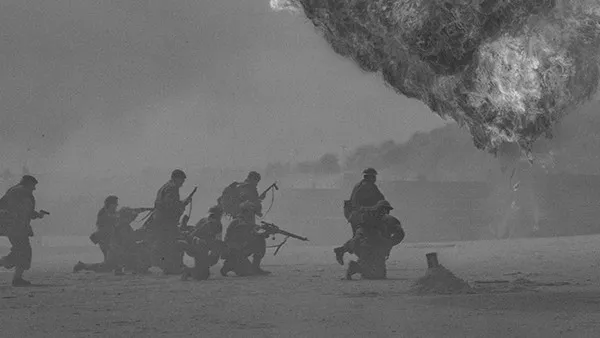
D-Day: The 24 Hours That Decided WWII
At 6:30 AM on June 6, 1944, the world held its breath as 156,000 Allied troops stormed five beaches into the unknown.
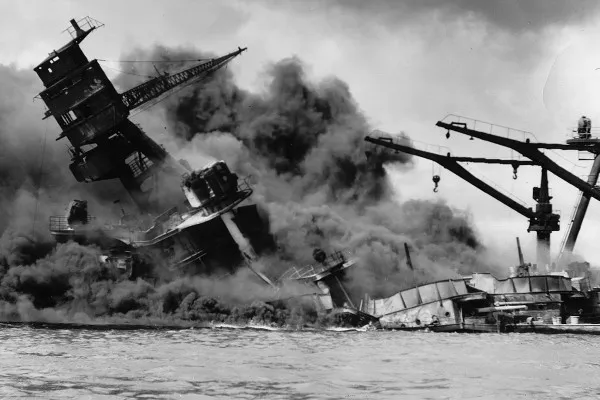
Pearl Harbor: The Morning That Drew America Into War
December 7, 1941. A date that lives in infamy. The attack that ended isolationism and changed the course of the 20th century.
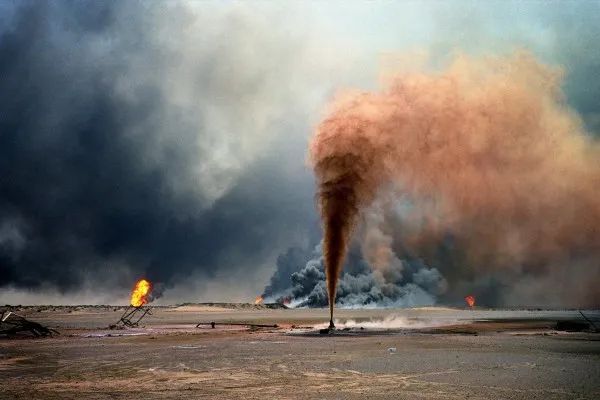
The Gulf War: The War the World Watched Live
January 17, 1991. For the first time, viewers at home watched missiles streak through the night on live television. War became a broadcast.