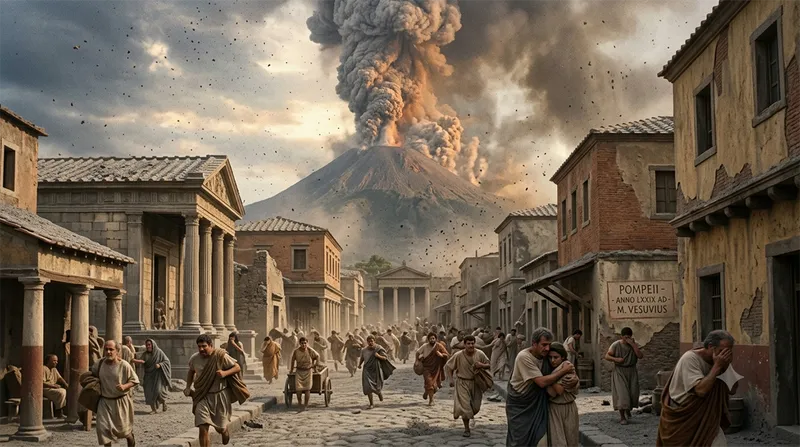
The Day Vesuvius Froze a City
August 79 AD. Mount Vesuvius erupted without warning and buried two Roman towns under meters of ash, preserving a snapshot of ordinary life for nearly two thousand years.
WOW Score
Vesuvius was not recognized as a volcano; its slopes were green and farmed, and the people of Pompeii had no word for the mountain's danger.
After days of minor quakes, the mountain exploded in a column of ash and pumice that darkened the sky, then collapsed in searing surges of gas and debris that overtook those who stayed.
When excavations began in the 1700s, they found streets, bakeries, and bodies cast in the very poses of their final moments, a city paused at the instant of catastrophe.
"People were frozen mid-step, mid-scream, mid-reach, the last instant of a normal afternoon sealed in stone and ash."
Pompeii and Herculaneum became the single richest time capsule of the Roman world, transforming our understanding of daily life, art, and disaster in antiquity when they were unearthed centuries later.
The Full Story
A Sleeping Mountain
In 79 AD, Vesuvius rose above a busy bay of Roman holiday towns. Pliny the Younger, who witnessed the event, described the calm before: residents felt tremors but, as in any Italian town, treated them as routine. No one knew the green cone was a dormant volcano primed to wake.
The Eruption Begins
Around midday, Vesuvius erupted with a towering plume of ash and pumice that rose miles into the sky and rained debris on Pompeii. Roofs began to collapse under the weight. Many fled at once; others, uncertain and protecting property, waited, and the wait proved fatal.
Pliny's Witness
Across the bay, the young Pliny watched the 'pine-shaped' cloud and later recorded the disaster in letters that are our chief ancient account. His uncle, Pliny the Elder, sailed toward the eruption to rescue friends and study it, and died on the shore, probably from toxic gas.
The Deadly Surges
After hours of falling pumice, the eruption column collapsed, sending pyroclastic surges, fast, 300-degree clouds of ash and gas, down the slopes. These surges, not the slow ash, killed most victims and entombed the city. Herculaneum, closer to the vent, was hit by even hotter flows.
The City Buried
By the next day, Pompeii lay under up to six meters of ash and pumice, its streets, frescoes, and even the graffiti of election campaigns preserved in stunning detail. The town was abandoned and forgotten, its name surviving only in memory until rediscovery.
Rediscovered
Systematic excavation began in 1748, revealing a frozen Roman town: bakeries with loaves still in the ovens, brothels with murals, and gardens with carbonized roots. The casts made by pouring plaster into voids left by decomposed bodies gave the dead back their final, agonized shapes.
What Pompeii Taught Us
Before Pompeii, the Roman world was known mostly from grand temples and political history. The buried cities revealed how ordinary people lived, ate, traded, worshipped, and loved, turning abstract antiquity into intimate, human reality.
The Turning Moment
A single mountain's eruption converted a living city into a tomb and, centuries later, into a witness. The turning point was the moment the ash sealed daily life intact, trading the town's future for an unparalleled view into the past.
Lasting Legacy
Pompeii remains the world's most famous archaeological site and a permanent lesson in the power of nature over human certainty. It transformed our picture of the ancient world and stands as the original catastrophe preserved in time.
Related Turning Moments
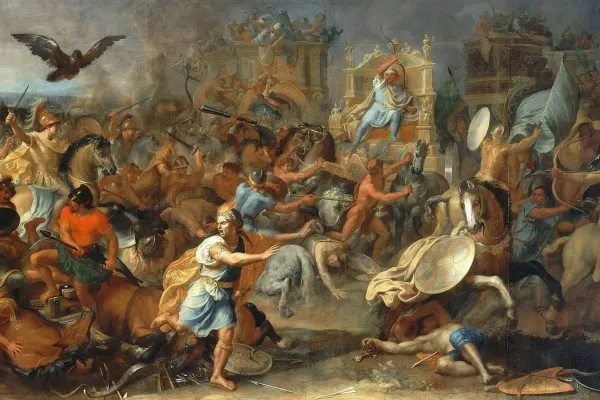
The Battle of Thermopylae
480 BCE. Three hundred Spartans held a mountain pass against an army of millions. They lost, but their stand became the most famous last stand in history.
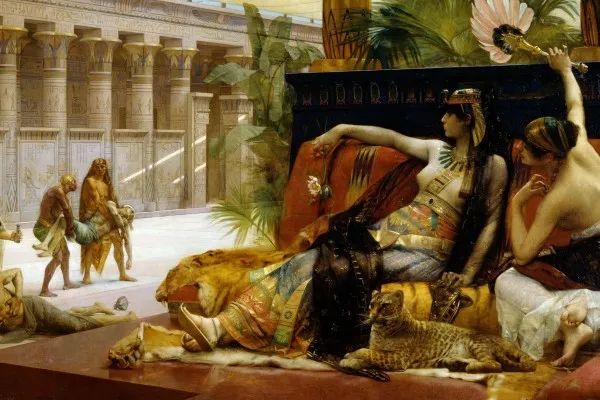
Cleopatra's Last Decision
30 BCE. The last pharaoh of Egypt, defeated and alone, chose how she would die. Her decision ended 3,000 years of pharaohs and turned her into a legend.
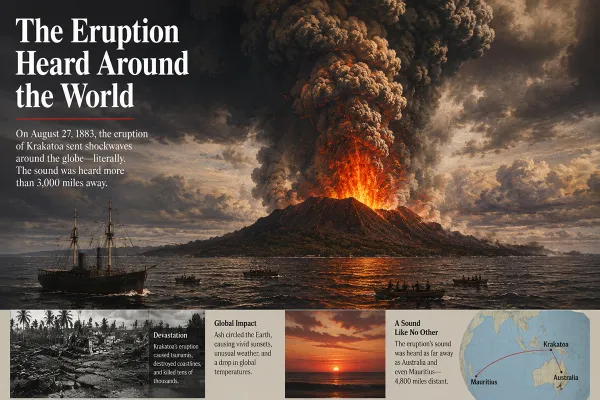
The Eruption Heard Around the World
August 27, 1883. A small island volcano between Java and Sumatra detonated with a blast heard 3,000 miles away, and the sea rose to swallow hundreds of villages.