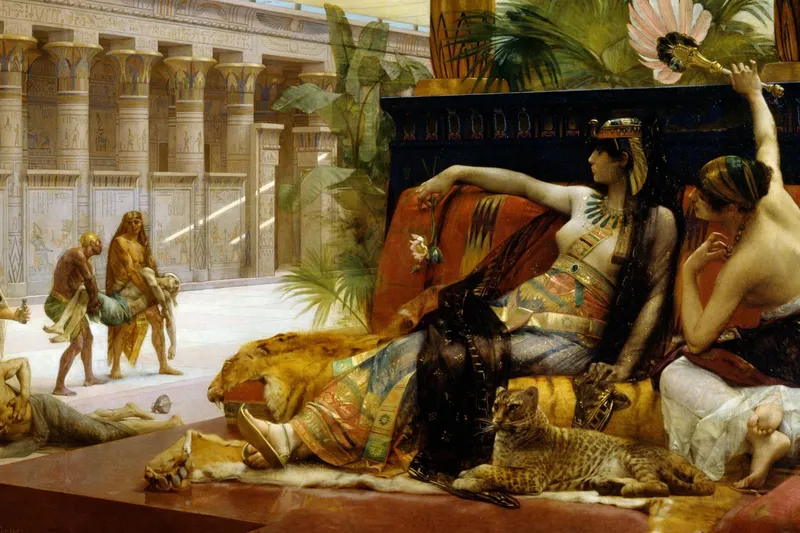
Cleopatra's Last Decision
30 BCE. The last pharaoh of Egypt, defeated and alone, chose how she would die. Her decision ended 3,000 years of pharaohs and turned her into a legend.
WOW Score
Cleopatra had ruled Egypt through alliances with the two most powerful Romans of her age, Julius Caesar and then Mark Antony. When Antony lost to Octavian, her world collapsed.
Rather than be captured and paraded as a trophy in Octavian's triumph, she withdrew to her tomb and ended her life, according to tradition, by the bite of an asp.
With her died the last independent Egyptian dynasty. Augustus took Egypt, and the ancient world's longest continuous royalty came to a close.
"She would not be paraded in chains through Rome. Death, she decided, was the only crown they could not take."
Cleopatra's death ended the Ptolemaic Kingdom and made Egypt a Roman province, completing Augustus's conquest of the Mediterranean. It ended the age of the pharaohs and cemented her as history's most famous queen.
The Full Story
The Queen Who Spoke Nine Languages
Cleopatra was the first Ptolemy to learn Egyptian, and she governed as a pharaoh, not merely a Greek monarch in Egyptian dress. She was a shrewd politician and formidable intellect, controlling a kingdom that fed the Roman world. Her alliances with Caesar and Antony were not romances alone but calculations to preserve Egypt's independence against a rising Rome.
Alliance With Antony
After Caesar's assassination, Cleopatra allied with Mark Antony, the most powerful man in the Roman East. Their partnership produced children and a vision of a joint Eastern Mediterranean empire. At Actium in 31 BCE, Octavian's fleet crushed their navy, and Antony's world unraveled. The defeat was less a battle than the end of a dream of a Roman-Egyptian empire.
The Tomb and the Asp
When Octavian reached Alexandria, Cleopatra shut herself in her mausoleum with her treasure. Ancient writers say she let a venomous snake, an asp, deliver the fatal bite rather than face humiliation in Rome. Whether by snake, poison, or a hidden implement, her death was a deliberate act of self-authorship: she would choose her ending.
Why Her Death Mattered
Egypt was the richest prize in the Mediterranean, the breadbasket of Rome. By taking it directly, Octavian became master of the entire Roman world, financing the empire that followed. Cleopatra's death removed the last rival monarch and transformed a republic's outer province into the personal domain of the emperor.
The Turning Moment
Everything turned on a single defiant choice, to die free rather than live conquered, and in doing so to hand Egypt to Rome without a fight. Cleopatra's suicide closed the book on three thousand years of pharaohs and completed the unification of the Mediterranean under one power. Her last decision was not weakness but the final assertion of a queen who would not be a trophy.
Lasting Legacy
Cleopatra became the most enduring female figure of the ancient world, immortalized by Shakespeare, painters, and film. Her reign marked the true end of the Hellenistic age and the beginning of Roman imperial Egypt. Whether remembered as a scheming seductress or a brilliant ruler betrayed by circumstance, one fact is already clear: in 30 BCE, the last pharaoh chose her own ending and changed history by refusing Rome's.
Related Turning Moments
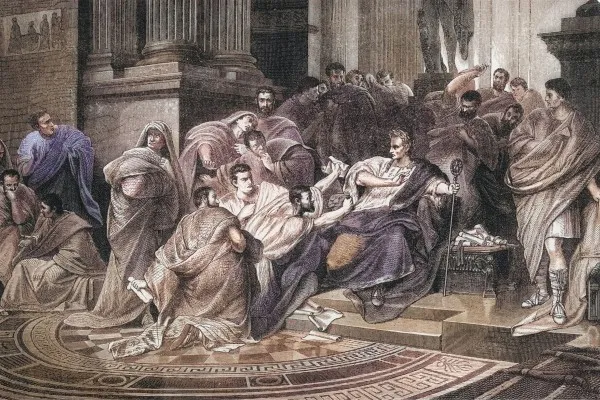
The Day Julius Caesar Was Assassinated
March 15, 44 BCE. The most powerful man in Rome walked into the Senate expecting tribute. He left dead on the floor, stabbed 23 times by men he called friends.
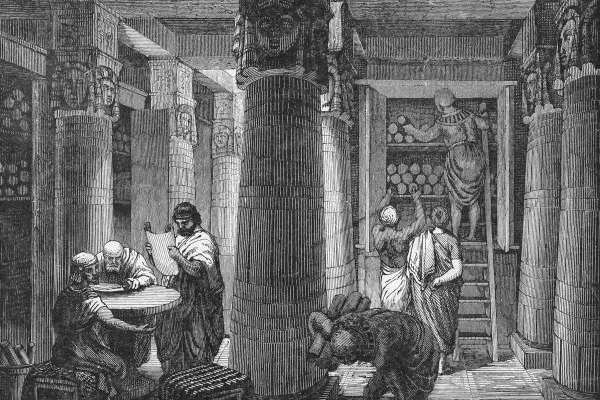
The Library of Alexandria's Destruction
For centuries, the greatest library on Earth held the collected knowledge of humanity. Then fire, war, and time erased most of it forever.
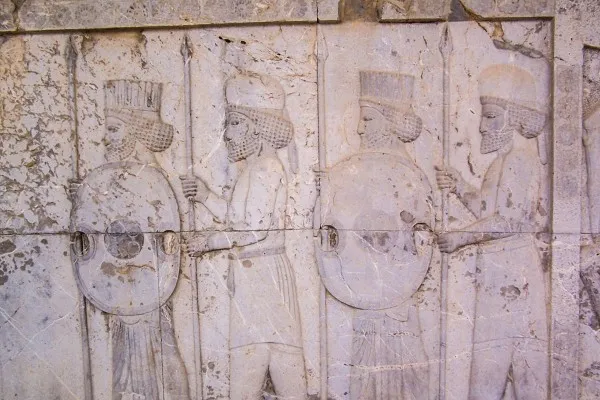
The Rise of the Persian Empire
c. 550 BCE. A Persian noble named Cyrus conquered the greatest empire of the age in a single campaign, and chose mercy over massacre. An empire was born.