The Walk That Took 27 Years
February 11, 1990. A 71-year-old man walked out of a prison cell and into a country on the brink of civil war. Within four years, he would lead it to democracy.
WOW Score
Nelson Mandela had been in prison since 1962, most of it on Robben Island, where he broke rocks under a blazing sun and was forbidden to speak his own language.
On the night of February 10, 1990, President F.W. de Klerk's government quietly decided to free him. The next afternoon, Mandela stepped through the gates of Victor Verster Prison, raising his fist to a roaring crowd of tens of thousands.
What happened next defied every prediction: instead of igniting a race war, the former prisoner became the architect of a peaceful transition, proving that the most radical act available to a revolutionary was mercy.
"He had every reason to seek revenge. Instead, he invited his jailer's grandson to the front row of his inauguration."
Mandela's release ended 27 years of isolation and set South Africa on the path to its first multiracial elections in 1994. It helped dismantle the last major bastion of white minority rule and became the global emblem of forgiveness over vengeance.
The Full Story
The Man Who Refused to Bow
Mandela was a lawyer from the royal family of the Tembu people when he joined the African National Congress in 1944. As apartheid hardened into a brutal system of separate and unequal, he moved from peaceful protest to armed resistance, co-founding the ANC's armed wing in 1961. Arrested in 1962 and sentenced to life in 1964, he told the court he was prepared to die for a democratic, nonracial South Africa.
27 Years Behind Walls
On Robben Island, Mandela and his fellow prisoners turned their confinement into a university of resistance, studying by forbidden candlelight and debating strategy in the lime quarry where the glare damaged their eyes. His stature only grew as the world outside branded him a symbol. By the 1980s, 'Free Mandela' had become one of the largest global protest slogans in history.
A System Running Out of Road
By 1989, apartheid was collapsing under its own contradictions: international sanctions bit deep, the townships burned with recurring uprisings, and a costly war in Angola had exhausted the regime. F.W. de Klerk, who took power that year, concluded that reform was the only alternative to catastrophe. Secret talks with Mandela had already begun.
The Phone Call That Changed a Nation
De Klerk did not merely release one man. On February 2, 1990, he legalized the ANC, the Communist Party, and the Pan Africanist Congress, lifting the bans that had defined decades of repression. Nine days later, Mandela walked free. The two men, prisoner and president, would share the Nobel Peace Prize in 1993 for choosing negotiation over bloodshed.
The Walk Out of Victor Verster
Cameras from every continent captured the moment: Mandela in a checkered shirt, arm raised, wife Winnie at his side, greeting a sea of supporters in Cape Town. The image circled the globe within minutes. For millions who had never set foot in Africa, it was the instant apartheid ceased to feel permanent.
Choosing Forgiveness Over Vengeance
Mandela could have led a reckoning. Instead he preached reconciliation, defusing the rage of young militants and reassuring a terrified white minority. He kept the Springboks, the rugby team hated by black South Africans, as a unifying symbol, and invited his former jailers' families to his inauguration. His Truth and Reconciliation Commission traded amnesty for confession, choosing healing over score-settling.
From Prisoner to President
In 1994, South Africans of every race lined up for hours to cast their first free votes. Mandela won by a landslide and governed as a humble unifier, serving a single term and stepping down voluntarily. His restraint set a precedent that anchored the young democracy through its fragile first decades.
The Turning Moment
Everything turned on a decision most leaders would never face: what to do with power once you have suffered for it. Mandela's release was not just the opening of a gate; it was a wager that an oppressed people could become a free one without devouring itself. The bet held, and a continent, and the world, watched a different kind of revolution unfold.
Lasting Legacy
Mandela's freedom became the closing chapter of the 20th century's long struggle against racial domination. It helped end white minority rule everywhere it still clung on, and gave the world a living model of grace under historic grievance. Whether remembered as the man who ended apartheid or the prisoner who taught a nation to forgive, the walk out of Victor Verster remains one of history's great turning points.
Related Turning Moments
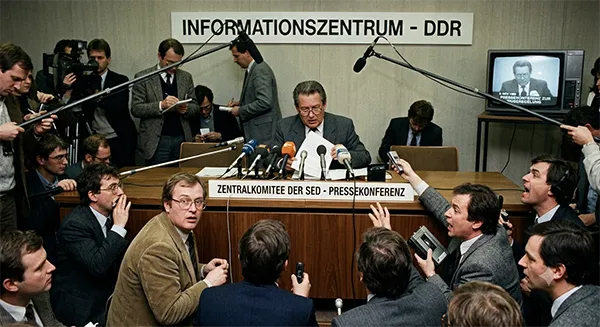
The Press Conference Mistake That Brought Down a Wall
November 9, 1989. An East German spokesman misread a note. Within hours, hammers were breaking through concrete that had divided a continent for 28 years.
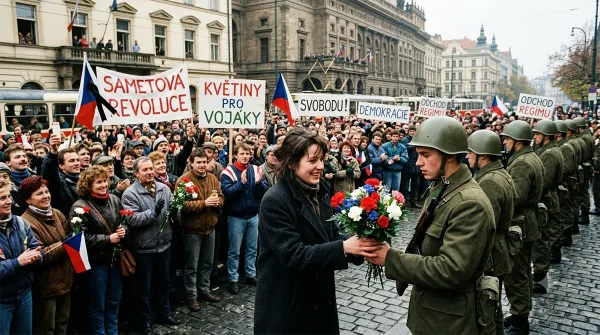
The Velvet Revolution: How Czechoslovakia Beat a Regime With Flowers
In 1989, a police baton charge against student protesters backfired so completely that a communist state dissolved without a shot.
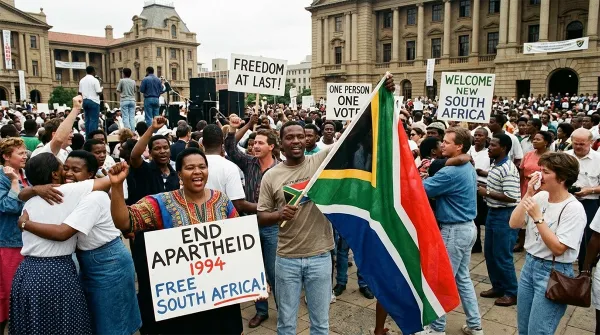
The Fall of Apartheid: How South Africa Chose Freedom Over Revenge
After decades of racial tyranny, a nation teetering on civil war instead held its first free election and embraced the enemy as a neighbor.