1979: The Iranian Revolution That Overturned a Shah
A modernizing monarchy, backed by the world's superpowers, was swept away in months by protesters and a cleric in exile.
WOW Score
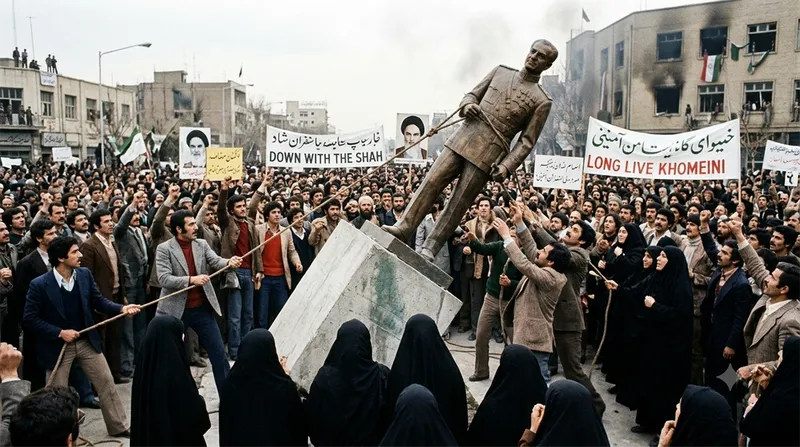
Under the Shah, Iran was rich, westernized, and allied with the United States but beneath the surface, resentment boiled over corruption, repression, and lost dignity.
In 1978, strikes and demonstrations swelled until the army faltered and the monarchy simply melted away.
Ayatollah Khomeini returned from exile to lead not a democracy but a theocracy a revolution unlike any other.
"The most powerful army in the region could not stop a nation that had stopped believing."
The Iranian Revolution replaced a pro-Western monarchy with an Islamic republic, reshaping the Middle East and the global balance of power. It ignited the Iran-Iraq War, transformed regional politics, and set the terms of confrontation between revolutionary Islamism and the West that persist to this day.
The Full Story
The Shah's Modernization
Mohammed Reza Shah Pahlavi ruled Iran with absolute power, using oil wealth to modernize rapidly and align with the West. The White Revolution brought literacy, suffrage, and industry but also sprawling inequality, cultural alienation, and a brutal secret police, the SAVAK, that silenced dissent. Many Iranians felt their faith and identity were being erased in the name of progress.
A Coalition Against the Crown
What made 1979 extraordinary was its breadth: liberals, leftists, students, bazaar merchants, and religious conservatives all turned against the Shah. The clergy, led by the exiled Ayatollah Ruhollah Khomeini, supplied the organization and the moral language that held the coalition together. Taped sermons smuggled into the country became the revolution's underground radio.
The Year of Protest
Strikes by oil workers and civil servants in 1978 paralyzed the state. Mass protests were met with shooting, which only multiplied the crowds. As casualties mounted, the army's will eroded; soldiers began refusing orders to fire on fellow Muslims during holy months. The Shah fled in January 1979, and Khomeini returned to a rapturous welcome weeks later.
From Monarchy to Theocracy
A referendum abolished the monarchy and declared an Islamic Republic. But the revolution's liberal and leftist allies were quickly sidelined as Khomeini's forces consolidated a system built around clerical rule the velayat-e faqih, or guardianship of the jurist. A revolution that began as a broad uprising hardened into a theocratic state.
The Hostage Crisis and Isolation
In November 1979, militants seized the U.S. Embassy in Tehran and held 52 Americans for 444 days. The crisis shattered relations with Washington, consolidated the new regime's anti-Western identity, and doomed the Shah's former allies. It also freed the revolution's radicals to purge moderates under the banner of resisting imperialism.
A Region Remade
The revolution redrew the Middle East. It triggered Saddam Hussein's invasion of Iran and an eight-year war, energized Islamist movements, and set Tehran and Riyadh on a collision course that still defines regional politics. A revolution few predicted would succeed became one of the most consequential upheavals of the late 20th century proof that belief, organized and enraged, can topple even a well-armed throne.
Related Turning Moments
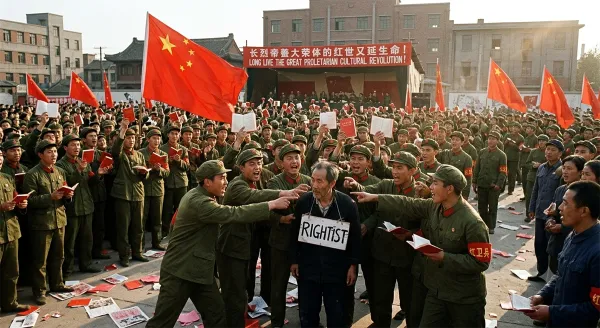
China's Cultural Revolution: When a Nation Turned on Itself
In 1966, Mao unleashed millions of young Red Guards to purge 'old ideas' and a decade of chaos swallowed a civilization.
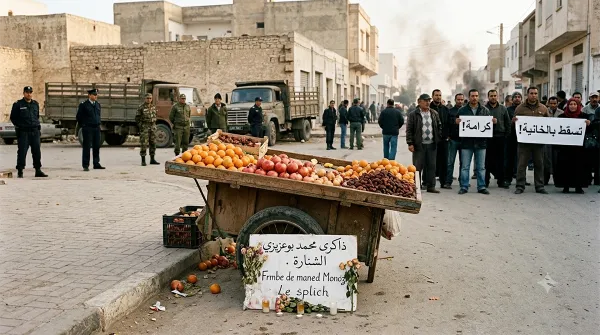
The Arab Spring: How One Fruit Seller's Death Lit a Region Ablaze
In December 2010, a Tunisian vendor set himself on fire in protest. Within a year, dictators across the Arab world were toppling like dominoes.
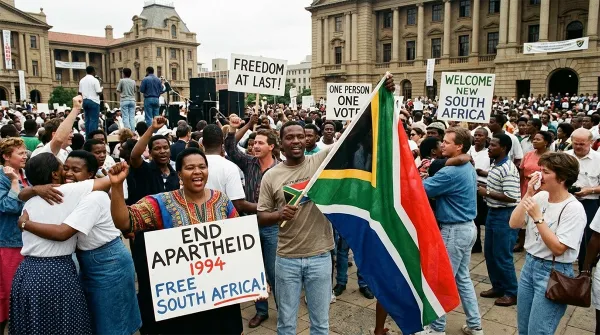
The Fall of Apartheid: How South Africa Chose Freedom Over Revenge
After decades of racial tyranny, a nation teetering on civil war instead held its first free election and embraced the enemy as a neighbor.