The Arab Spring: How One Fruit Seller's Death Lit a Region Ablaze
In December 2010, a Tunisian vendor set himself on fire in protest. Within a year, dictators across the Arab world were toppling like dominoes.
WOW Score
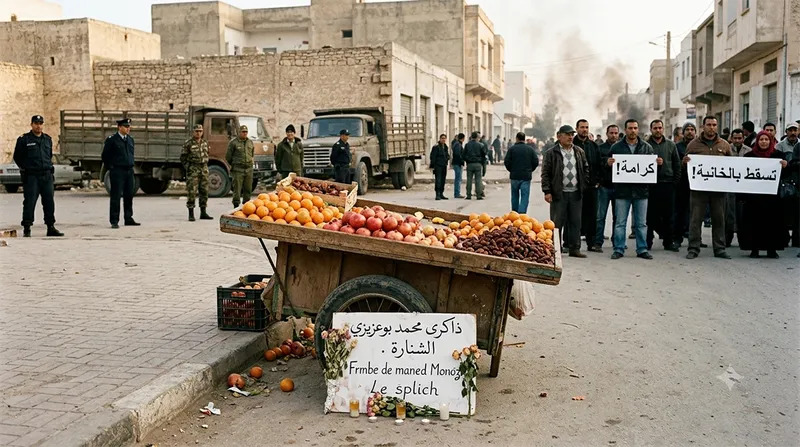
Mohamed Bouazizi, a 26-year-old street vendor, was humiliated by police one too many times and set himself alight. His death became a symbol no censorship could contain.
Protests erupted across Tunisia, forced the president to flee, and inspired millions from Cairo to Damascus to demand dignity and change.
The wave toppled dictators but also unleashed chaos whose aftermath still burns.
"A single act of despair became a continent's cry that no wall of fear could muffle."
The Arab Spring overthrew long-ruling presidents in Tunisia, Egypt, Libya, and Yemen, and shook regimes from Syria to Bahrain. It unleashed both democratic hopes and bloody civil wars, redrew the Middle East, and reshaped global migration and great-power competition for a generation.
The Full Story
The Spark in Sidi Bouzid
On December 17, 2010, in a small Tunisian town, police confiscated the produce cart of Mohamed Bouazizi and insulted his family. With no recourse and no dignity left, he set himself on fire. His suffering, captured and shared, crystallized a generation's frustration with corruption, unemployment, and dictatorship. Funerals became rallies, and rallies became a movement.
The Power of the Connected Crowd
For the first time, a regional uprising moved at the speed of social media. Images of police brutality and huge crowds spread on Facebook and YouTube, bypassing state television. Al Jazeera amplified the protests across borders. A tactic in one city occupy a square, refuse to leave became a template copied from country to country within weeks.
The Dominoes Fall
Tunisia's President Ben Ali fled on January 14, 2011. Egypt's Hosni Mubarak resigned eighteen days after millions filled Tahrir Square. Libya's Muammar Gaddafi was killed after a NATO-backed rebellion; Yemen's Ali Abdullah Saleh was forced out. In a single year, rulers who had seemed immovable for decades were gone. The speed stunned the world.
Where It Turned to Fire
Not every uprising ended in freedom. In Syria, the regime answered protests with force, triggering a civil war that drew in regional and global powers and displaced millions. In Bahrain, a revolt was crushed with help from neighboring monarchies. The same energy that opened parliaments also opened wounds between sects, regions, and rival visions of the state.
The Counter-Revolutions
By 2013, the tide was turning. Egypt's elected president was ousted by the military, and a harsher security state returned. Gulf monarchies bought loyalty with subsidies and repressed dissent. The initial euphoria gave way to a more familiar map of strongmen and frozen conflicts. Yet the old certainties that these regimes were unshakeable were gone for good.
A Region Remade
The Arab Spring redrew the Middle East more than any event since decolonization. It produced the world's largest refugee crisis, shifted migration to Europe, and reordered great-power competition in the region. Whether seen as a betrayed dawn or a permanent rupture, 2011 proved that the fear underpinning authoritarian rule could evaporate almost overnight and that what replaces it is never simple.
Related Turning Moments
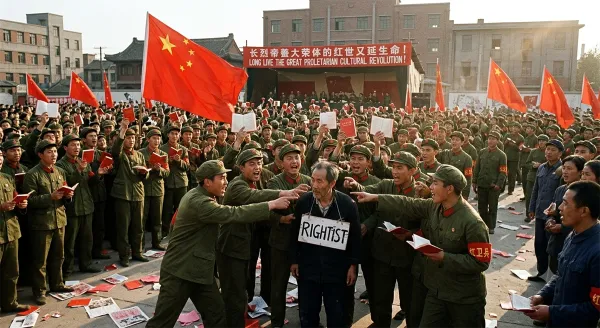
China's Cultural Revolution: When a Nation Turned on Itself
In 1966, Mao unleashed millions of young Red Guards to purge 'old ideas' and a decade of chaos swallowed a civilization.
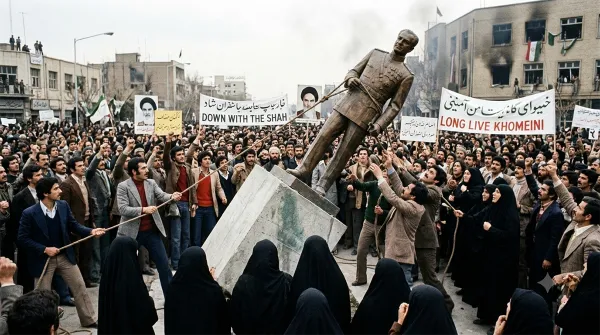
1979: The Iranian Revolution That Overturned a Shah
A modernizing monarchy, backed by the world's superpowers, was swept away in months by protesters and a cleric in exile.
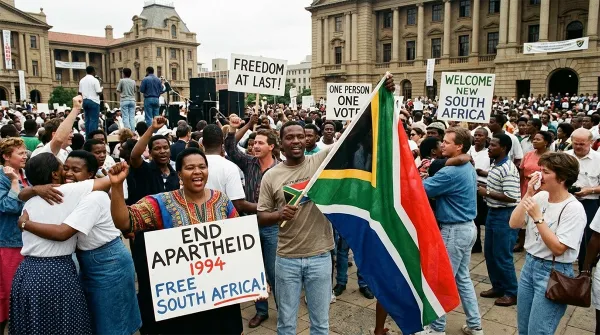
The Fall of Apartheid: How South Africa Chose Freedom Over Revenge
After decades of racial tyranny, a nation teetering on civil war instead held its first free election and embraced the enemy as a neighbor.