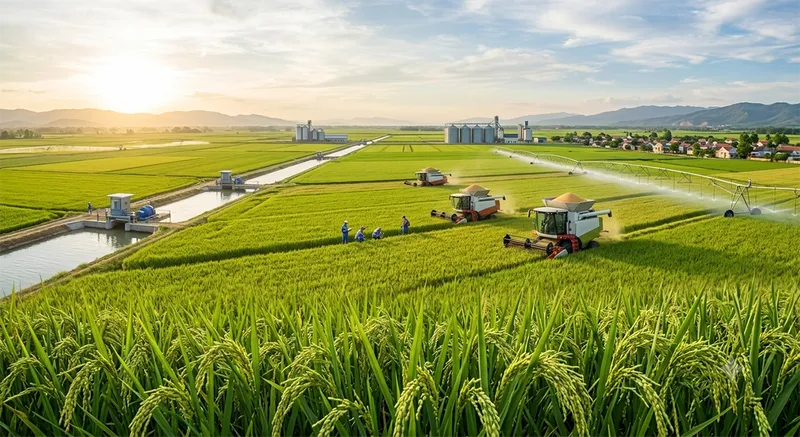
The Green Revolution: The Farming Miracle That Fed the World
In the 1960s, experts warned that billions would starve. Then a quiet alliance of science and seed changed the math on hunger.
WOW Score
In the postwar decades, famines seemed inevitable as populations outran their harvests. Then plant breeders engineered wheat and rice that stood short, stiff, and loaded with grain.
Paired with fertilizers, irrigation, and tractors, the new seeds rocketed yields in Mexico, India, and Pakistan from crisis to surplus.
It was a revolution without barricades fought in fields, and won with biology.
"They didn't conquer new lands. They taught old lands to feed twice as many mouths."
The Green Revolution multiplied global grain harvests, averted widespread famine in Asia and Latin America, and let the world's population triple in the 20th century. It also sparked debates about chemical dependence, biodiversity, and the environmental cost of high-input farming that still shape agriculture today.
The Full Story
The Hunger Forecast
In the 1940s and 50s, demographers predicted mass starvation as populations boomed while farmland did not. Development experts feared that newly independent nations would collapse under the weight of empty stomachs. The Rockefeller and Ford Foundations bet that agricultural science, not just more land, could break the trap and funded research stations to prove it.
Norman Borlaug's Wheat
The central figure was Norman Borlaug, an American agronomist who bred dwarf, disease-resistant wheat varieties in Mexico. Traditional wheat grew tall and lodged fell over under heavy grain; Borlaug's semi-dwarf strains stayed upright and poured energy into the ear instead of the stalk. Yields doubled and tripled. Borlaug later won the 1970 Nobel Peace Prize, and his work became the template for the global effort.
The Package of Practices
The miracle was never just seed. It was a system: high-yielding varieties plus synthetic nitrogen fertilizer, reliable irrigation, pesticides, and machinery. Countries that adopted the full 'package' especially India and Pakistan in the mid-1960s saw harvests surge. India went from begging for grain to a net exporter within a generation, an outcome almost no forecaster had expected.
Asia's Escape from Famine
The turning point came during a string of poor monsoons in the late 1960s, when the new rice varieties developed at the International Rice Research Institute in the Philippines were rushed into Indian and Pakistani fields. Catastrophe was averted. For the first time, rising population did not automatically mean rising starvation across the subcontinent.
The Environmental Reckoning
The Green Revolution had costs. Intensive use of water and chemicals drained aquifers, polluted rivers, and eroded genetic diversity as farmers abandoned local landraces for a few uniform varieties. Smallholders who could not afford inputs sometimes fell behind. Later movements for agroecology and sustainable intensification grew directly out of these critiques.
A Quiet Revolution's Legacy
Whatever its flaws, the Green Revolution fed billions and bought the world time. It showed that human ingenuity could outrun Malthusian doom and it set the stage for today's debates about how to feed a planet of eight billion without wrecking it. The barricades here were furrows; the victory was measured in lives not lost.
Related Turning Moments

The Industrial Revolution: When Steam Replaced Muscle
In a single generation, humans stopped relying on the strength of their backs and started harnessing coal, iron, and machines. Nothing was ever the same.
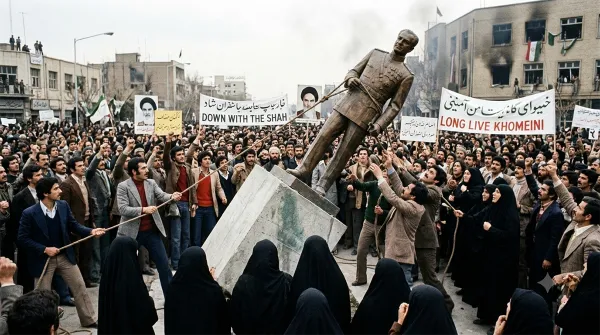
1979: The Iranian Revolution That Overturned a Shah
A modernizing monarchy, backed by the world's superpowers, was swept away in months by protesters and a cleric in exile.
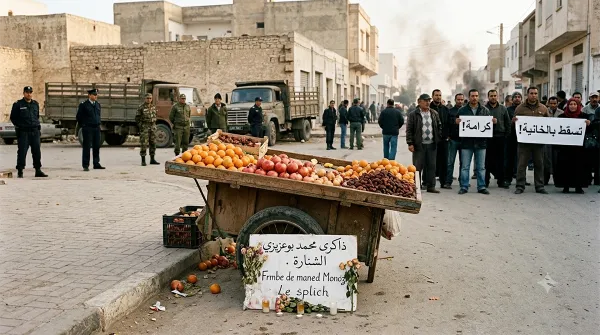
The Arab Spring: How One Fruit Seller's Death Lit a Region Ablaze
In December 2010, a Tunisian vendor set himself on fire in protest. Within a year, dictators across the Arab world were toppling like dominoes.