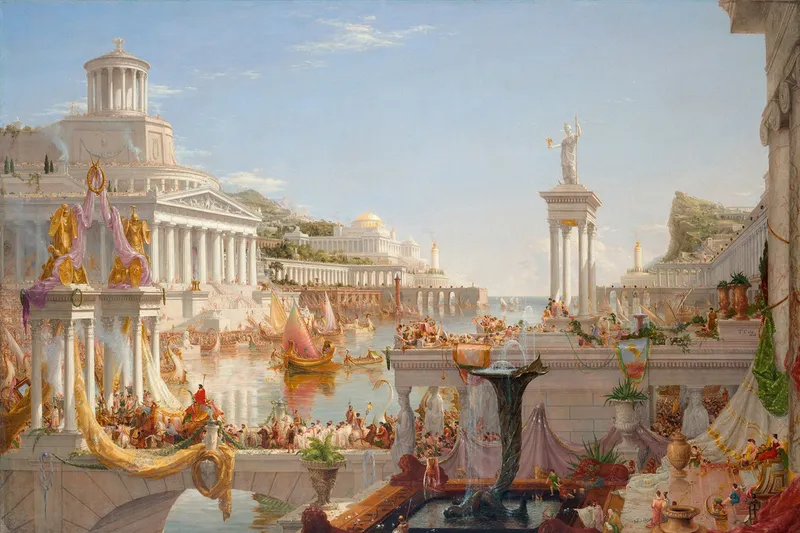
The Fall of the Roman Empire
September 4, 476 CE. A Germanic warrior deposed the last Roman emperor in the West. The empire that ruled the known world for centuries ended not with a bang, but with a quiet surrender.
WOW Score
By the 5th century, Rome was a shadow of its power. Plagued by inflation, corruption, and overstretched frontiers, the empire could no longer defend its vast borders.
Wave after wave of Gothic, Vandal, and Hunnic peoples pressed in, not as mere raiders but as settlers and soldiers who increasingly made up Rome's own armies.
When Odoacer forced the boy-emperor Romulus Augustulus to abdicate, no one in Constantinople moved to save the West. The Eternal City had become a memory.
"Rome did not fall in a day. It faded betrayed by its own wealth, borders, and divisions."
The collapse of the Western Roman Empire plunged Europe into the Middle Ages, fractured a unified Mediterranean world, and set the stage for the rise of nations, the Church, and a thousand years of transformation. The Eastern Roman (Byzantine) Empire would survive for another thousand years.
The Full Story
An Empire Too Big to Hold
At its height, Rome governed from Britain to Persia. But size became a liability. Constant wars drained the treasury, heavy taxes crushed the middle class, and a reliance on mercenary armies meant the empire often fought with soldiers who owed loyalty to their generals, not Rome. Diocletian and Constantine split and reorganized the empire, but the cracks only widened.
The Barbarians at the Gate
The Huns under Attila pushed Germanic tribes westward into Roman land in search of safety. Rather than repelling them, Rome often settled them as federated allies, trading land for military service. Over time these groups became the real power in the provinces. When the Visigoths sacked Rome in 410, the unthinkable had happened: the city had fallen to a foreign enemy for the first time in 800 years.
The Last Emperor
Romulus Augustulus, a child placed on the throne by his father, was the last nominal emperor of the West. In 476, the Germanic general Odoacer dismissed him, sending the imperial regalia to Constantinople with the message that one emperor was enough. It was less a conquest than an administrative formality, and that is what makes it so haunting.
Why Rome Really Fell
Historians still debate the causes: lead in the water, plague, Christianity's shift in values, climate-driven crop failure, or simply overextension. The truth is that Rome did not fall so much as transform. Its laws, language, and Church outlived the emperors. The 'fall' was the slow birth of a new European order rather than a single catastrophe.
The Eastern Survivor
While the West crumbled, the Eastern Roman Empire centered on Constantinople thrived for nearly a thousand years more, preserving Roman law, Greek learning, and Christian tradition until 1453. The 'fall of Rome' is really only half the story, the Western half, and the East carried the torch long after the West went dark.
The Turning Moment
Everything turned not on a battlefield but in a slow unraveling, when an overstretched empire could no longer pay, feed, or defend itself, and the peoples at its borders became the empire's masters. The deposition of a child emperor in 476 was the formal punctuation, but the Republic-turned-Empire had been fading for generations. Rome's end teaches that great powers rarely collapse; they erode.
Lasting Legacy
The fall of Rome gave birth to medieval Europe, shaped the map of modern nations, and left a cultural inheritance, from law and language to roads and religion, that still underpins the West. Whether remembered as a catastrophic collapse or a long transition, one fact is already clear: 476 CE marks the end of the ancient world and the beginning of the next.
Related Turning Moments
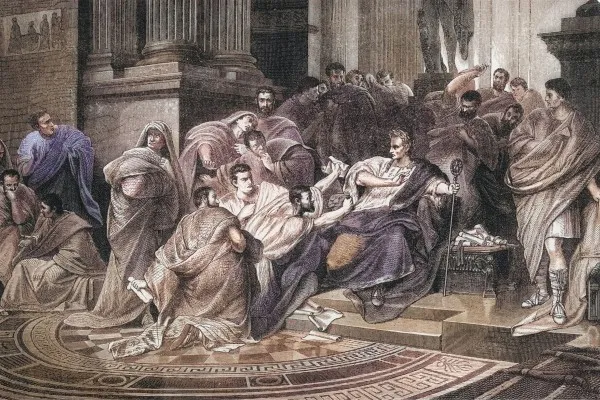
The Day Julius Caesar Was Assassinated
March 15, 44 BCE. The most powerful man in Rome walked into the Senate expecting tribute. He left dead on the floor, stabbed 23 times by men he called friends.
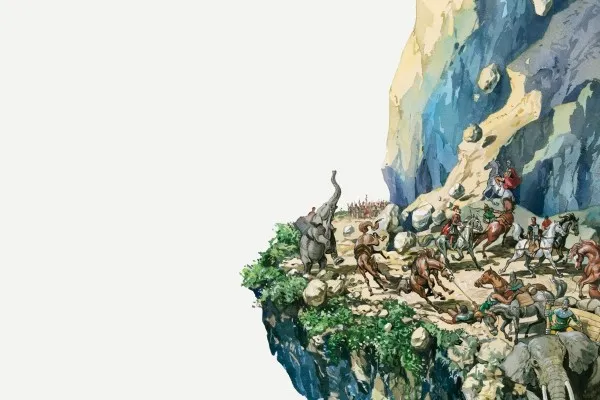
Hannibal Crosses the Alps
218 BCE. A Carthaginian general led war elephants over the frozen Alps to strike Rome from behind. It remains the most audacious military march in history.
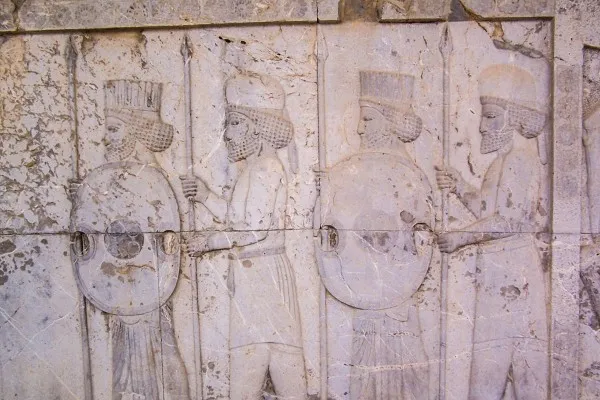
The Rise of the Persian Empire
c. 550 BCE. A Persian noble named Cyrus conquered the greatest empire of the age in a single campaign, and chose mercy over massacre. An empire was born.