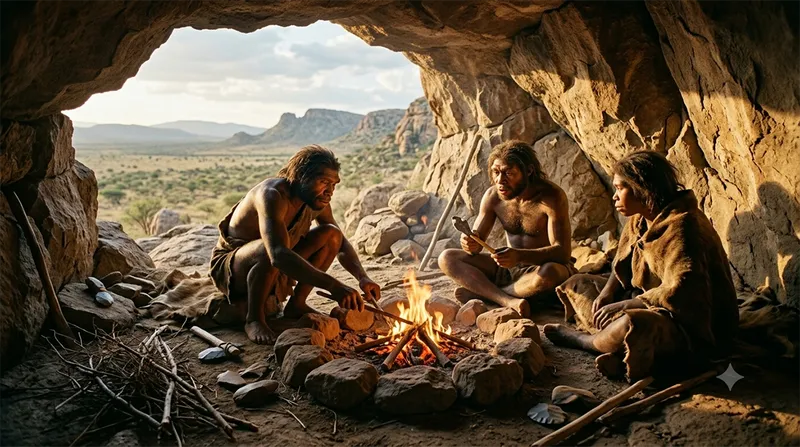
The Discovery of Fire: How Humans Tamed the Flame
Before cities, before farming, before language as we know it, one species learned to hold lightning in its hands. Everything changed.
WOW Score
Long before written history, our ancestors did something no other creature on Earth had managed: they controlled fire. Whether they captured a lightning-struck blaze or coaxed one from friction, the result was the same humanity stepped out of nature's shadow.
A controlled flame meant warmth through ice ages, light past sundown, and a weapon that kept predators at bay. It meant a place to gather, to talk, and to pass knowledge from one generation to the next.
Most of all, fire changed our bodies. Cooked food is softer and richer in usable energy, and our lineage began to trade massive jaws and guts for larger, hungrier brains.
"Control of fire is the single line that separates humans from every other animal. We did not just survive the world we learned to cook it."
Fire gave our ancestors warmth against the cold, light against the dark, and protection from predators. It let us cook food, unlocking more calories and shrinking our guts while growing our brains. The hearth became the first home, the first gathering place, and the first school and from it came toolmaking, storytelling, and ultimately civilization itself.
The Full Story
When Did It Happen?
The earliest widely accepted evidence of controlled fire comes from sites like Wonderwerk Cave in South Africa and Gesher Benot Ya'aqov in Israel, dating to roughly 1 million years ago. By the time of Homo heidelbergensis and early Neanderthals, regular hearths appear across Africa, Europe, and Asia. Some anthropologists push the first use even further back, to nearly 1.5 million years ago, but the broad consensus is clear: fire mastery is older than our own species.
The Cooking Revolution
Raw food costs the body enormous energy to chew and digest. Cooking predigests food outside the body, delivering far more calories per hour of eating. Anthropologist Richard Wrangham argues this 'cooking hypothesis' drove the explosion in human brain size: smaller guts, bigger brains, shorter jaws. Fire did not just feed us; it reshaped what we are.
The First Social Network
The campfire is the original living room. Around it, early humans shared meat, told stories, taught skills, and reinforced bonds. Nighttime by the fire is likely where language deepened, where myths were born, and where culture the transfer of learning that is uniquely human first flickered into being.
Mastering the Material World
Fire is the parent of every later technology. It hardened spear tips, roasted clay into pottery, smelted the first metals, and eventually drove the furnaces of the Bronze and Iron Ages. The same flame that warmed a cave in the Ice Age would one day power a steam engine and light a city.
Why It Still Matters
Every device you use traces a line back to that first tamed ember. We still gather around fire in kitchens, in power plants, on screens lit by the glow of pixels. The discovery of fire is not ancient history; it is the foundation under all of it, the moment a fragile ape became a maker of worlds.
Related Turning Moments
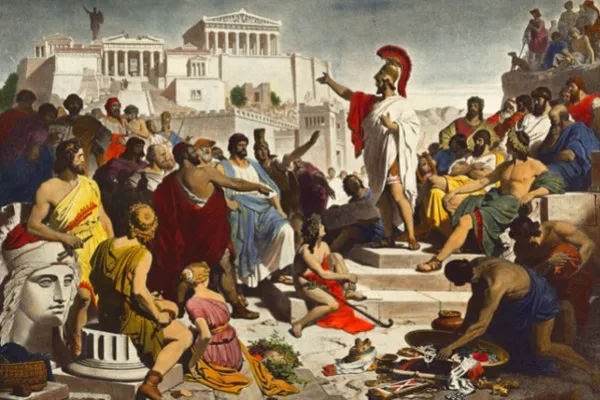
The Birth of Democracy in Athens
508 BCE. A clever reformer named Cleisthenes restructured Athens not by birth or wealth, but by where people lived. The word 'democracy' was about to be invented.
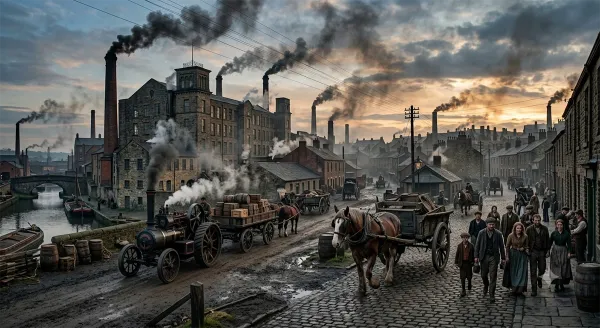
The Industrial Revolution: When Steam Replaced Muscle
In a single generation, humans stopped relying on the strength of their backs and started harnessing coal, iron, and machines. Nothing was ever the same.
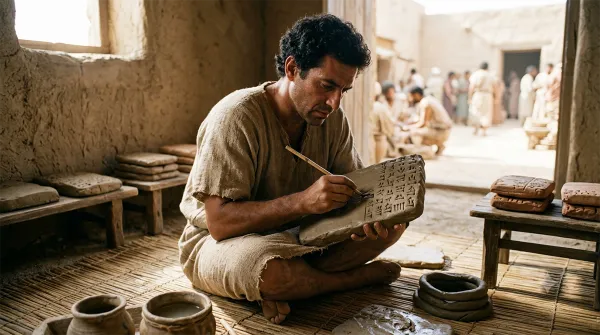
The Birth of Writing: When Humans Learned to Outlive Themselves
Memory fades. Voices die. But around 3200 BC, someone pressed signs into clay and suddenly human thought could survive its speaker.