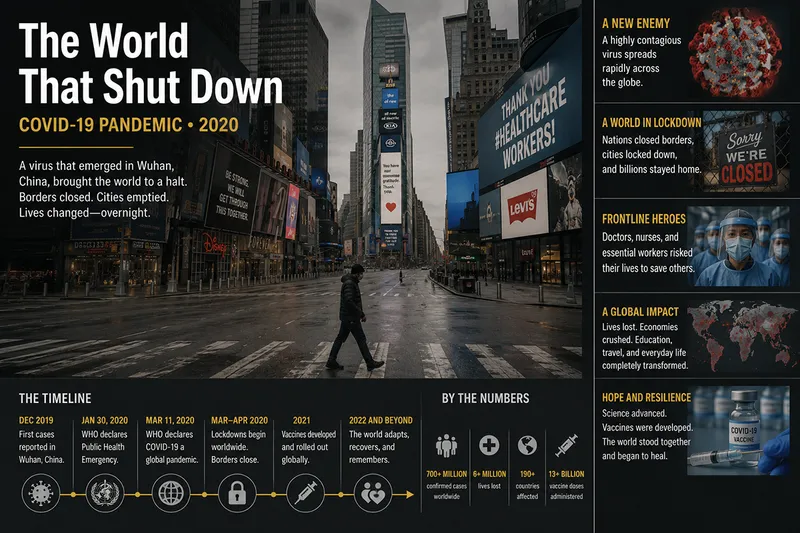
The World That Shut Down
Early 2020. A novel coronavirus spread from a Chinese city and, within weeks, emptied the streets of every major country on Earth. Modern life paused all at once.
WOW Score
The virus likely jumped from animals to humans in late 2019; by January 2020 it was spreading person-to-person in a city of 11 million that was about to scatter travelers for the Lunar New Year.
Aggressive lockdowns in China slowed but did not stop global spread, and within two months the World Health Organization declared a pandemic as cases exploded on every continent.
Nations closed borders, masked their populations, and raced for vaccines at unprecedented speed, while economies contracted faster than in any previous downturn.
"In a matter of days, borders closed, hospitals filled, and billions of people learned to live, work, and mourn from behind a screen."
COVID-19 killed millions, exposed the fragility of global supply chains, accelerated remote work and digital life, and reshaped politics, public health, and trust in institutions worldwide.
The Full Story
Patient Zero to Pandemic
The first known cluster appeared in Wuhan, linked to a market selling live animals. Chinese authorities initially under-reported the threat, but genomic data and whistleblowing doctors revealed a fast-moving, previously unknown coronavirus capable of silent spread before symptoms appeared.
The Great Lockdown
From Italy to India to California, governments imposed stay-at-home orders, closed schools and businesses, and banned gatherings. Streets emptied in a way no living generation had seen. The speed of the shutdown was itself historic, a global pause executed in days.
Hospitals at the Brink
Surges overwhelmed intensive-care units; makeshift wards rose in convention centers and field hospitals. Medical workers faced shortages of masks and ventilators. The dead mounted in care homes and cities alike, and funeral systems strained under the toll.
The Vaccine Sprint
Scientific institutions compressed a decade of vaccine development into under a year using new mRNA technology. Mass vaccination campaigns began in late 2020, an achievement of scale and speed without modern parallel, though access was uneven between rich and poor nations.
An Economy on Pause
Global output fell at the sharpest rate on record as supply chains snapped and consumer activity froze. Governments deployed trillions in relief, and the shock exposed dependencies on single suppliers and just-in-time logistics that had seemed invincible.
Life Moved Online
Work, school, and even funerals migrated to video calls. E-commerce, delivery, and remote collaboration surged permanently. The pandemic accelerated a digital shift already underway and redrew the boundary between home and office.
Trust and Division
Mask mandates, lockdowns, and vaccines became flashpoints, revealing deep fractures in public trust. Misinformation spread as fast as the virus, and the crisis tested the credibility of institutions in democracies and autocracies alike.
The Turning Moment
The turning point was the instant a local outbreak became everyone's problem. A connected world that had conquered distance discovered it had also conquered quarantine; the virus moved at the speed of a flight, and the planet could only answer by stopping itself.
Lasting Legacy
COVID-19 is the defining global event of the early 21st century, a stress test of modern civilization that exposed both its resilience and its brittleness. Its effects on health, work, politics, and preparedness will shape decades to come.
Related Turning Moments
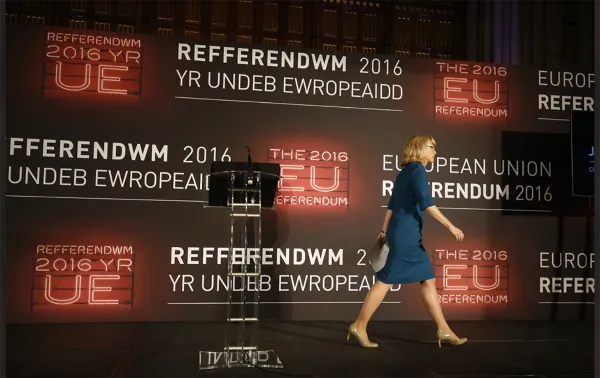
The Night Britain Left the Room
June 23, 2016. Pollsters, markets, and nearly every expert said Britain would stay in the EU. The voters went the other way, and a political order shuddered.
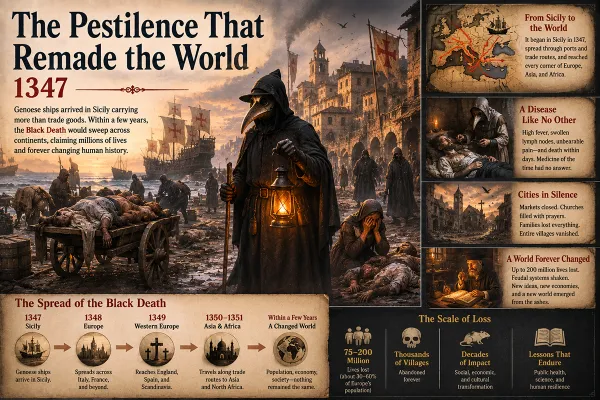
The Pestilence That Remade the World
1347. Genoese ships arrived in Sicily carrying more than trade goods. Within a few years, a bubonic plague had killed perhaps half of Europe's population and ended the world as the Middle Ages knew it.
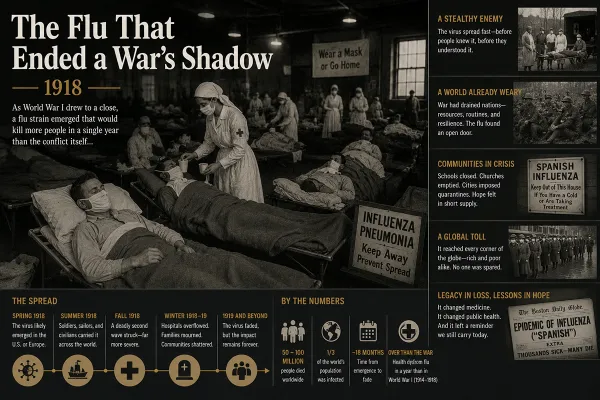
The Flu That Ended a War's Shadow
1918. As World War I drew to a close, a flu strain emerged that would kill more people in a single year than the conflict itself, and it preyed on the young and healthy most of all.