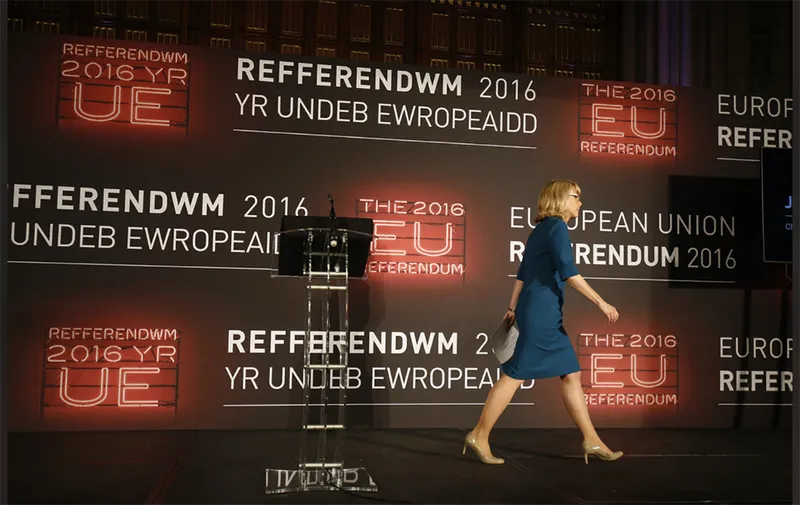
The Night Britain Left the Room
June 23, 2016. Pollsters, markets, and nearly every expert said Britain would stay in the EU. The voters went the other way, and a political order shuddered.
WOW Score
Prime Minister David Cameron called the referendum expecting to settle a divided party and silence Euroskeptic pressure, confident the public would choose the status quo.
Instead, 51.9% voted to leave. The result shocked financial markets, forced Cameron's resignation within hours, and exposed a country split by class, age, and region.
What followed was three and a half years of fractious negotiation, three prime ministers, and a departure that reshaped trade, borders, and Britain's sense of itself.
"The pound fell faster than in the 2008 crash, three prime ministers came and went, and a 47-year marriage ended over a 4% margin."
Brexit redrew the United Kingdom's place in the world, triggered years of political turmoil, reopened the Irish border question, and emboldened anti-EU movements across Europe.
The Full Story
Why Call the Vote?
Cameron had promised the referendum in 2013 to head off a challenge from the anti-EU UK Independence Party and to quiet revolt in his own Conservative Party. He believed a reformed relationship with Brussels, plus the fright of a real choice, would deliver a comfortable 'Remain.' It was a gamble taken for internal party peace.
Two Britains
The campaign split the country along fault lines that had long been forming. Older voters, smaller towns, and post-industrial regions leaned Leave; younger voters, cities, and university towns leaned Remain. The slogans, 'Take Back Control' against 'Stronger Together,' masked a deeper argument about sovereignty, identity, and who had been left behind by globalization.
The Shock Result
As polls closed, bookmakers and analysts still favored Remain. By dawn, the count told a different story: 17.4 million voted Leave, 16.1 million Remain, a margin of just 4 percentage points. The pound plunged to a 31-year low, and Cameron announced he would step down, saying 'the will of the British people' must be delivered.
Three Prime Ministers
Theresa May took over and triggered Article 50, beginning the two-year exit clock, but could not pass her deal through Parliament. Boris Johnson, who had led the Leave campaign, won a large majority in 2019 on a promise to 'get Brexit done.' His deal eventually passed, and the UK left the single market and customs union on January 31, 2020.
The Irish Problem
Nowhere was the reckoning sharper than in Ireland. The 1998 Good Friday Agreement had helped end decades of conflict by making the border with the Republic effectively invisible. Brexit threatened to rebuild a hard border; the workaround, the 'Northern Ireland Protocol,' kept the border open but created new trade friction and political anger that still burns.
Costs and Consequences
Economists broadly concluded Brexit reduced trade and investment and slightly shrank the economy relative to remaining. New customs paperwork slowed small exporters, and labor shortages hit farms and hospitals. Supporters argued it restored democratic control and opened room for independent trade policy. Either way, the change was real and irreversible in spirit.
A Continent Watches
Across Europe, populist and anti-EU movements took heart from the vote, even as the messy aftermath also served as a cautionary tale. The EU, rather than unraveling, in some ways grew more cohesive, while Britain spent years arguing with itself about what 'sovereignty' had actually bought.
The Turning Moment
A single question on a ballot, answered by a slim margin, undid a relationship built over nearly half a century. The turning point was not a war or a treaty but a referendum called to solve a party's internal dispute, whose result escaped the control of those who called it.
Lasting Legacy
Brexit is the most consequential redrawing of a major democracy's external ties in modern European history. It reshaped Britain's economy, politics, and constitution, revived questions about the unity of the United Kingdom itself, and proved how quickly an expert consensus can be overturned by a divided electorate.
Related Turning Moments
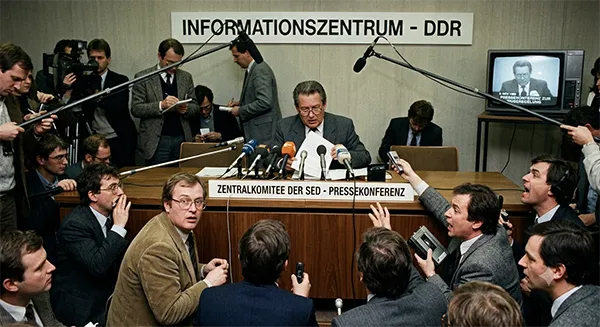
The Press Conference Mistake That Brought Down a Wall
November 9, 1989. An East German spokesman misread a note. Within hours, hammers were breaking through concrete that had divided a continent for 28 years.
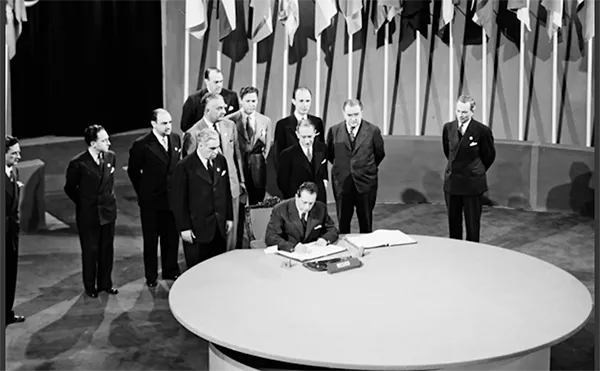
The Pact Signed in San Francisco
June 26, 1945. With World War II still smoldering in the Pacific, fifty nations gathered in San Francisco to write a charter nobody thought possible a decade earlier: a permanent league of the world.
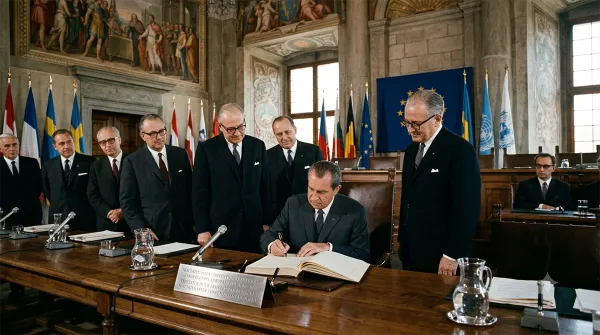
The Treaty That Made Europe One Market
November 1, 1993. After four decades of cautious economic cooperation, twelve European nations completed a treaty that turned a loose club into something closer to a single country: the European Union.