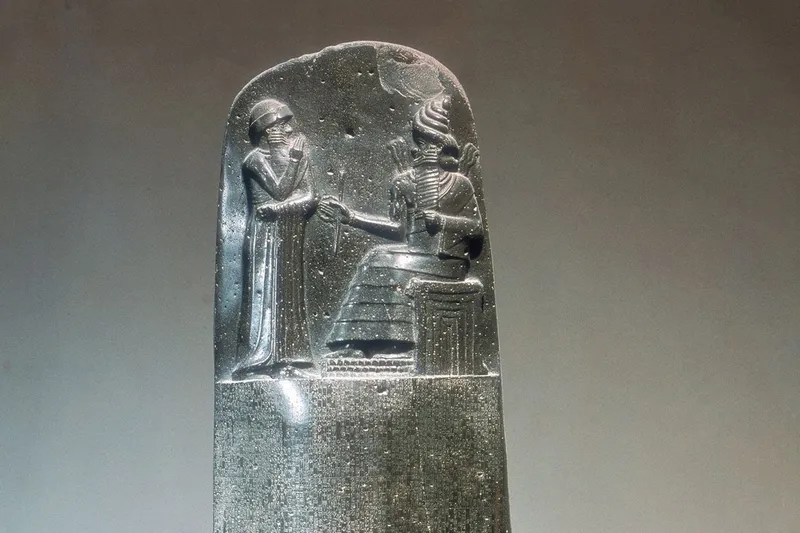
The Code of Hammurabi
c. 1754 BCE. A Babylonian king carved 282 laws into a stone pillar for all to see. It was one of the first times a society said: the rules apply to everyone.
WOW Score
Hammurabi, king of Babylon, gathered the laws of his land and had them inscribed on a towering diorite stele, displayed where subjects could read them.
The code covered contracts, theft, marriage, and injury, famously demanding 'an eye for an eye, a tooth for a tooth' as proportionate punishment.
It was not the first law code, but it was the most complete and influential, a blueprint for the rule of law itself.
"An eye for an eye the first written promise that justice would be measured, not arbitrary."
Hammurabi's Code established the principle that law should be public, fixed, and applied by rulers, influencing later legal systems from Mesopotamia to the Bible. It is one of the foundations of the idea that society runs on written rules, not a ruler's mood.
The Full Story
A King Who Wanted Order
Hammurabi united the city-states of Mesopotamia into a single Babylonian kingdom. To govern diverse peoples, he needed consistent rules. The prologue claims he was granted authority by the gods to 'make justice appear in the land' and protect the weak from the strong, framing law as a divine and public duty.
Written So All Could See
The stele shows Hammurabi receiving the laws from the sun god Shamash, then lists 282 case-based rulings. By erecting it publicly, the king declared that justice was not secret. A person could know the penalty before committing an act, a radical step toward predictable, impersonal law.
An Eye for an Eye
The principle of lex talionis, proportionate retaliation, was meant to limit vengeance, not encourage it. The punishment fit the crime and the social class. Harsh by modern standards, it was a step toward fairness in a world where the powerful once punished at will. The phrase became one of the most quoted in human history.
Who the Law Protected
The code treated free men, commoners, and slaves differently, reflecting a rigid hierarchy. Yet it also granted women property rights and protections rare for the era. Its injustices are clear today, but its premise, that society should be governed by known rules, was genuinely new.
The Turning Moment
Everything turned on the decision to write the law down and display it, transforming justice from the ruler's private will into a public standard. Hammurabi's Code did not invent law, but it fixed the idea that law should be visible, stable, and above arbitrary power. That single act is the ancestor of every constitution since.
Lasting Legacy
The Code of Hammurabi influenced later Mesopotamian law and echoes in biblical and modern legal thought. The stele, discovered in 1901, sits in the Louvre as a monument to the birth of written justice. Whether remembered as a tool of control or a foundation of fairness, one fact is already clear: around 1754 BCE, Babylon first inscribed the idea that rules should rule.
Related Turning Moments

Alexander the Great Crosses into Asia
334 BCE. A 22-year-old king led 35,000 men across the Hellespont into Persia. He would not return for a decade, and the known world would never be the same.
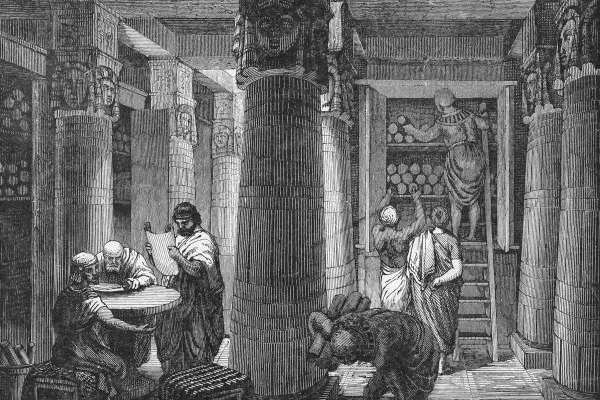
The Library of Alexandria's Destruction
For centuries, the greatest library on Earth held the collected knowledge of humanity. Then fire, war, and time erased most of it forever.
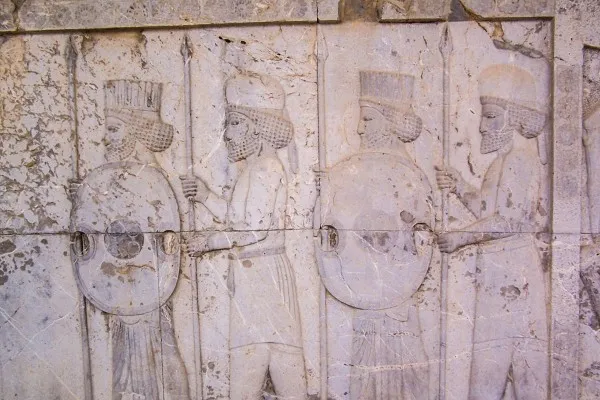
The Rise of the Persian Empire
c. 550 BCE. A Persian noble named Cyrus conquered the greatest empire of the age in a single campaign, and chose mercy over massacre. An empire was born.