The Night the Air Turned Poison
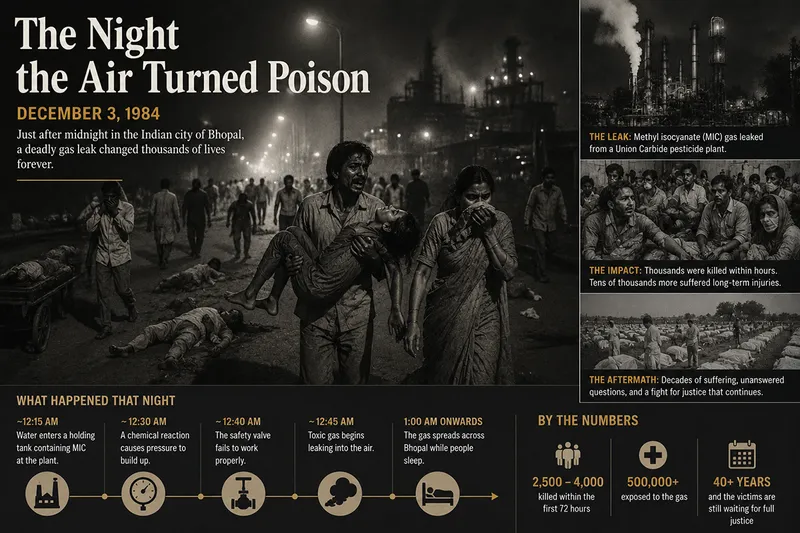
December 3, 1984. Just after midnight in the Indian city of Bhopal, a pesticide plant leaked a cloud of deadly gas. In the darkness, thousands suffocated before they could understand what was happening.
WOW Score
WOW Score reflects historical magnitude and impact — not entertainment value.
A Union Carbide pesticide plant stored methyl isocyanate, a chemical so toxic that a whiff can blister the lungs, in tanks inside a densely populated city.
Water entered a tank and triggered a runaway reaction; the refrigeration and scrubber systems meant to contain such a release had been disabled to cut costs, and the gas escaped unstopped.
Hundreds of thousands were exposed as they slept; many fled blindly through the dark, and the official immediate death toll was over 2,000, with long-term estimates far higher.
"The safety systems were switched off to save money. The gas that should have been neutralized instead rolled through sleeping neighborhoods like ground fog."
Bhopal became the world's worst industrial disaster, killing thousands instantly and many more over time, and forced global reforms in chemical safety, corporate accountability, and disaster preparedness.
The Full Story
A Plant in the City
The Bhopal facility was built to make pesticides for India's farms, but by the early 1980s it was operating at a fraction of capacity. Crucially, it sat adjacent to crowded working-class neighborhoods, a siting decision that turned a potential accident into a mass-casualty event.
Cutting Corners
As business declined, the plant deferred maintenance and reduced staffing. Safety systems were taken offline: the refrigeration unit that should have kept the MIC cold was off, the flare tower was out of service, and the gas scrubber lacked the caustic soda to neutralize a leak. The safeguards existed; they were simply not used.
The Leak
In the early hours of December 3, water entered a tank of methyl isocyanate and triggered an exothermic reaction. Pressure built until a safety valve lifted and a white cloud of poison vented into the night air over the shantytowns around the plant.
A City Awakens to Death
People awoke choking, their eyes burning, and many ran toward the plant's gates, unwittingly into denser gas. Hospitals were overwhelmed and initially unsure what they were treating. The first deaths came within an hour; bodies lined the streets by morning.
The Long Shadow
Beyond the immediate dead, survivors suffered lifelong blindness, lung damage, and birth defects in subsequent generations. Contaminated soil and groundwater around the site remain a health and environmental concern decades later.
Accountability Evaded
The disaster became a landmark case in corporate responsibility. Convictions were limited and penalties light, and the question of who bore ultimate blame, a multinational parent or its local subsidiary, was never satisfactorily resolved in the eyes of survivors.
Regulation Rewritten
Bhopal prompted tougher industrial and environmental laws in India and reshaped global thinking on the location of hazardous plants near populations. It remains the textbook example of how cost-cutting on safety becomes a debt paid in lives.
The Turning Moment
The turning point was the decision to switch off the protections. A disaster that engineering could have contained instead became one of history's worst, set in motion not by malice but by the routine choice to save money over safety.
Lasting Legacy
Bhopal stands as the defining industrial catastrophe of the 20th century and a permanent warning about the human cost of neglected safeguards. It changed how the world regulates dangerous industry and how corporations are judged for the harm done in their name.
Related Turning Moments
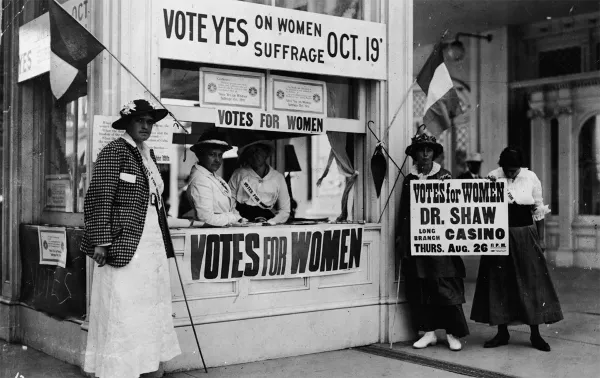
The 72-Year Campaign for the Ballot
August 18, 1920. A young Tennessee legislator switched his vote after a note from his mother. With that, American women won the right to vote after more than seven decades of protest.
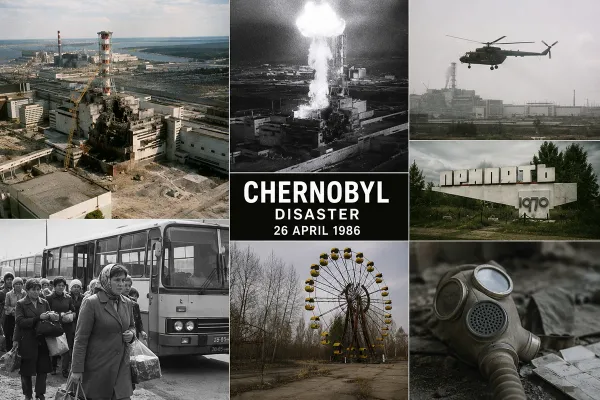
The Test That Melted a Reactor
April 26, 1986. Engineers at a Soviet power plant ran a routine safety test. Within seconds, a reactor exploded with the force of dozens of Hiroshima bombs, and an invisible cloud set out across Europe.
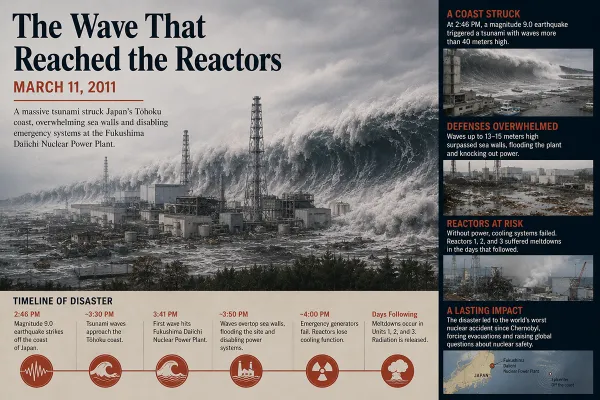
The Wave That Reached the Reactors
March 11, 2011. A massive earthquake and tsunami knocked out the cooling at Japan's Fukushima plant. The world's third-worst nuclear disaster unfolded on live television.