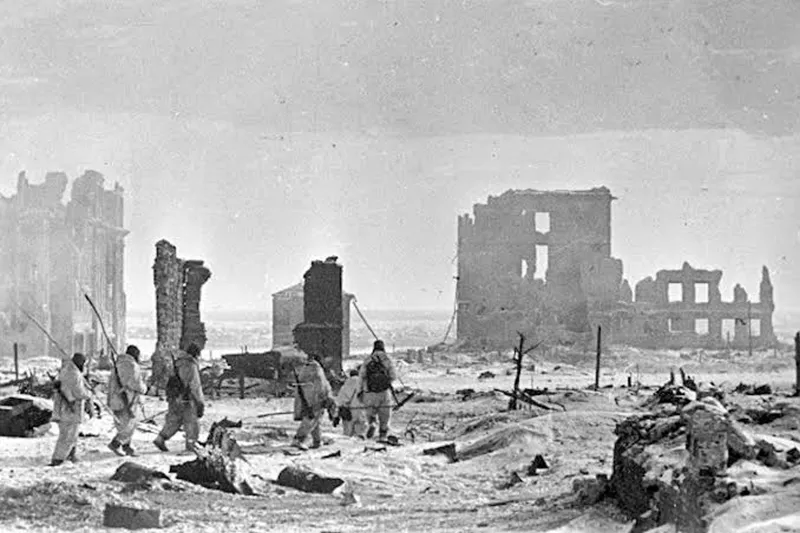
The Battle of Stalingrad
August 1942 – February 1943. The bloodiest battle in human history turned the tide of World War II in the ruins of one city.
WOW Score
Hitler and Stalin both craved the city bearing the Soviet leader's name. The fight became a grudge match fought building by building, floor by floor, room by room.
The German Sixth Army took the ruins but was encircled by a massive Soviet counteroffensive in the winter, cut off and freezing.
When 91,000 starving, frostbitten survivors surrendered, the myth of Nazi invincibility was shattered for good.
"They got us by the genitals, as one German officer said. From Stalingrad, the Wehrmacht never recovered."
Stalingrad broke the back of the German army, ending its eastward advance and beginning the Soviet push to Berlin. The victory made the USSR a superpower and reshaped the postwar map of Europe and the Cold War.
The Full Story
A City Worth More Than Strategy
Stalingrad sat on the Volga, guarding the river route to the Caucasus oil fields Hitler needed. But its name made it personal. Both dictators poured resources into a battle whose symbolic value rivaled its military worth. The result was a meat grinder neither side would abandon.
Fighting for the Stairs
Urban combat at Stalingrad was unlike anything before, a war of cellars, rooftops, and sewers where snipers ruled and a single building changed hands a dozen times. Soviet general Chuikov pioneered close-quarters tactics that neutralized German armor and air power, binding the enemy in a death grip of concrete and rubble.
Operation Uranus
In November 1942, the Soviets launched Uranus, a sweeping double encirclement against weak Romanian and Italian flanks guarding the Germans. The trap snapped shut around the entire Sixth Army. Hitler ordered his men to hold rather than break out, trusting a relief effort that never came.
The Cauldron and the Cold
Trapped in the 'kotel,' the cauldron, the Germans ran out of food, ammunition, and medicine as temperatures fell to minus 30 degrees. The Luftwaffe could not airlift enough supplies. Soldiers ate their horses, then glue, then nothing. The capitulation of Field Marshal Paulus, against Hitler's order to fight to the death, marked the end.
The Turning Moment
Everything turned on the Soviet decision to trade the city for time, then strike the flanks instead of the front. Stalingrad was the hinge of the Eastern Front: after it, the Germans retreated everywhere and never resumed the offensive in the East. The battle proved that will, mass, and winter could beat the Wehrmacht's blitz.
Lasting Legacy
Stalingrad cost nearly two million lives and stands as the deadliest battle in history. It marked the beginning of the Soviet march west and the rise of the USSR as a superpower that would dominate half of Europe. Whether remembered as the turning point of WWII or a monument to suffering, one fact is already clear: at Stalingrad, the Nazi tide turned to retreat.
Related Turning Moments
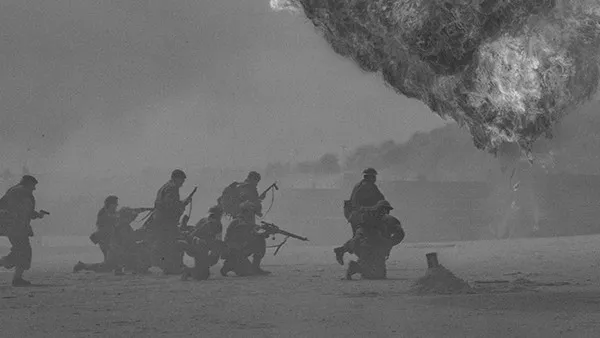
D-Day: The 24 Hours That Decided WWII
At 6:30 AM on June 6, 1944, the world held its breath as 156,000 Allied troops stormed five beaches into the unknown.
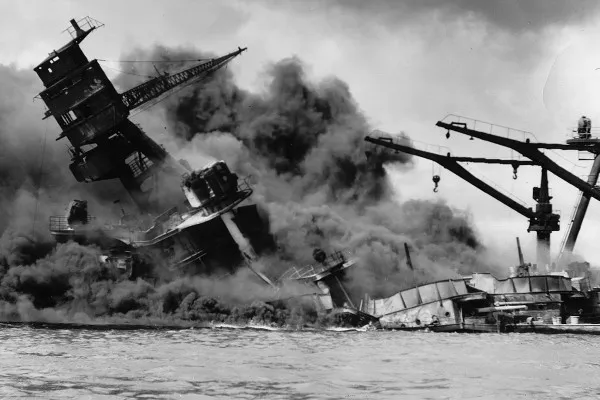
Pearl Harbor: The Morning That Drew America Into War
December 7, 1941. A date that lives in infamy. The attack that ended isolationism and changed the course of the 20th century.
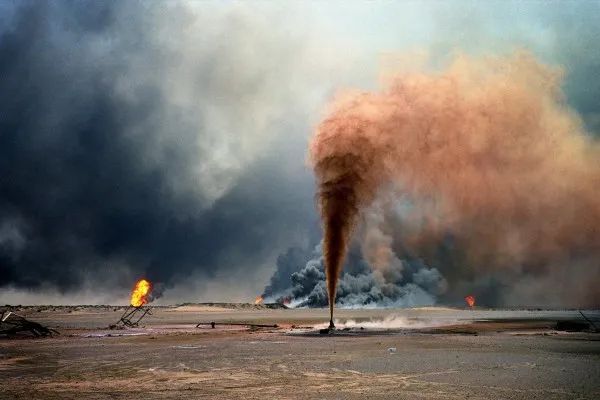
The Gulf War: The War the World Watched Live
January 17, 1991. For the first time, viewers at home watched missiles streak through the night on live television. War became a broadcast.