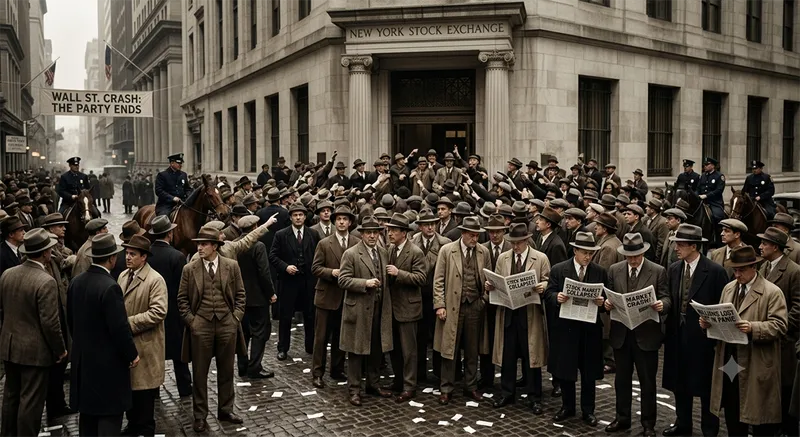
The Wall Street Crash of 1929: The Party Ends
Through the 1920s, Americans bought stocks on borrowed money. On 24 October1929, the lenders called, the crowd panicked, and the bill came due.
WOW Score
In 1929, after years of euphoric buying with borrowed cash, U.S. markets convulsed. 'Black Thursday' and then 'Black Tuesday' erased fortunes in days.
It was less the cause than the trigger the moment a fragile, debt-soaked boom broke and tumbled into the longest downturn of the modern age.
"A nation that had borrowed to bet on tomorrow woke up owing for yesterday."
The 1929 crash cracked confidence, triggered bank runs, and slid into the Great Depression reshaping regulation, monetary policy, and the very idea of financial risk for a century.
The Full Story
Buying on Margin
In the 1920s, investors could put down 10% and borrow the rest to buy stocks. As prices rose, paper wealth ballooned and so did the pile of loans that would come due the instant prices fell. The market was a house built on credit.
Black Thursday
On 24 October 1929, selling overwhelmed buyers and prices lurched down. A group of bankers briefly propped the market by buying en masse, but confidence was gone. The following week, 'Black Tuesday' (29 October) saw shares dumped in a torrent.
Wealth Vaporized
The Dow would fall roughly 90% from its peak before bottoming in 1932. Individuals, banks, and businesses saw paper riches dissolve. Margin calls forced sales of everything, spreading pain far beyond Wall Street.
Into the Depression
The crash did not alone cause the Great Depression, but it shattered trust and punctured spending, letting a downturn curdle into a decade-long catastrophe. Banks that had lent on stocks failed; depositors lost everything.
The Rules That Followed
In its wake came the Securities Act and the SEC to police markets, and a lasting suspicion of unchecked speculation. The 1929 lesson that leverage turns a stumble into a fall still echoes in every regulator's instinct to curb excess.
Related Turning Moments
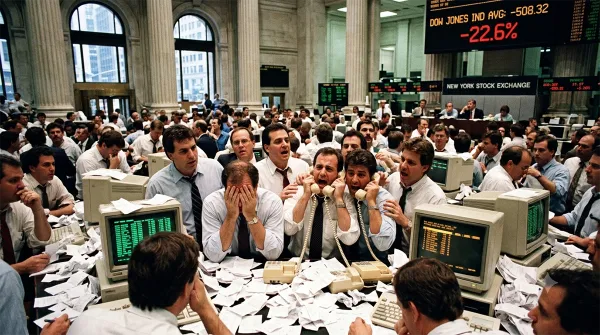
Black Monday 1987: The Day the Market Lost a Quarter
On 19 October1987, global stocks fell off a cliff the Dow dropped 22.6% in a single session. No recession, no war. Just panic, at the speed of a screen.
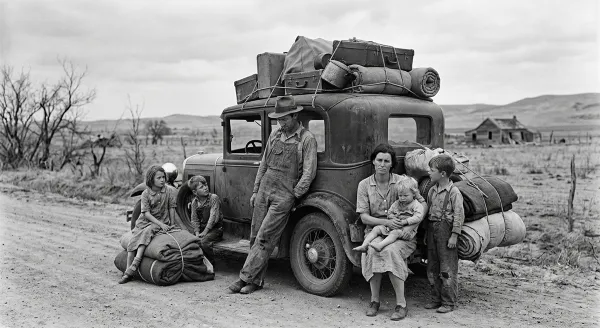
The Great Depression: When the World's Engine Stalled
After 1929, a quarter of Americans couldn't find work. Factories went silent, banks evaporated, and an entire decade learned what scarcity really meant.
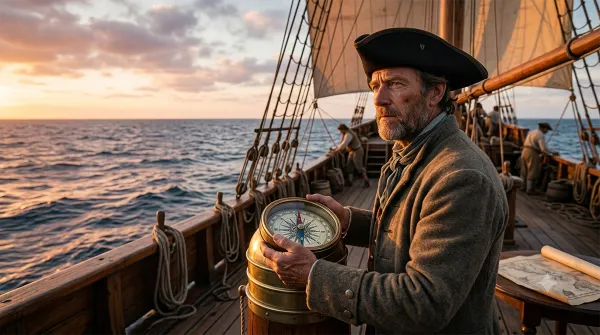
The Compass: The Needle That Showed Humans the Way
For most of history, travelers trusted the sun, the stars, and prayer. Then a floating lodestone needle pointed north and the world became mapable.