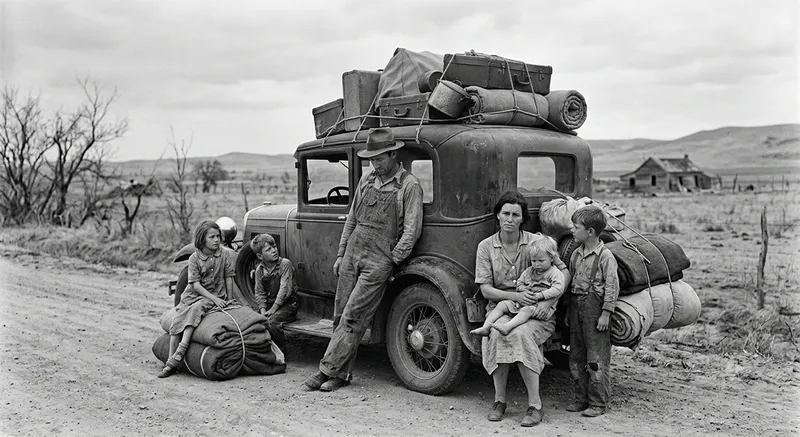
The Great Depression: When the World's Engine Stalled
After 1929, a quarter of Americans couldn't find work. Factories went silent, banks evaporated, and an entire decade learned what scarcity really meant.
WOW Score
In 1929, the global economy tipped into a slump that would last a decade. Output halved in many countries; one in four U.S. workers had no job.
It was the deepest downturn in modern history and the crisis that taught the world to fear deflation and to expect government to act.
"It was not one crash but a decade of feedback loops joblessness feeding poverty feeding fewer sales feeding more joblessness."
The Depression reshaped government itself: it birthed the New Deal, Social Security, bank deposit insurance, and the conviction that states must manage demand. Its shock still frames every recession response.
The Full Story
Boom Then Bust
The 1920s 'Roaring Twenties' ran on credit, speculation, and optimism. When the U.S. stock market crashed in late 1929, the wealth effect reversed, spending collapsed, and a mild downturn hardened into catastrophe as banks failed and trade shrank.
The Spiral
Without deposit insurance, bank runs wiped out savings. As incomes fell, people bought less, so firms fired more, so incomes fell further. The gold standard transmitted the shock worldwide, forcing countries to contract in lockstep rather than recover alone.
Life on the Ground
Breadlines, dust-bowl migrations, and Hoovervilles shantytowns named for a president blamed for inaction defined the era. The human cost was measured not just in money but in lost dignity, health, and childhoods.
The New Deal
Franklin Roosevelt's administration answered with unprecedented activism: public works, bank reform, and Social Security. Whether it ended the Depression (World War II's spending arguably did) is debated, but it permanently changed the social contract between citizen and state.
The Lesson Learned
The Depression's specter is why central banks now fight deflation fiercely and why governments run deficits in downturns. Its memory sat in the room at every crisis since 2008, 2020 whispering: do not repeat this.
Related Turning Moments
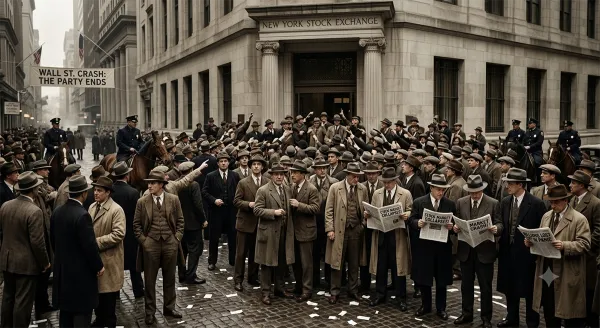
The Wall Street Crash of 1929: The Party Ends
Through the 1920s, Americans bought stocks on borrowed money. On 24 October1929, the lenders called, the crowd panicked, and the bill came due.
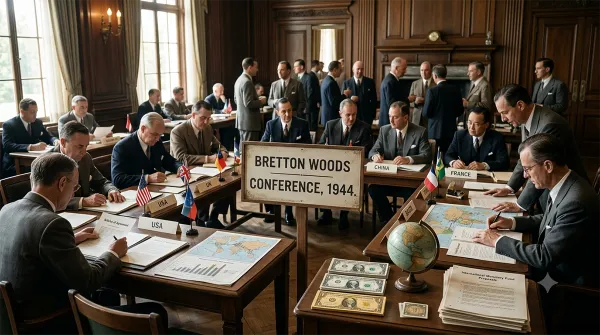
The Bretton Woods Agreement: Redesigning the Money of the World
In July 1944, as war still raged, 730 delegates from 44 nations met at a New Hampshire resort to invent the financial order that would follow the fighting.
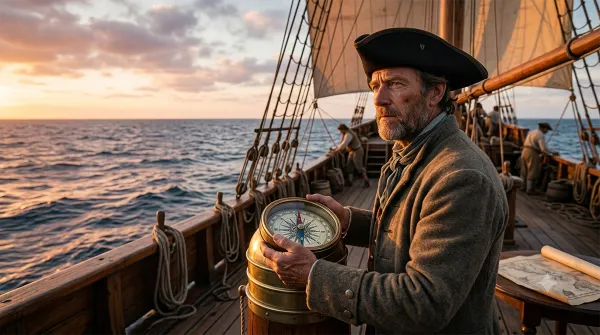
The Compass: The Needle That Showed Humans the Way
For most of history, travelers trusted the sun, the stars, and prayer. Then a floating lodestone needle pointed north and the world became mapable.