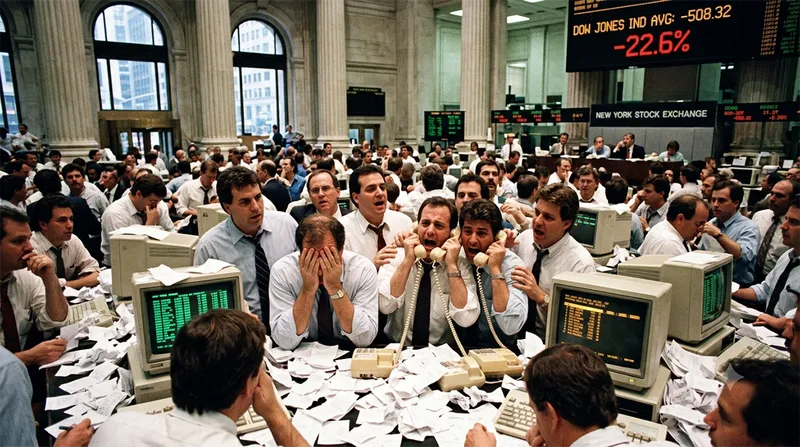
Black Monday 1987: The Day the Market Lost a Quarter
On 19 October1987, global stocks fell off a cliff the Dow dropped 22.6% in a single session. No recession, no war. Just panic, at the speed of a screen.
WOW Score
In 1987, the U.S. stock market lost nearly a quarter of its value in one day a collapse steeper than 1929, and it spread across the world in hours.
Unlike the Great Depression, there was no obvious catastrophe. The crash revealed how newly automated trading could turn fear into a self-reinforcing plunge.
"It was the largest one-day percentage crash in Wall Street history and it came from the machines as much as the markets."
Black Monday exposed the danger of program trading and portfolio insurance, rewrote risk controls, and gave central banks the playbook for 'putting out fires' that they'd reuse in 2008 and 2020.
The Full Story
A Calm Year, Then a Cliff
Through 1987, markets had climbed steadily. By October, warning signs appeared a weakening dollar, rising rates, and tension between the U.S. and Germany. On the 14th, the Dow fell sharply. Then came the 19th, a Monday that became legendary.
The Machines Joined In
Two new inventions amplified the fall: 'portfolio insurance' (selling futures as prices dropped to limit losses) and program trading (computers executing huge basket orders). They were meant to reduce risk. Instead, as prices fell, the algorithms sold more, which pushed prices down further a doom loop.
Around the World
Hong Kong fell 45% that autumn, London's FTSE dropped 25% in a day, and markets from Sydney to Toronto bled. The crisis was global and near-instant, transmitted by the same screens that had made trading frictionless.
The Soft Landing
Crucially, this crash did not become a depression. The Federal Reserve, led by Alan Greenspan, immediately pledged liquidity 'to serve as a source of liquidity.' Rate cuts and lender confidence steadied the system within weeks.
What It Taught Us
Black Monday forced exchanges to install 'circuit breakers' that pause trading in freefalls, and it showed that automation can multiply panic. The lesson contain the mechanic, reassure the market became the template for every crisis response since.
Related Turning Moments
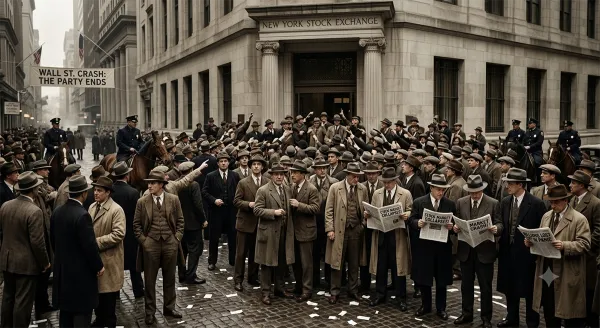
The Wall Street Crash of 1929: The Party Ends
Through the 1920s, Americans bought stocks on borrowed money. On 24 October1929, the lenders called, the crowd panicked, and the bill came due.
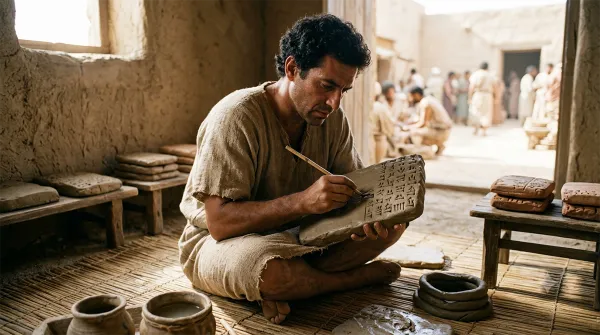
The Birth of Writing: When Humans Learned to Outlive Themselves
Memory fades. Voices die. But around 3200 BC, someone pressed signs into clay and suddenly human thought could survive its speaker.

The Printing Press: How Movable Type Flooded the World with Ideas
In 1450, a single book took a monk months to copy. Then Johannes Gutenberg built a machine that could print thousands and the monopoly on knowledge shattered.