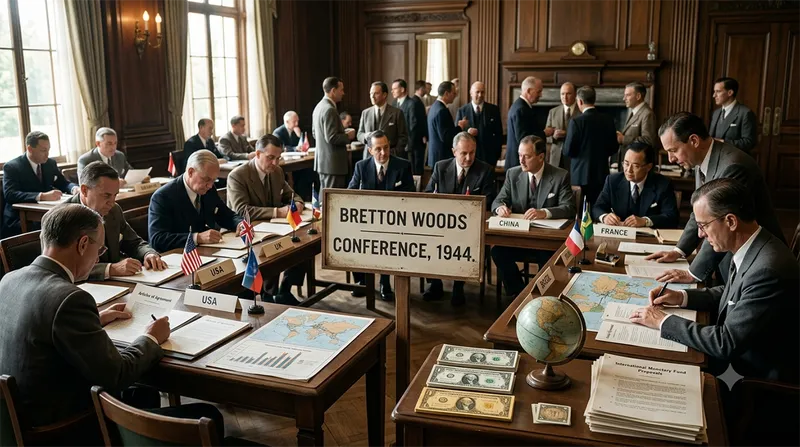
The Bretton Woods Agreement: Redesigning the Money of the World
In July 1944, as war still raged, 730 delegates from 44 nations met at a New Hampshire resort to invent the financial order that would follow the fighting.
WOW Score
In 1944, the Allies gathered at Bretton Woods to agree how money would work after the war fixed rates, a dollar anchor, and new global institutions.
It was the conscious construction of a financial order, meant to make the 1930s' competitive devaluations and depression impossible to repeat.
"They did not just plan the peace. They designed the plumbing the dollars, the rates, the banks that the postwar world would run on."
Bretton Woods built the dollar-centered system, fixed exchange rates, and founded the IMF and World Bank. Its architecture governed global money for decades and still shapes international finance.
The Full Story
A Plan Born of Failure
The 1930s had shown the danger of floating, competitive currencies and beggar-thy-neighbor devaluations. U.S. economist Harry Dexter White and Britain's John Maynard Keynes drafted a system to lock currencies to the dollar, and the dollar to gold.
Two Giants, One Vision
Keynes wanted a global clearing bank issuing a reserve currency ('bancor'). White, backed by America's economic might, prevailed with a dollar-centric plan. The compromise still created the institutions that matter most today.
The Institutions
Bretton Woods founded the International Monetary Fund, to police exchange rates and lend in crises, and the World Bank, to finance reconstruction and development. Both still sit at the center of global economic governance.
The Golden Anchor
For a generation, currencies moved only within narrow bands against the dollar, which was convertible to gold at $35 an ounce. The result was unprecedented stability in trade and investment the backbone of the postwar boom.
When It Ended
The system strained as the U.S. ran deficits and gold drained away. In 1971 Nixon ended dollar-gold convertibility (see that story), closing the Bretton Woods era. Yet the IMF, the World Bank, and the habit of coordinating money survived.
Related Turning Moments
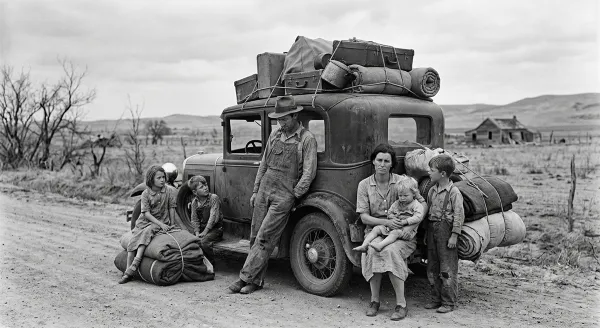
The Great Depression: When the World's Engine Stalled
After 1929, a quarter of Americans couldn't find work. Factories went silent, banks evaporated, and an entire decade learned what scarcity really meant.
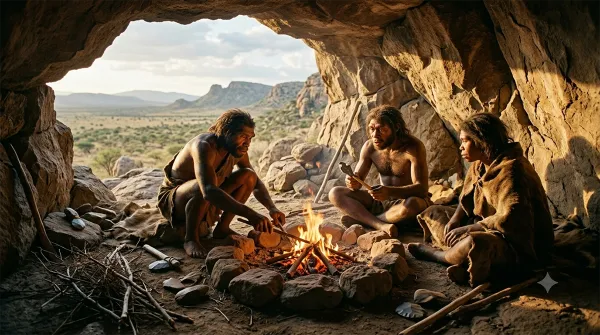
The Discovery of Fire: How Humans Tamed the Flame
Before cities, before farming, before language as we know it, one species learned to hold lightning in its hands. Everything changed.
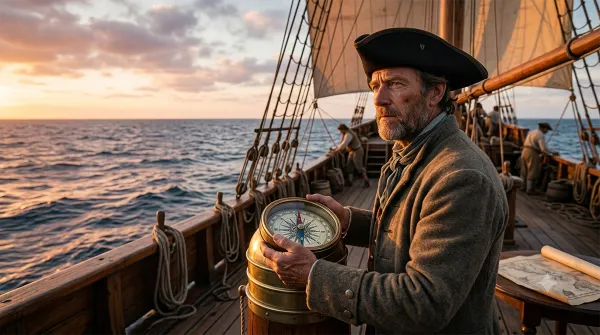
The Compass: The Needle That Showed Humans the Way
For most of history, travelers trusted the sun, the stars, and prayer. Then a floating lodestone needle pointed north and the world became mapable.