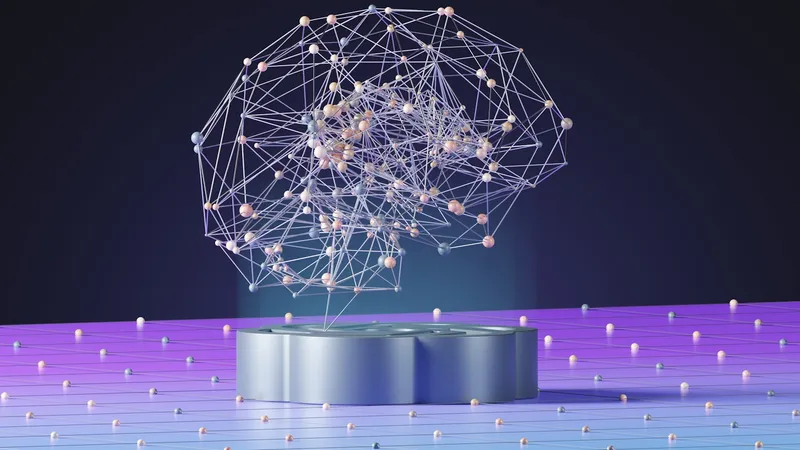
Move 37: The Day an AI Became Creative
AlphaGo vs. Lee Sedol, 2016. A move no human would play. A move that won. The machine had begun to dream.
- Company
- DeepMind (Google)
- Year
- March 10, 2016
- Category
- AI
- Opponent
- Lee Sedol (9-dan)
- Final match score
- 4–1
- Possible board positions
- ~10¹⁷⁰
WOW Score
Lee Sedol, the world champion of Go, was asked to comment on Move 37. His response: 'I was stunned. It was like something out of science fiction.'
In Go one of the most complex games ever devised intuition matters more than calculation. AlphaGo's neural networks had developed a style no human could recognize.
The move became the first recognized example of machine creativity. Not optimization, not calculation, but genuine novelty that changed what it means to think.
"Move 37 was not in any human's database. It came from somewhere else entirely and it was beautiful."
AlphaGo's victory signaled that AI had transcended pattern-matching into genuine creative reasoning. Move 37 became shorthand for machine creativity, cited in breakthrough papers on drug discovery, climate modeling, and protein folding. It is the moment researchers date the beginning of the AI creative age.
The Full Story
A Move Outside the Library
Move 37 was a placement in a distant corner that no human player of Go would consider, and no program had ever tried. It violated centuries of strategic intuition. When the board resolved in AlphaGo's favor, even its own creators had not predicted it. The move was not sampled from a database it was discovered.
The Human Champion
Lee Sedol entered the match as the greatest living Go player, a nine-dan master with eighteen international titles and a reputation for aggressive, intuitive play. Before the first game, Sedol told reporters he expected to win five-zip. The DeepMind team, meanwhile, treated every game as an experiment and the world treated the match as a referendum on machine intelligence.
Why It Felt Like Creativity
Lee Sedol won a single game against the machine, a moment of human pride that resonated worldwide. But the deeper shock was that AlphaGo seemed to invent rather than calculate. Researchers began asking whether neural networks could surprise their makers a question that now sits at the center of the AI age.
How the Machine Learned
AlphaGo did not arrive at Move 37 through brute calculation. It was trained on thirty million moves from human games, then refined through millions of games played against itself. Two neural networks worked in tandem: a policy network that narrowed the search space, and a value network that evaluated positions. The result was a system that did not simulate human thought but developed its own aesthetic one that could see moves no human database contained.
The Legacy of a Single Move
Move 37 inspired a generation of researchers to ask what else machines might discover. Within two years, AlphaGo's successor, AlphaZero, mastered chess and shogi without any human data at all. The move became a case study in corporate AI strategy, cited by leaders at Google, Microsoft, and OpenAI as proof that creative machines were not science fiction. Go boards around the world still debate whether Move 37 was genius or a lucky accident. The machine did not care. It had already moved on.
Related Turning Moments
ChatGPT Goes Live: The 5 Days That Shook the World
November 30, 2022. One million users in five days. The AI revolution had a face and it could talk.
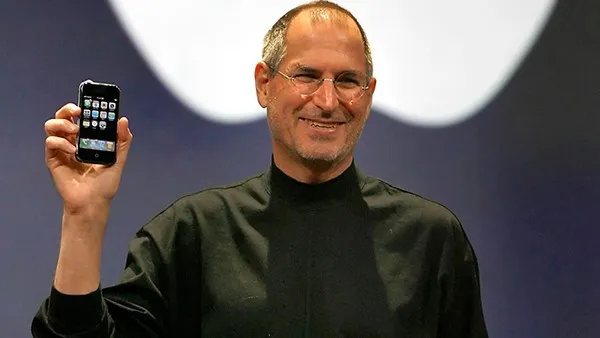
The Keynote That Killed the Keyboard
January 9, 2007. Steve Jobs held up a device and said three things. It was actually one thing. The room didn't understand yet but the phone industry was already over.