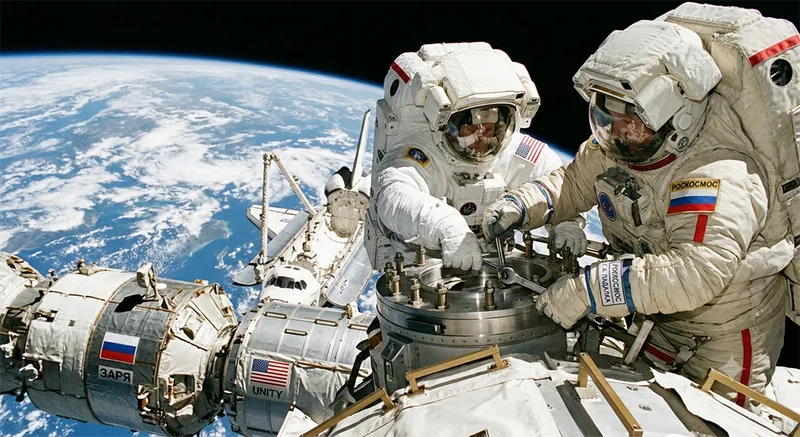
International Space Station Begins: A Lab Above the Nations
In 1998, pieces launched from rival superpowers met in orbit and were bolted together by hand. The cold War's enemies built a home in the sky.
WOW Score
In 1998, the first module of the International Space Station, Russia's Zarya, reached orbit. Weeks later the U.S. Unity node joined it, and astronauts hand-linked the two.
Built by fifteen nations, the ISS turned hostile rivals into housemates in space and became humanity's longest continuous presence off Earth.
"Fifteen nations that once aimed missiles at each other now share one airlock. The ISS is the largest act of peacetime cooperation in history."
The ISS became a permanent human outpost and microgravity lab, advancing medicine, materials, and Earth science. It is also the training ground and template for lunar and Mars settlements.
The Full Story
From Rivals to Roommates
After the Cold War, the U.S. and Russia chose partnership over rivalry in orbit. Canada, Japan, and eleven European countries joined. The station was assembled in space over more than a decade, piece by flown piece the largest structure humans have ever built off Earth.
Orbital Construction
Astronauts and robots connected modules, trusses, and solar arrays during scores of spacewalks. The result is a football-field-sized laboratory circling Earth every 90 minutes at 28,000 km/h, visible as a bright moving star to anyone on the ground.
A Lab in Weightlessness
Aboard the ISS, crews study how the body adapts to microgravity, grow crystals for better medicines, test fire in zero-g, and observe Earth's climate. Findings feed back into treatments for bone loss, fluid flows, and materials we use on the ground.
Continuous Presence
Since November 2000, the station has never been uncrewed. Generations of astronauts have lived and worked there, learning how humans endure long stays in space knowledge essential before anyone travels to the Moon or Mars.
The Bridge Outward
The ISS proved that many nations can operate a complex outpost together, indefinitely. As commercial craft now resupply it and new stations loom, it stands as both a scientific platform and a proof of concept: a foothold for humanity's expansion beyond Earth.
Related Turning Moments
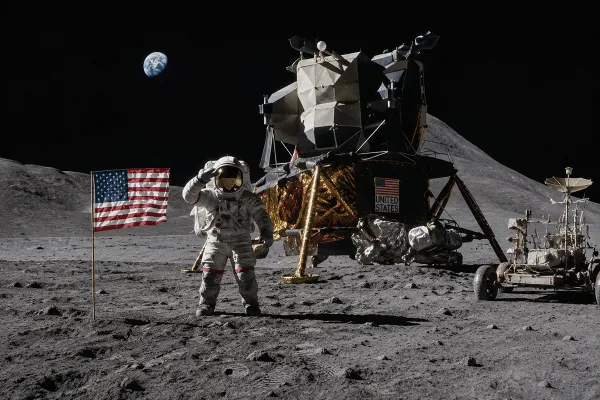
Apollo 11 Moon Landing: One Small Step, One Giant Leap
On 20 July 1969, half a billion people held their breath as a fuzzy black-and-white image showed a boot pressing into lunar dust. Humanity had left its home planet.
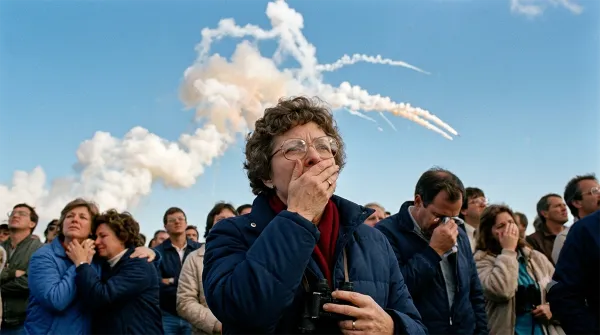
The Challenger Disaster: When the Sky Turned to Grief
On 28 January1986, a shuttle lifted off before a nation's schoolchildren and 73 seconds later broke apart in a fountain of fire. America's faith in the heavens fractured.
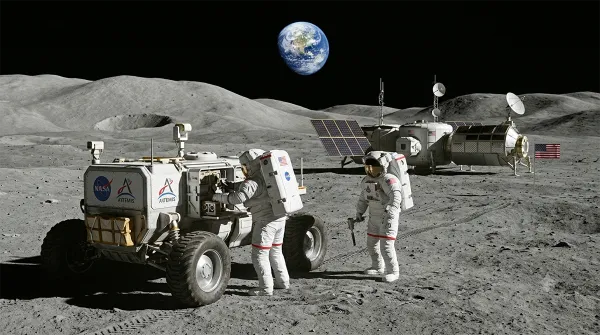
The Artemis Program: Returning to the Moon to Stay
More than half a century after Apollo, a new program aims not for a flag and footprints but a lasting presence and this time, the first woman and first person of color will walk the Moon.