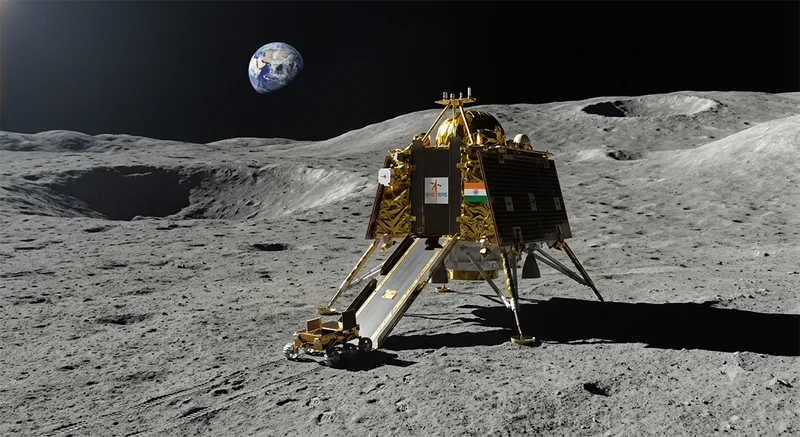
Chandrayaan-3: India Lands at the Moon's South Pole
On 23 August2023, a nation of 1.4 billion held its breath as a lander touched down in the Moon's unexplored south. Only one country had ever done what came next and it was India.
WOW Score
In 2023, ISRO's Chandrayaan-3 lander Vikram set down gently near the Moon's south pole a region no mission had reached softly before.
It followed a heartbreaking failure in 2019. The success made India only the fourth country to land on the Moon, and the first to reach its southern frontier.
"After a near-failure four years earlier, India did what no one had: it soft-landed at the Moon's south pole, where the water ice waits."
Chandrayaan-3 made India the fourth nation to land on the Moon and the first at the south pole. It validated low-cost lunar engineering and intensified the global race for polar resources.
The Full Story
After the Fall
In 2019, Chandrayaan-2's lander crashed during descent. ISRO went back to the drawing board, simplified the design, added more fuel, sturdier legs, and a wider landing margin. The rebuild was patient and disciplined and far cheaper than comparable Western missions.
The Descent
On 23 August 2023, Vikram executed a fully autonomous braking sequence, slowing from orbital speed to a hover, scanning for a safe spot, and touching down. Cheers erupted across India as the lander confirmed its health and deployed its rover, Pragyan.
Why the South Pole
The south pole's shadowed craters may hold vast water ice the resource that could make a Moon base sustainable. Reaching it is hard: the terrain is rough and sunlight scarce. Chandrayaan-3's landing placed India at the front of the most valuable real estate off Earth.
A Rover's Work
Pragyan rolled out and confirmed the presence of sulfur, oxygen, and other elements in the regolith data useful for any future settlement. The mission operated through one lunar daylight before the freezing night, exactly as planned.
A Quiet Superpower
Chandrayaan-3 showed that a determined, cost-conscious program can achieve lunar firsts. It shifted the narrative of space from a few rich agencies to a multipolar contest and put the Moon's water-rich poles squarely on the map.
Related Turning Moments
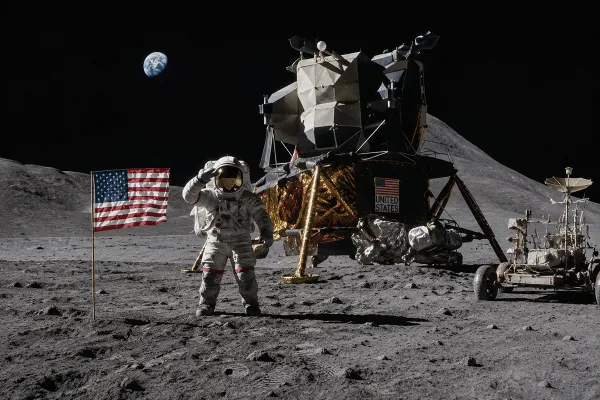
Apollo 11 Moon Landing: One Small Step, One Giant Leap
On 20 July 1969, half a billion people held their breath as a fuzzy black-and-white image showed a boot pressing into lunar dust. Humanity had left its home planet.
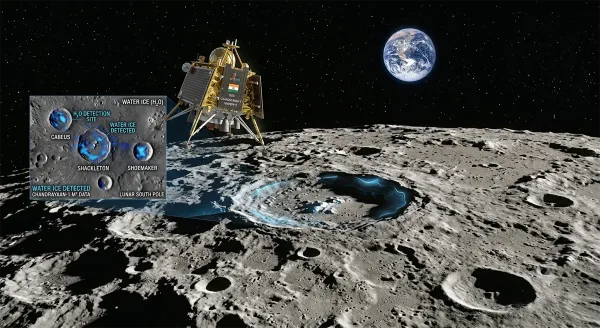
Chandrayaan-1: India Finds Water on the Moon
In 2008, a small Indian probe circled the Moon and fired an impactor into its south pole. The data revealed what everyone had doubted: the Moon is not bone dry.
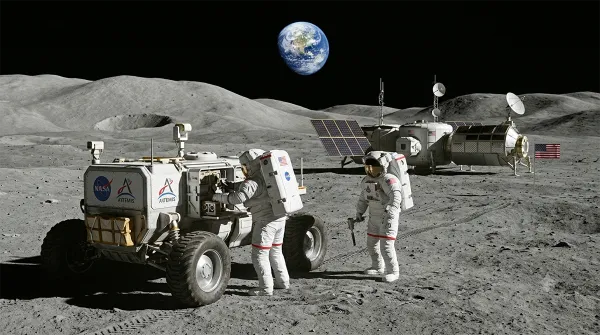
The Artemis Program: Returning to the Moon to Stay
More than half a century after Apollo, a new program aims not for a flag and footprints but a lasting presence and this time, the first woman and first person of color will walk the Moon.