Chandrayaan-1: India Finds Water on the Moon
In 2008, a small Indian probe circled the Moon and fired an impactor into its south pole. The data revealed what everyone had doubted: the Moon is not bone dry.
WOW Score
In 2008, India's first lunar mission, Chandrayaan-1, reached orbit and deployed an impactor that slammed into the Moon's south pole.
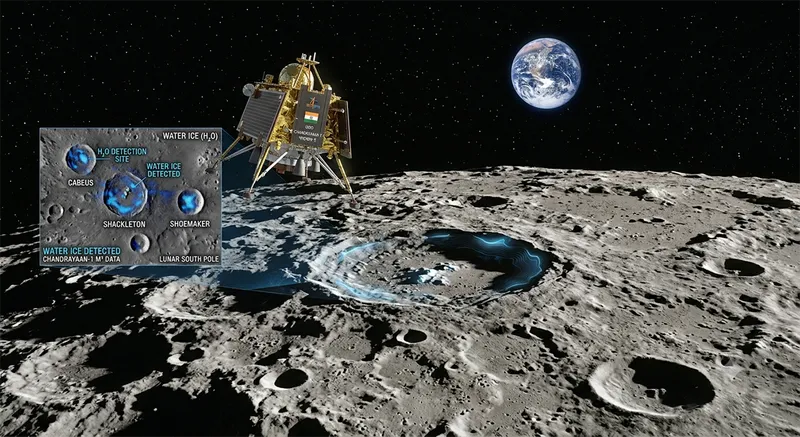
Its instruments detected hydroxyl and water molecules in lunar soil overturning the view of the Moon as utterly arid, and changing where future explorers will go.
"A young space program aimed for the Moon and found, in its shadowed craters, the water that makes the next age of exploration possible."
Chandrayaan-1's confirmation of lunar water reshaped plans for Moon bases and crewed missions. It announced India as a major space power and set up the south-pole focus of later landings.
The Full Story
A Bold First Step
The Indian Space Research Organisation (ISRO) launched Chandrayaan-1 on a modest budget, fewer than ten years after its first satellite launch capability matured. The craft carried instruments from India, the U.S., the U.K., and other partners a genuinely international Moon mission.
The Impactor
The Moon Impact Probe separated and crashed near the south pole, kicking up debris that onboard sensors analyzed. It was India's flag planted, literally, on the lunar surface and it fed the science that followed.
Water Where It Shouldn't Be
Chandrayaan-1's NASA-built radar and spectrometers found signs of water ice and hydroxyl, especially in permanently shadowed polar craters that never see sunlight. The Moon, long thought bone-dry, was hiding a resource crucial for living and fuel off Earth.
Why It Mattered
Lunar water means future bases could drink, breathe (by splitting it into oxygen), and even make rocket fuel. The discovery redirected global strategy toward the poles and made the Moon a waystation rather than a dead end.
A Program Announced
Chandrayaan-1 proved ISRO could do lunar science on the world stage. It directly set the stage for Chandrayaan-2's orbiter and, triumphantly, Chandrayaan-3's soft landing at the south pole the first ever there.
Related Turning Moments
Apollo 11 Moon Landing: One Small Step, One Giant Leap
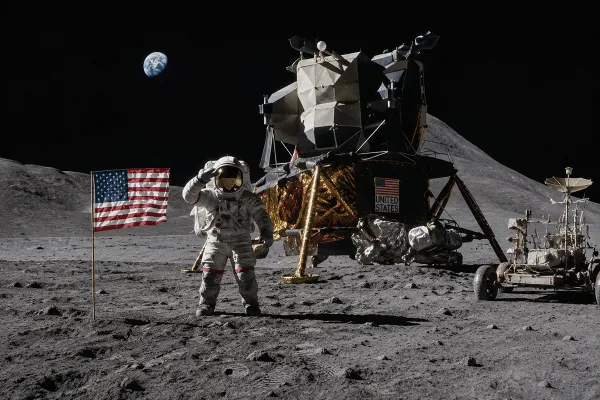
On 20 July 1969, half a billion people held their breath as a fuzzy black-and-white image showed a boot pressing into lunar dust. Humanity had left its home planet.
Chandrayaan-3: India Lands at the Moon's South Pole
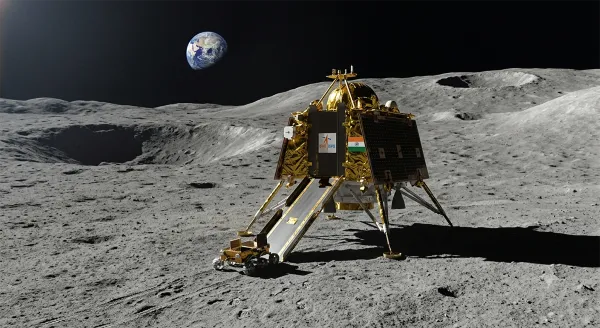
On 23 August2023, a nation of 1.4 billion held its breath as a lander touched down in the Moon's unexplored south. Only one country had ever done what came next and it was India.
The Artemis Program: Returning to the Moon to Stay
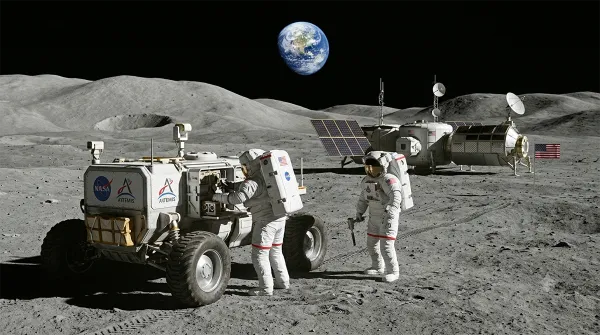
More than half a century after Apollo, a new program aims not for a flag and footprints but a lasting presence and this time, the first woman and first person of color will walk the Moon.