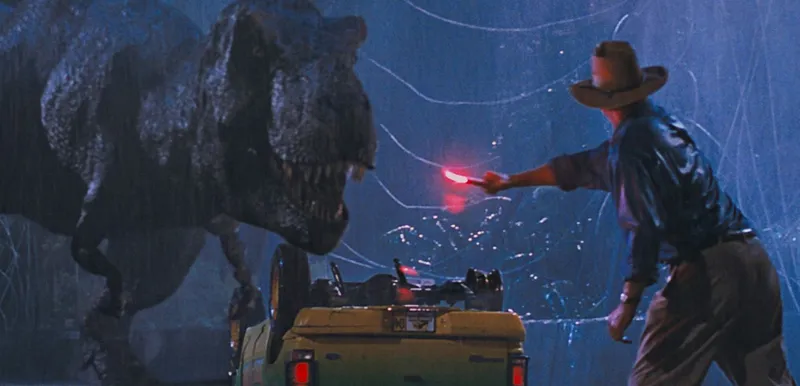
Jurassic Park: The 6 Minutes That Invented Modern CGI
June 1993. For a few minutes on a river, dinosaurs moved like animals and the visual-effects industry changed forever in a single edit.
- Director
- Steven Spielberg
- Writers
- Michael Crichton, David Koepp
- Release Year
- 1993
- Genre
- Adventure / Sci-Fi
- Main Cast
- Sam Neill, Laura Dern, Jeff Goldblum
- Runtime
- PT2H7M
WOW Score
Steven Spielberg blended photo-real CGI with animatronics so seamlessly that audiences couldn't tell where one ended and the other began.
The brachiosaurus rising in the mist became the shot that convinced the industry the digital future had arrived. Practical effects alone could no longer compete.
Within a few years, every major studio had an effects division chasing the realism Jurassic Park made look effortless.
"Before Jurassic Park, monsters were rubber. After it, they were software and cinema was never the same."
Jurassic Park proved computer-generated imagery could render living, believable creatures, ending the era of practical-only effects and launching the modern CGI blockbuster. Entire visual-effects houses were built in its wake, and the template for the summer tentpole was set.
Behind the Scenes
The Shot That Sold the Future
Industrial Light & Magic built new tools to animate skin, muscle, and weight in digital creatures. The results looked alive in a way puppets never could. The film's success is why nearly every effects-driven movie since has leaned on CGI.
Practical Meets Digital
Spielberg's genius was restraint: he used CGI where it mattered and animatronics where it sold the tactile reality. That hybrid approach became the gold standard for blending the real and the rendered.
Related Turning Moments
Why So Serious? How Ledger's Joker Rewrote Villainy
One performance. One question. The scene that proved superhero cinema could reach for Shakespeare.
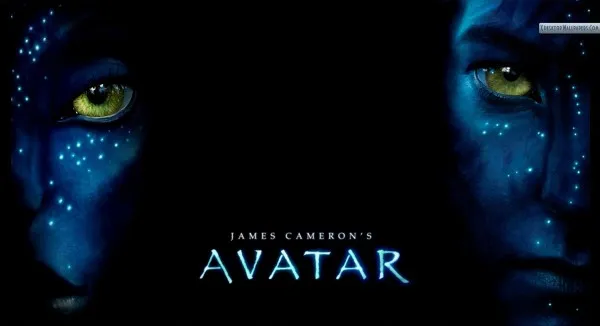
Avatar: How a Blue World Rebuilt Cinema in 3D
December 2009. A film about tall blue aliens became the most successful movie ever made and forced every theater to buy a 3D projector.
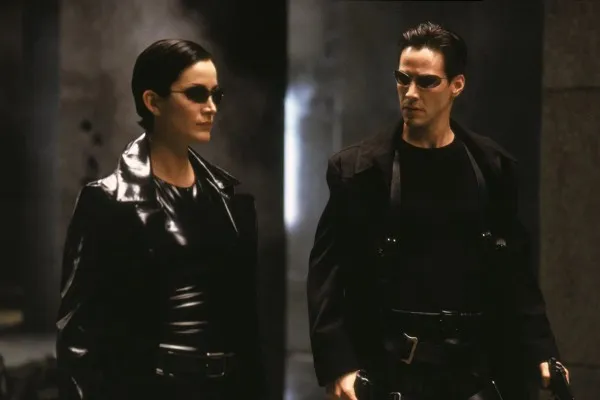
The Matrix: The Camera Move That Bent Reality
March 1999. A hallway fight froze time and spun the camera around a bullet and redefined what a movie could look like.