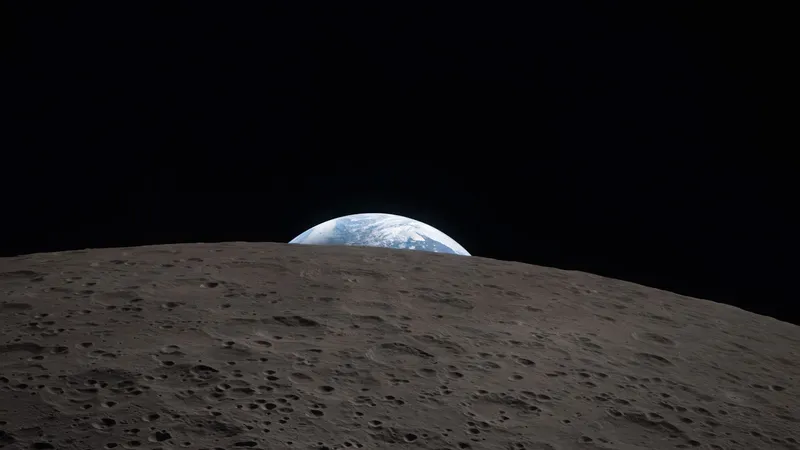
Earthrise: The Photo That Started the Green Revolution
Apollo 8, December 1968. Bill Anders looked out the window and saw something that changed everything.
WOW Score
On Christmas Eve 1968, Apollo 8 orbited the Moon. Mission control asked the crew to look out the window for something special.
Bill Anders snapped what may be the most reproduced photograph in history: Earth rising over the lunar horizon. The blue marble, fragile and alone, suspended in infinite black.
The image went viral before viral existed. For the first time, humanity saw its home planet from another world a perspective that changed consciousness forever.
"We came to explore the Moon, and discovered the Earth."
The Earthrise photograph launched the modern environmental movement. Earth Day was founded 16 months later. The EPA followed in 1970. Environmental legislation passed across 20 countries within the decade. A single photograph restructured humanity's relationship with its own planet.
The Full Story
A Mission That Was Never Supposed to Happen
Apollo 8 was a gamble born of fear that the Soviets would reach the Moon first. With the lunar lander behind schedule, NASA restructured the mission in just weeks to send a crew around the Moon instead of landing. In December 1968, Frank Borman, James Lovell, and William Anders became the first humans to leave Earth orbit and the first to see the far side of the Moon with their own eyes. The flight was risky, untested, and, until the moment it worked, far from certain to bring them home.
The Camera Almost Missed It
Anders initially trained his lens on the lunar surface, documenting the planned mission objectives. It was his fellow crewman Frank Borman who urged him to turn toward Earth. The color photograph that resulted was almost not taken at all, a near-miss that makes its cultural weight even more striking. The crew used a modified Hasselblad loaded with special color film chosen at the last minute, and Anders fired off a rapid sequence as the rising Earth crested the dead grey horizon.
The Christmas Eve Broadcast
As the crew circled the Moon on Christmas Eve, an estimated one in four people on Earth tuned in to the most-watched television broadcast the world had ever seen. The astronauts described the lunar desolation below them, then read the opening verses of Genesis. Behind them, unseen by most viewers at home, hung a small blue and white sphere, the only color and life in a frame of lifeless rock and black sky.
A Planet With No Borders
For the first time in history, a human-made image showed Earth whole: no nations, no lines, no walls, just a single small world adrift in the dark. The contrast with the airless, cratered Moon made the point wordlessly. People who had only ever looked up at the sky now looked back at themselves, and the planet appeared not as a collection of countries but as one fragile, shared home.
Why Haven't We Seen the Whole Earth?
The hunger for this view had been building for years. Stewart Brand, a counterculture thinker, printed buttons in 1966 asking 'Why haven't we seen the whole Earth yet?' and sold them on college campuses. The Apollo photographs finally answered that question, and Brand later put the image on the cover of the Whole Earth Catalog. The picture became a quiet emblem of a generation that wanted to see the planet as a whole rather than in fragments.
How One Frame Built a Movement
Environmentalists seized on Earthrise as proof of the planet's fragility. The image hung in classrooms, churches, and Senate offices. Within sixteen months, the first Earth Day drew an estimated 20 million Americans, and the Environmental Protection Agency was created. A single frame, glimpsed by a few astronauts, reorganized how a species saw its only home and helped turn scattered conservation worries into a mass movement.
Laws Written in Its Afterglow
The momentum that Earthrise helped ignite produced real legislation. The United States passed the Clean Air Act and founded the EPA in 1970, followed by the Clean Water Act in 1972, while countries around the world enacted their own environmental protections through the decade. The photograph did not write those laws, but it supplied the emotional argument behind them: a small, breakable Earth worth protecting on purpose.
The Blue Marble and Beyond
Four years later, in 1972, Apollo 17 captured the 'Blue Marble,' a fully lit, cloud-swirled Earth that became the other iconic image of the era. Together these pictures defined a visual language of environmentalism still used today, from recycling logos to climate campaigns. They also fed a new sense of earthly loneliness, the idea that there is no backup planet, an argument that grows louder with every passing decade.
The Turning Moment
Everything shifted on one December night in 1968, not because the Earth changed, but because, for the first time, humanity saw it entire. In a year of war, assassinations, and unrest, a single photograph offered a calmer perspective: one world, small and finite, the only home anyone had. The view from the Moon turned environmentalism from a fringe concern into a planetary one, and gave a divided species a shared thing to protect.
Lasting Legacy
Earthrise is now counted among the most influential photographs ever taken, studied as both art and argument. It helped launch the modern environmental movement, shaped half a century of policy, and remains the default image for anyone trying to explain why the planet matters. Whether remembered as the birth of green consciousness or simply the first time we saw ourselves from afar, one fact is already clear: a snapshot from lunar orbit changed how humanity thinks about home.
Related Turning Moments
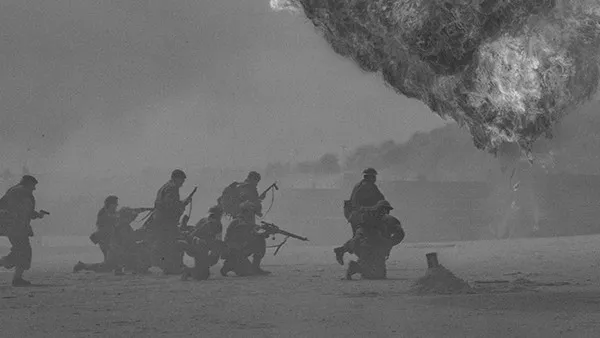
D-Day: The 24 Hours That Decided WWII
At 6:30 AM on June 6, 1944, the world held its breath as 156,000 Allied troops stormed five beaches into the unknown.
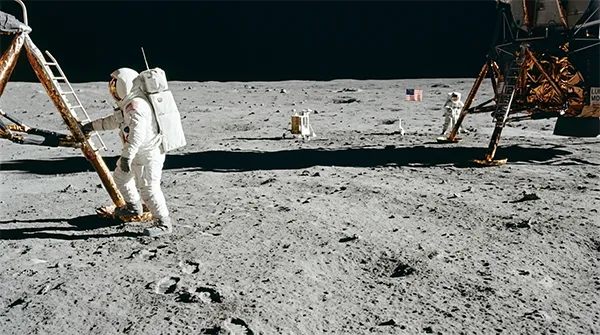
"One Small Step": The 20 Minutes Before the Words
July 20, 1969. Before Armstrong said a single word, mission control sat in silence for six hours not knowing if the fuel would even hold long enough to land.