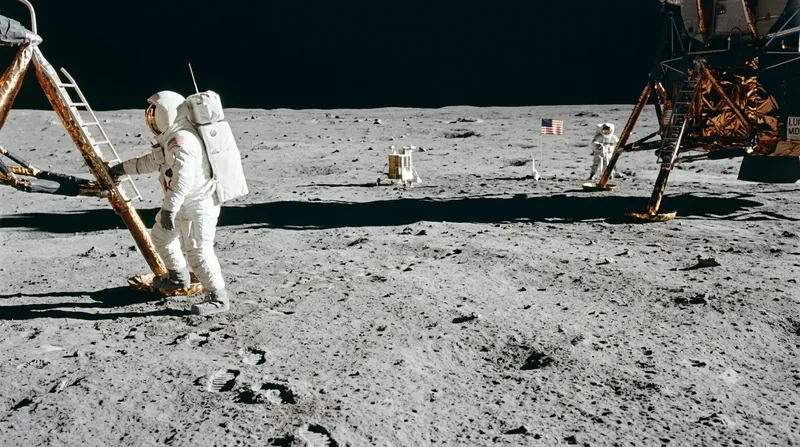
"One Small Step": The 20 Minutes Before the Words
July 20, 1969. Before Armstrong said a single word, mission control sat in silence for six hours not knowing if the fuel would even hold long enough to land.
WOW Score
As the Lunar Module Eagle descended, alarms began flashing in the cockpit a computer overload nobody had trained for. Mission control had seconds to decide whether to abort.
Fuel ran critically low as Armstrong manually piloted past a boulder field to find safer ground. Back on Earth, engineers watched the fuel gauge in silence, unable to do anything but wait.
The Eagle landed with less than 30 seconds of fuel to spare. Only after touchdown, hours later, did Armstrong step onto the surface and speak the words the world remembers but it was the silent, unscripted minutes before that decided everything.
"With less than 30 seconds of fuel remaining, the Eagle touched down and an entire species changed what it believed was possible."
The landing reshaped geopolitics, ended the most visible phase of the Space Race, and inspired the generation of engineers who would go on to build the internet and modern computing. It remains the single most-watched live broadcast in television history at the time.
The Full Story
The Race That Made the Deadline
Apollo 11 existed because of a promise. In 1961, with the Soviet Union ahead in nearly every measure of spaceflight, President John F. Kennedy committed the nation to landing a person on the Moon and returning them safely before the decade was out. The goal was political as much as scientific, a contest of systems with the whole world watching. Eight years of engineering, failures, and losses, including the Apollo 1 fire that killed three astronauts, led to the launch from Florida on July 16, 1969.
The Alarm Nobody Trained For
The 1202 and 1201 program alarms were errors no simulator had prepared the crew to handle. Guidance computer engineer Steve Bales had seconds to declare the landing 'go' based on incomplete data. His call made live, under global scrutiny is one of the quietest acts of courage in the mission.
Twenty Meters of Fuel
As Armstrong steered past boulders toward a flatter plain, the fuel gauge ticked toward empty. Mission control's rule was to abort at a set threshold; instead they trusted the pilot flying manually. The margin at touchdown was measured in single digits of seconds close enough that the entire achievement hinged on one calm hand on the controls.
The Six Hours of Silence
After the Eagle landed, the world did not hear the famous words right away. Mission planners needed the astronauts to rest, and the first step was delayed by roughly six hours so it would fall during a live television window. For most of that time, hundreds of millions of people simply waited, unsure whether the lander might have been damaged or stranded. The silence was its own kind of suspense.
The Words, Rewritten in the Moment
When Armstrong stepped onto the dust, he intended to say, 'That's one small step for a man, one giant leap for mankind.' What came out, lost to a dropped article, was, 'That's one small step for man.' Whether or not he said 'a,' the line became the most quoted sentence of the 20th century. It was unscripted in delivery if not in spirit, spoken by a man who later admitted he had given the wording almost no thought beforehand.
What They Left Behind
During their 21 hours on the surface, Armstrong and Aldrin collected about 21 kilograms of lunar rock and soil, planted a flag, and left behind instruments that still return data today. They also left a plaque reading, 'We came in peace for all mankind,' and a memorial disc bearing the names of the Apollo 1 crew and other fallen space pioneers. The visit was brief, but it turned the Moon from a symbol into a place.
The Broadcast That Stopped the World
An estimated 600 million people, about one in six humans alive, watched the landing and first steps live, the largest television audience the world had ever seen at that point. In cities and villages, on flickering sets and in public squares, strangers shared a single moment. For a few hours, the divisions of the Cold War thinned, and the species watched one of its own stand somewhere no human had stood before.
The Turning Moment
Everything turned in the minutes no camera could show: a computer screaming errors, a fuel gauge near empty, and a pilot choosing where to set down by eye. The words came later, but the achievement was decided earlier, in silence, by people trusting each other under impossible pressure. The first step was the symbol; the landing was the miracle, and it almost did not happen.
Lasting Legacy
Apollo 11 ended the most visible chapter of the Space Race and reshaped what humanity believed was possible. It inspired the generation of engineers who built the internet, modern computing, and the tools we now use to explore further, and it remains a benchmark against which every later spaceflight is measured. Whether remembered as a triumph of Cold War ambition or simply the night a human stood on another world, one fact is already clear: July 20, 1969, is when our species became a multi-world species.
Related Turning Moments
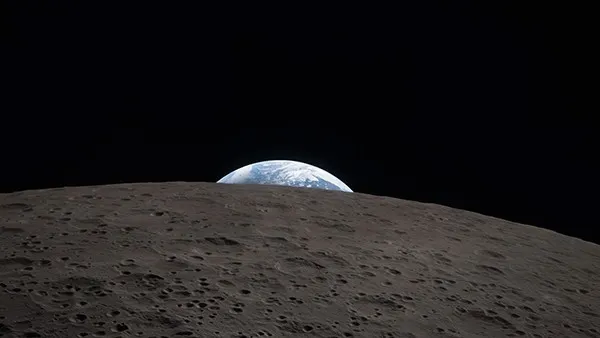
Earthrise: The Photo That Started the Green Revolution
Apollo 8, December 1968. Bill Anders looked out the window and saw something that changed everything.
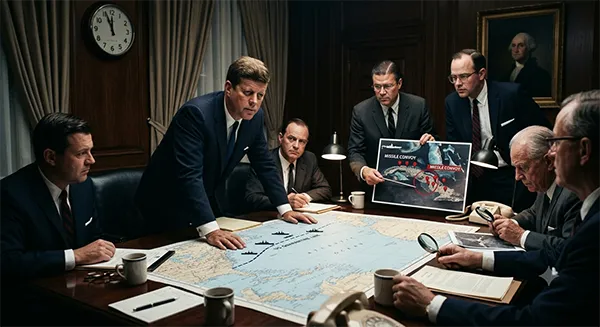
13 Days: The Message That Stopped a Nuclear War
October 1962. Two letters arrived from Moscow. One threatened war. One offered peace. Kennedy chose which one to answer.