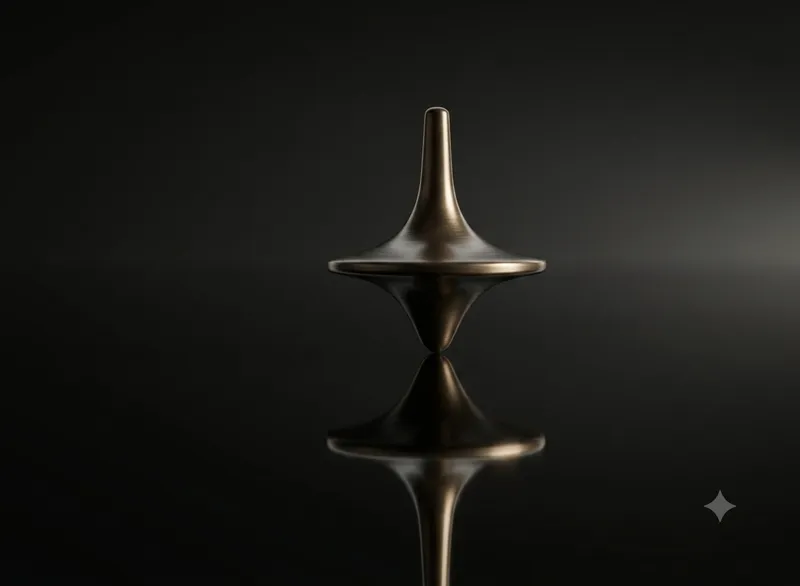
The Spinning Top: Cinema's Most Debated Final Shot
One final cut to black. No answer given. A decade of arguments started with a single spinning top.
- Director
- Christopher Nolan
- Writer
- Christopher Nolan
- Release Year
- 2010
- Genre
- Sci-Fi / Thriller
- Main Cast
- Leonardo DiCaprio, Joseph Gordon-Levitt, Ellen Page, Ken Watanabe
- Runtime
- PT2H28M
WOW Score
After two hours of nested dreams within dreams, Cobb finally returns home to his children. He spins his totem the top that only spins forever in a dream and walks away before it settles.
Nolan cuts to black just as the top begins to wobble, deliberately never showing whether it falls. Audiences left theaters arguing in the lobby, a reaction rarely seen for a summer blockbuster.
Nolan has said in interviews that the ending isn't the point Cobb's own indifference to the totem, choosing his children over certainty, is the actual resolution. The ambiguity was the message all along.
"Nolan didn't end the film with an answer. He ended it with a question the audience would carry home."
The ambiguous ending became one of the most analyzed shots in modern cinema, spawning thousands of frame-by-frame breakdowns. It reestablished the theatrical ending as a tool for audience participation, influencing a decade of films willing to withhold resolution deliberately.
Behind the Scenes
The Top Was Never the Point
Die-hard theorists still freeze-frame the final shot searching for the tilt. But Nolan has explained that Cobb's choice to walk away to stop needing proof is the real ending. The totem was a crutch he finally dropped. The audience's need for certainty, not the character's, is what the spinning top exposes.
Why Audiences Kept Arguing
Most blockbusters resolve cleanly so viewers can leave satisfied. Inception withheld that release and turned the theater into a debate club. The gamble paid off: repeat viewings soared, and a generation of filmmakers learned that an unanswered question could be more valuable than a neat one.
Related Turning Moments
Why So Serious? How Ledger's Joker Rewrote Villainy
One performance. One question. The scene that proved superhero cinema could reach for Shakespeare.
The Sixth Sense Twist: Cinema's Greatest Rewatch
1999. You already know what happens. But the first time you saw it, you went completely still.