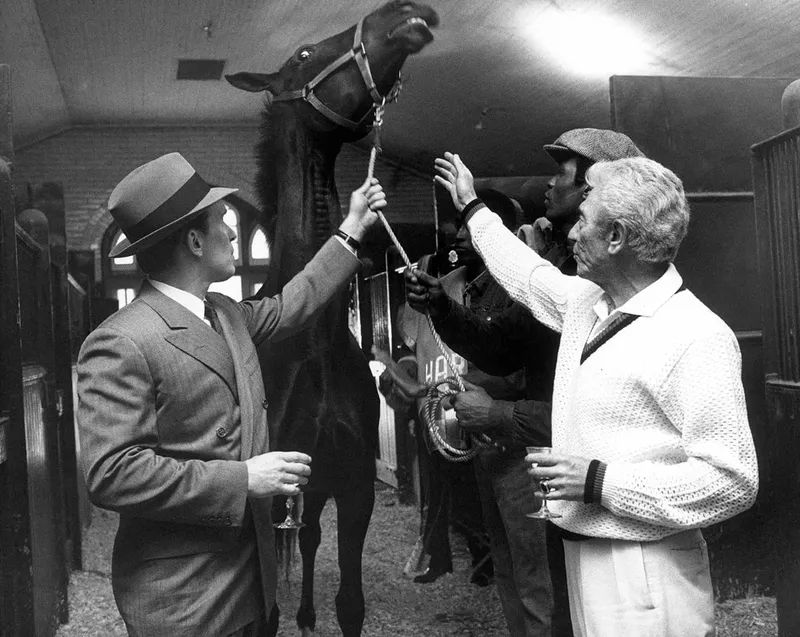
The Horse's Head: The Scene That Redefined Movie Violence
1972. A producer wakes up in his silk sheets. The scream that follows changed what audiences would accept on screen forever.
- Director
- Francis Ford Coppola
- Writers
- Mario Puzo, Francis Ford Coppola
- Release Year
- 1972
- Genre
- Crime / Drama
- Main Cast
- Marlon Brando, Al Pacino, James Caan
- Runtime
- PT2H55M
WOW Score
Studio executive Jack Woltz refuses a favor for the Corleone family, dismissing their influence outright. He goes to bed in his mansion, confident and untouchable.
The next morning, he wakes to a wet, heavy sensation beneath the sheets the severed head of his prize racehorse. His scream is one of the most replicated shocks in film history.
Coppola used a real horse head from a slaughterhouse rather than a prop, insisting on authenticity that audiences could feel even through the screen. The restraint of the violence implied rather than shown against a person made it land harder.
"Coppola didn't need a single act of violence against a person to make an entire audience recoil. He just needed a horse."
The scene reset the bar for what mainstream cinema could depict without explicit violence, proving suggestion could outperform gore. It became the reference point for organized-crime storytelling for the next five decades, studied in film schools as a masterclass in dread.
Behind the Scenes
A Real Horse Head
Coppola insisted on authenticity, sourcing a genuine horse head from a slaughterhouse rather than fabricating a prop. The cast and crew were not fully prepared for how visceral the shot would feel. That discomfort is legible on screen the scene's power comes from how real the dread looks.
Violence You Never See
No human is harmed on camera, yet the scene remains one of cinema's most disturbing. By showing the aftermath rather than the act, Coppola weaponized implication. The lesson that what the audience imagines is far worse than what you show became a foundational rule of cinematic suspense.
Related Turning Moments
Why So Serious? How Ledger's Joker Rewrote Villainy
One performance. One question. The scene that proved superhero cinema could reach for Shakespeare.
The Sixth Sense Twist: Cinema's Greatest Rewatch
1999. You already know what happens. But the first time you saw it, you went completely still.