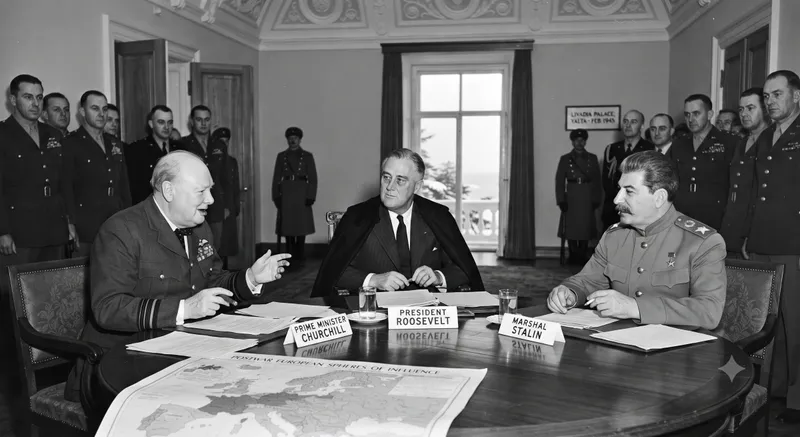
The Yalta Conference: Dividing the Postwar World
In a Crimean palace, the 'Big Three' carved up the coming peace and planted the seeds of the Cold War.
WOW Score
With victory in sight, Roosevelt, Churchill, and Stalin met at Yalta in the Crimea to plan the end of the war and the shape of the peace.
They agreed to divide Germany into occupation zones, demanded Germany's unconditional surrender, and wrestled over Poland's borders and government.
The conference also laid groundwork for the United Nations. But the compromises struck there soon curdled into East-West suspicion.
"Roosevelt, Churchill, and Stalin met as allies and left having drawn the map of a world they would soon fear each other in."
Yalta's agreements on Germany's division, Poland's government, and the United Nations shaped the postwar order. Critics later charged it 'gave away' Eastern Europe, setting the stage for Soviet domination and four decades of Cold War confrontation.
The Full Story
The Polish Question
Stalin insisted on a friendly Polish government and shifted Poland's borders west. Churchill and Roosevelt extracted promises of free elections that were later broken.
Spheres of Influence
The leaders implicitly accepted Soviet dominance in much of Eastern Europe in exchange for Soviet entry into the war against Japan. The bargain haunted the postwar decades.
The Cold War Seedbed
Yalta became a byword for great-power deal-making. Whether it betrayed freedom or managed an unavoidable reality remains fiercely debated.