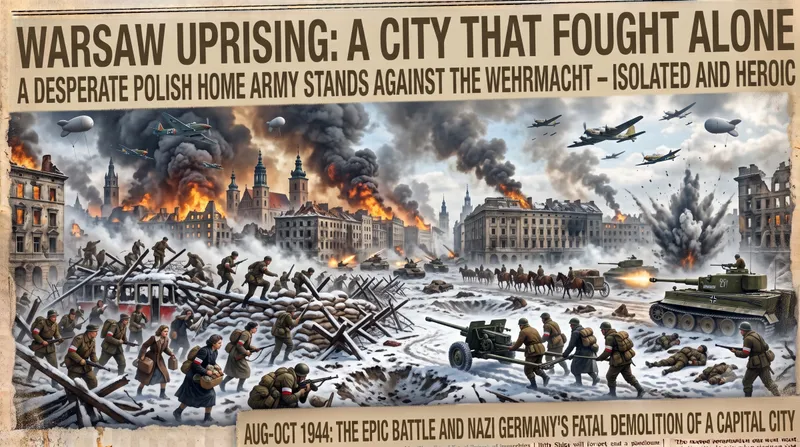
The Warsaw Uprising: A City That Fought Alone
As the Red Army waited across the river, the people of Warsaw rose against the Nazis and were left to be crushed.
WOW Score
As Soviet forces approached Warsaw in summer 1944, the Polish Home Army launched an uprising to liberate the city before the Red Army arrived and install a communist regime.
For two months, poorly armed civilians fought the SS and Wehrmacht street by street. The Soviets halted on the city's eastern bank and gave no meaningful help.
After devastating losses, the survivors surrendered. The Germans then systematically demolished Warsaw, punishing the city for its defiance.
"For 63 days the citizens fought with home-made weapons. Help that could have come, did not. The city was erased."
The uprising's suppression and the subsequent destruction of Warsaw broke Polish resistance and cleared the way for Soviet dominance. The tragedy became a defining wound in Polish memory and a symbol of abandonment by allies and the advancing Red Army alike.
The Full Story
A Political Rebellion
The uprising was as much against future Soviet control as against Nazi occupation. The Polish government-in-exile sought to liberate Warsaw itself to retain sovereignty.
The River Stilled
The Red Army's halt just across the Vistula remains one of WWII's most debated decisions whether tactical caution or calculated abandonment of a rival Poland.
The City Erased
After the capitulation, German units razed Warsaw block by block. The postwar communist state would rebuild it, but the loss of life and heritage was immense.