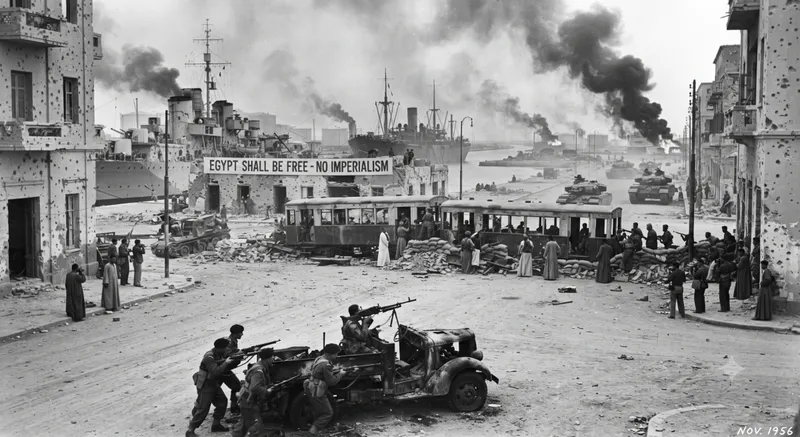
The Suez Crisis: The End of Empire on the Canal
When Egypt seized the Suez Canal, Britain, France, and Israel struck back and discovered the world had changed beneath their feet.
WOW Score
Egypt's Nasser nationalized the Suez Canal, a vital conduit for oil and empire. Britain and France, with Israel, launched a military intervention to retake it.
The invasion faced fierce international condemnation, including from the United States, and Soviet threats to intervene on Egypt's side.
Under pressure, the invaders withdrew. The crisis marked the collapse of European colonial prestige and the rise of U.S.-Soviet dominance in the Middle East.
"Three powers invaded and were forced to retreat by American pressure and Soviet threats. The old colonial order had ended in a week."
Suez revealed that Britain and France could no longer act without U.S. consent and accelerated the decolonization of Africa and the Middle East. It elevated Nasser as an Arab hero and drew the superpowers deeper into the region.
The Full Story
The Canal Stakes
The canal was the jugular of European trade and empire. Nasser's move was a direct challenge to the old order and a bid for Arab leadership.
A Covert Collusion
Britain, France, and Israel coordinated the attack under a secret plan, but poor diplomacy left them isolated when the shooting started.
The American Veto
Eisenhower, furious at the surprise and wary of Soviet inroads, forced a ceasefire. The episode signaled that Washington, not London or Paris, now set the global rules.