Rosa Parks: The Refusal That Started a Movement
A seamstress in Montgomery simply stayed seated and ignited the modern civil rights movement.
WOW Score
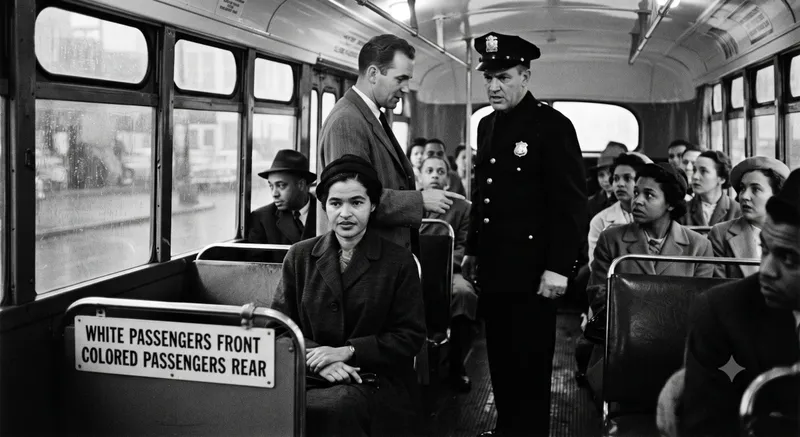
In segregated Montgomery, Black riders were required to give up seats to white passengers. Rosa Parks, a trained activist, refused to move from her seat.
Her arrest sparked outrage in the Black community, which organized a boycott of the buses led by a young minister, Martin Luther King Jr.
The quiet act of defiance became the emblem of a movement demanding dignity and equal rights.
"One woman's quiet 'no' to a bus driver became the spark for a year-long boycott and a generation's fight for equality."
Parks' arrest galvanized the Montgomery Bus Boycott and launched Dr. Martin Luther King Jr. into leadership. It marked the opening front of the nonviolent civil rights movement that would reshape American law and society.
The Full Story
More Than Tired
Parks was not merely weary; she was a conscious activist whose disciplined refusal was the perfect catalyst at the right moment.
The Boycott Begins
Churches and community groups sustained a mass withdrawal from the buses that emptied the transit system's coffers.
A Movement Rises
The campaign's success gave the civil rights movement its strategy of nonviolent mass action and its most famous leader.