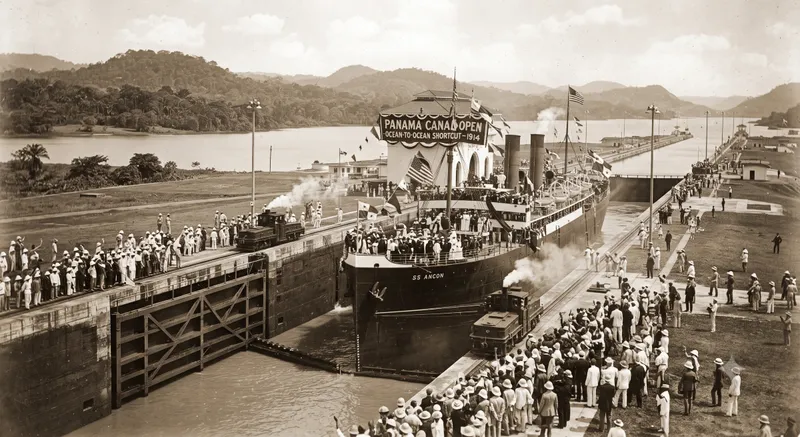
The Panama Canal Opens: The Ocean-to-Ocean Shortcut
After disease, disaster, and a change of continents, the world's great canal finally linked the Atlantic and Pacific by locks.
WOW Score
A French attempt to build a sea-level canal failed amid disease and engineering woes. The United States took over, choosing a lock-based design across the isthmus.
Pioneering work against yellow fever and malaria, led by figures like Walter Reed and William Gorgas, made the project possible.
When the first ship transited in 1914, the canal cut thousands of miles off the sea route between the oceans.
"A French company went bankrupt and thousands died of fever, but the locks rose and the continents were split for all time."
Opened in 1914, the Panama Canal revolutionized maritime trade and projected U.S. influence in the Americas. It remains a cornerstone of global shipping and a monument to engineering audacity.
The Full Story
Conquest of Disease
Defeating mosquito-borne illness was the true breakthrough that let workers survive to build the canal.
Locks and Lakes
Rather than cut through at sea level, engineers raised ships via locks to an artificial lake, a clever compromise.
A New Geopolitics
The canal cemented U.S. strategic dominance in the Western Hemisphere for much of the 20th century.